
Guide: How To Choose Your First Japanese Kitchen Knife
Buying your first Japanese knife feels like a gamble. Here’s how to read shape, steel and handle so it isn’t, plus the 100-day guarantee that softens the risk.

Buying your first Japanese knife feels like a gamble. Here’s how to read shape, steel and handle so it isn’t, plus the 100-day guarantee that softens the risk.

Fifteen presents for the Japan obsessive in your life, from a 100-sheet origami set to a kintsugi kit and 24-carat gold-lined bone porcelain.

No glue, no filler: urushi lacquer and real gold powder bond broken pottery, and the golden seam is meant to stay imperfect because that flaw is the point.

Why a loose drawer ruins knife edges, and how magnetic racks and blocks keep blades sharp, space saved and out of children’s reach.

That magnetic strip will hold more than knives: drill bits in the workshop, drying paintbrushes, makeup brushes, pot lids and stray bobby pins.

Trim the fins, open the belly, run the blade along the spine: filleting a round fish like sea bass or mackerel with a Deba, with a video to follow.

The Sujihiki packs 240-300mm of thin, double-bevel blade, and some sushi chefs reach for it over the yanagiba when slicing sashimi.

How to tell if a kitchen knife still needs sharpening, using the paper slice and everyday cutting tests, plus how edge angle affects sharpness.

Knife drawers, blocks and magnetic racks compared on space, usability, hygiene, child safety and price to help you store blades well.
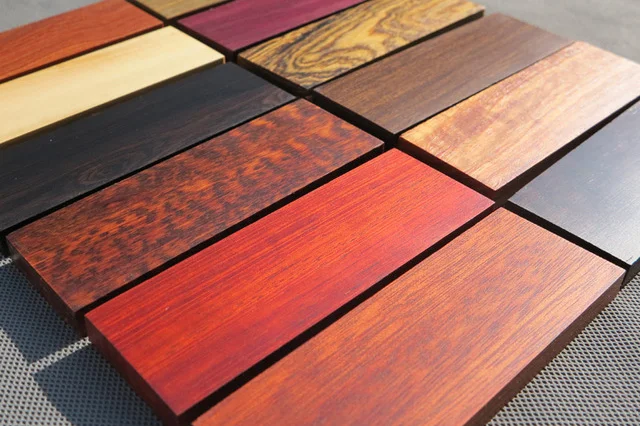
Most buyers obsess over the steel, but the handle carries the knife: cocobolo, ebony and rosewood compared, plus why soft woods fail in a wet kitchen.

A self-taught blacksmith from Reda, Poland now teaches young Japanese how to forge the knives their own country made famous, one YouTube vlog at a time.

Master blacksmiths told us to sharpen four or five times a year and judge the edge on a sheet of paper. Nine more habits that keep a blade honest.

Portuguese traders brought tobacco to Sakai in 1543, and the knives farmers needed to cut the leaves became the cooking blades the town is famous for.

Fifteen working tips from chefs like Emeril Lagasse and Daniel Boulud: spotting ivory marbling in beef, skipping the £110 mandoline, and braising cheap cuts tender.

Wagyu runs around £200/kg, but 1kg feeds six and the cooking is almost insultingly simple: sear, season, serve from a screaming-hot cast-iron pan.

Tape the edge, wear the glasses, mind the dust: fitting a handle to a razor-sharp Japanese blade, plus a simple antler mount borrowed from hunting knives.

Run a pizza wheel through dough, drop a bread slice in with clumped brown sugar, microwave a lemon for 30 seconds: 25 fixes for everyday kitchen snags.

Both come from Hitachi, but Aogami Super adds vanadium for a harder, longer-lasting edge, while #2 stays easier to sharpen. Which fits how you cook?

One chart lining up Shirogami, Kigami, Aogami and the GIN stainless grades by hardness, price and what each blade is actually built for.

Smelted from sand iron in Shimane, Yasugi steel splits into yellow, white and blue grades. Top smiths favour the white and blue and skip the cheap yellow.

An axe sits near 50 HRC, supermarket knives 54-58, good kitchen blades 60-66. What that diamond-point test measures, and why harder isn’t always better.

Most homes own three or four knives without really thinking about it. Here are the ten common types sorted, and the four worth buying first.

How to remove rust from an old knife using vinegar or lemon juice, then sharpen the blade back to a clean edge on a stone or honing rod.

The chef’s knife began as a butchery tool for slicing through cartilage. Here’s how the gyuto and its French and German cousins compare today.

Back from the forges of Takefu and Sakai, where an ageing trade and few young smiths explain why a handmade knife can take months.

Nine blade shapes, six steel finishes, and how to keep any of them sharp. If you read one thing before buying, make it the long version.

A $5,300 Yoshihiro Honyaki with a hamon shaped like Mount Fuji is only number ten here. Above it: diamonds, gold and rare wood.

One holds a near-scalpel edge but will rust; the other shrugs off abuse. It comes down to Rockwell hardness, high 50s against mid 60s.

Five blades, two traditions: the chef’s knife, Santoku, paring, bread and carving knife, and where Western and Japanese versions part ways.
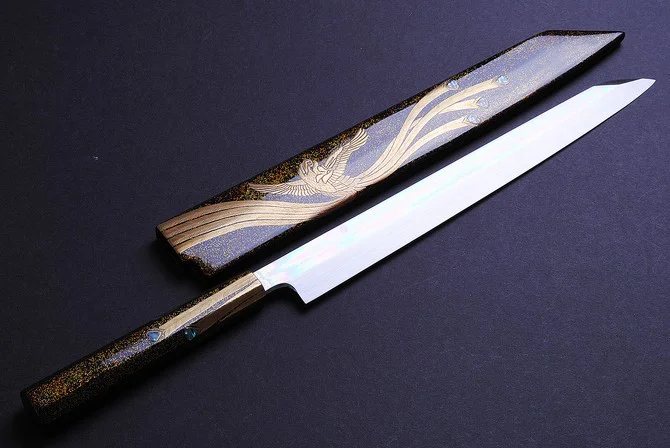
A £1,000 knife can take five weeks and a workshop of four to forge. What the price buys: layered steel, hand-welding and balance.
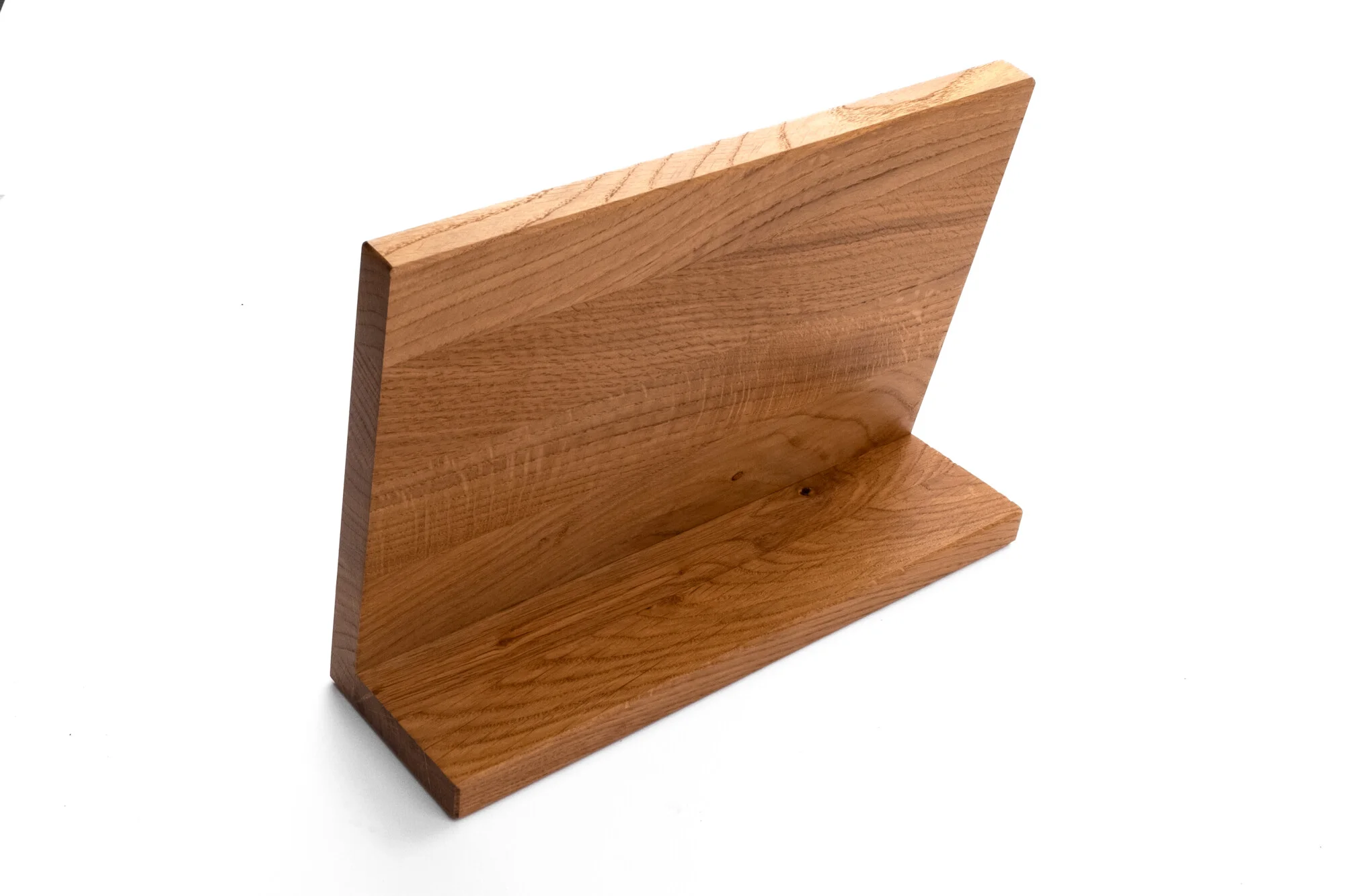
Five rules for caring for a Japanese knife, covering hand washing, the right cutting board, whetstone sharpening, and proper storage.
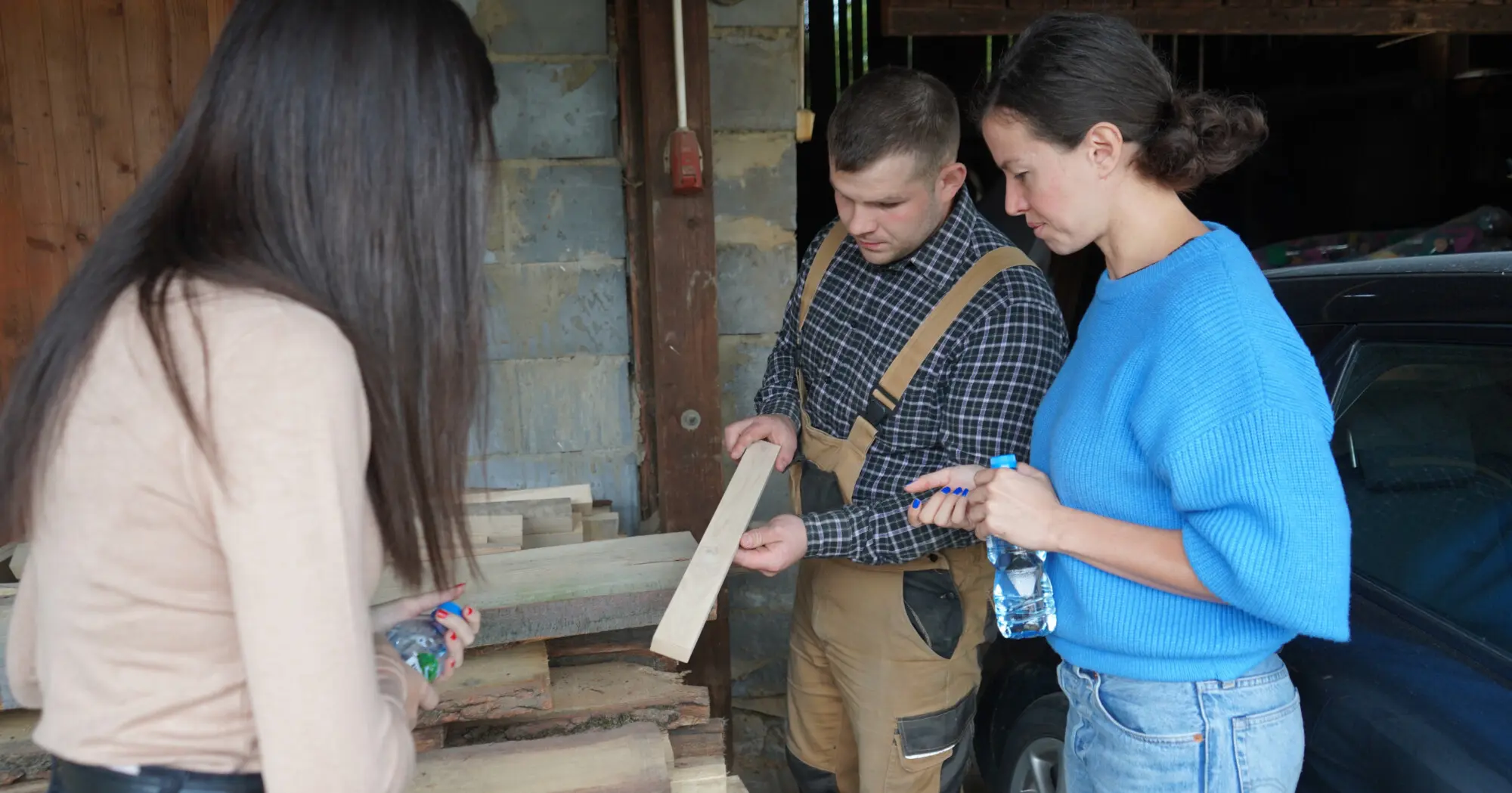
The story of Oishya, a brand born from trips to Sakai and Seki that works with Japanese workshops to make knives for European home cooks.
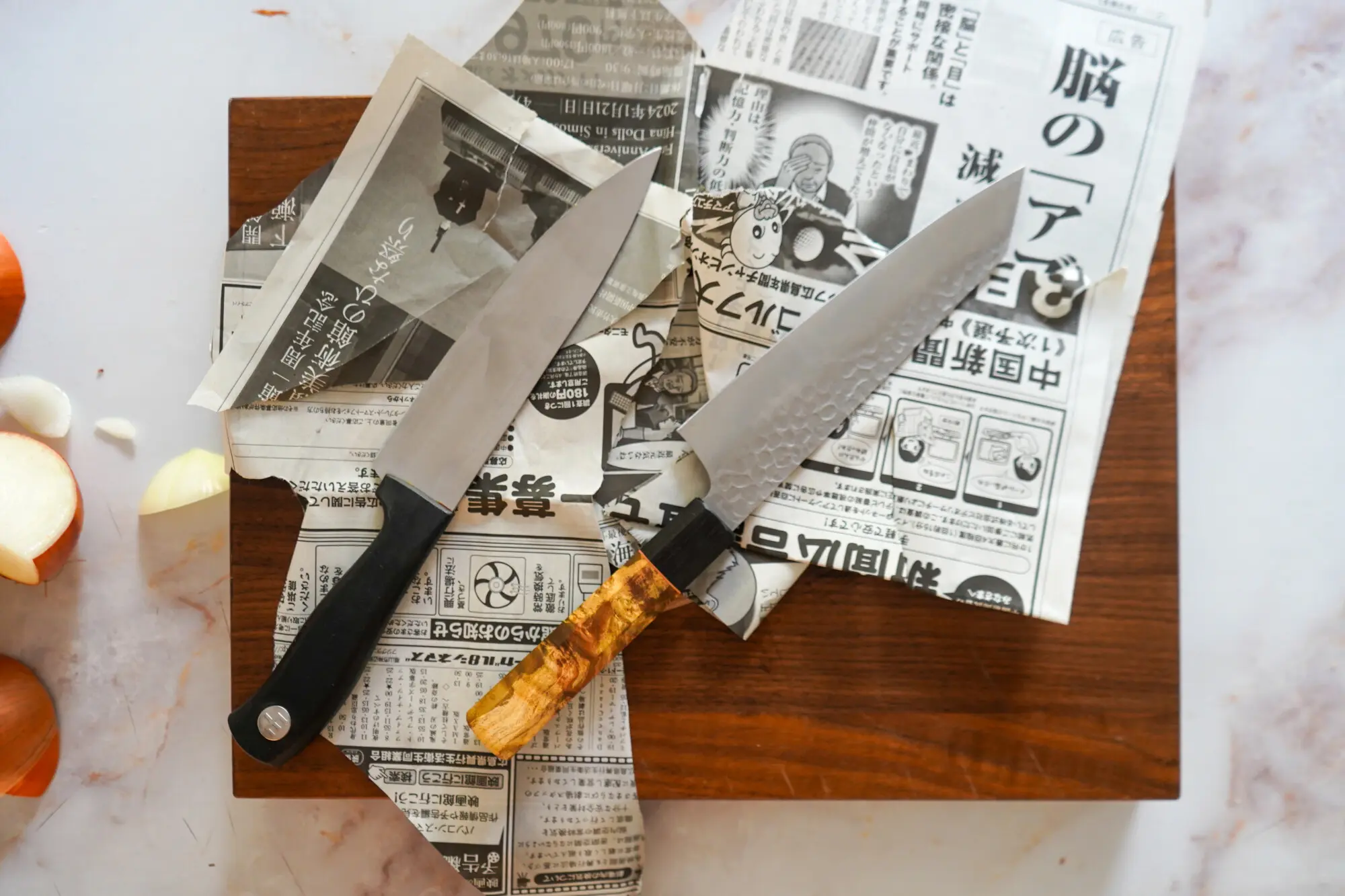
Ten kitchen gifts for summer 2026 cooks, from a Sakai Kyuba santoku and brass chopsticks to walnut cutting boards and a three-knife set.

Five rules for caring for a Japanese knife, covering hand washing, the right cutting board, whetstone sharpening, and proper storage.
The story of Oishya, a brand born from trips to Sakai and Seki that works with Japanese workshops to make knives for European home cooks.
Ten kitchen gifts for summer 2026 cooks, from a Sakai Kyuba santoku and brass chopsticks to walnut cutting boards and a three-knife set.