

Seki Kyuba
NIJI
“Rainbow” in Japanese. 37 layers of stainless, brass, and copper folded around a hardened core. Each blade reveals a pattern no other blade carries.
A masterpiece of art and function.
NIJI means “rainbow” in Japanese. The name is literal. The blade is a 12Cr18MoV cutting core wrapped in 37 layers of stainless steel folded together with brass and copper. The metals carry light differently, so when you angle the blade, you see waves of warmth move across the surface.
No two NIJI blades are identical. The folding process makes the pattern slightly unique to each piece. The knife that ends up in your kitchen is, in a quiet way, only yours.
The line sits just below SHIN in cutting performance. What you trade in pure edge retention you gain in an aesthetic that turns a counter into a small gallery. Cooks who choose NIJI are usually choosing both function and beauty.
Walk into the workshop
37 layers folded, hammered, ground until the pattern emerges.
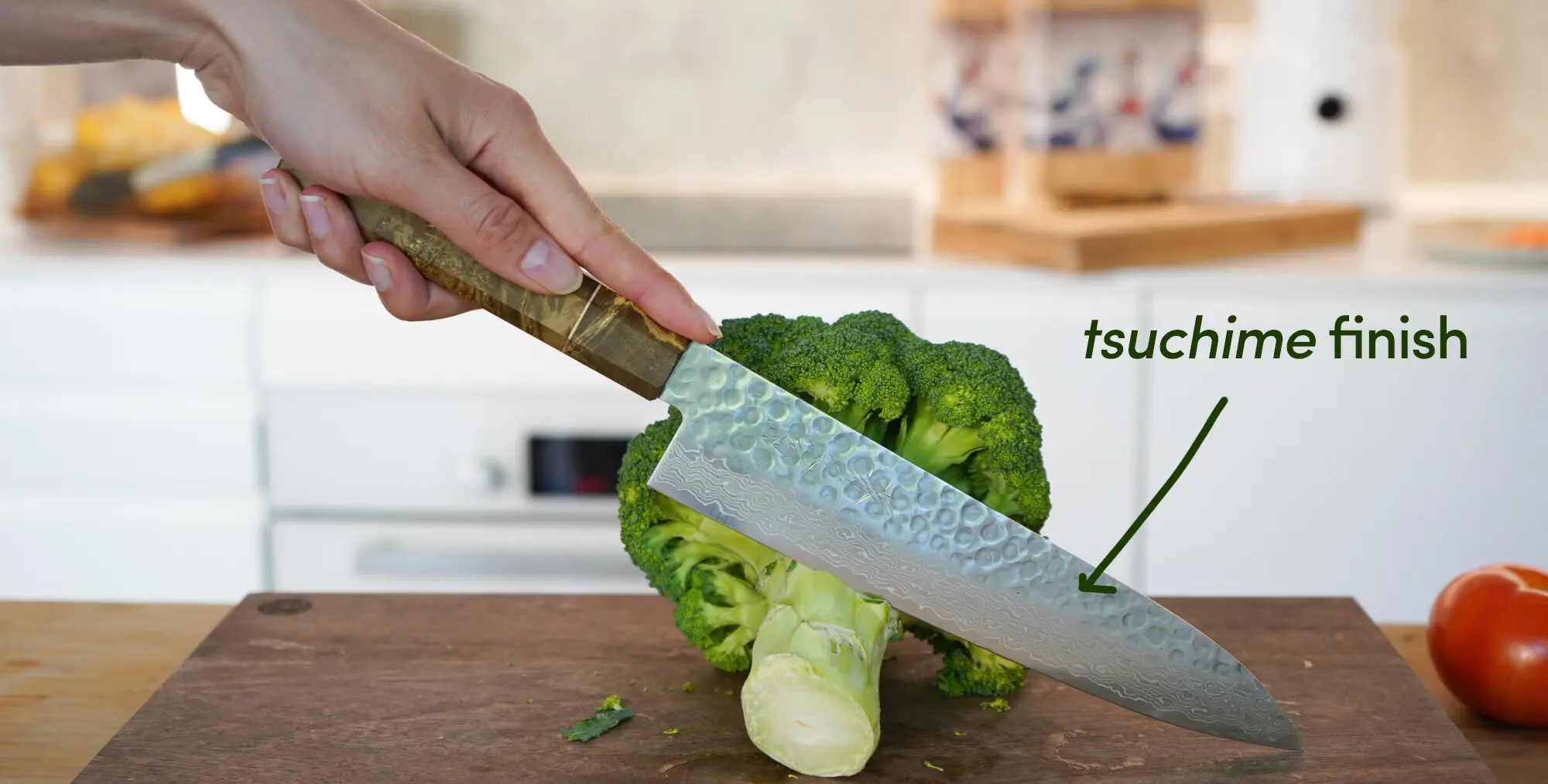


The pattern is the slowest thing about making a NIJI. The folding alone takes the bladesmith the better part of a day. The grind is what reveals it.
The materials
Stainless steel, brass, and copper. Folded 37 times around a hardened core.
37-layer rainbow Damascus
A 12Cr18MoV cutting core wrapped in alternating layers of stainless steel, brass, and copper. Each metal reflects light at a different wavelength. The folded structure also distributes stress across the blade, contributing to edge retention.

The Oishya handle: maple burl, copper, bog oak
The same construction as every Oishya. A stabilised maple burl body. A 5,000-year-old bog oak ferrule, known as the kakumaki. A hand-fitted copper ring between them. Octagonal profile. The copper ring quietly echoes the metal in the blade itself.
Shop the NIJI line
Five knives. One hammered finish.


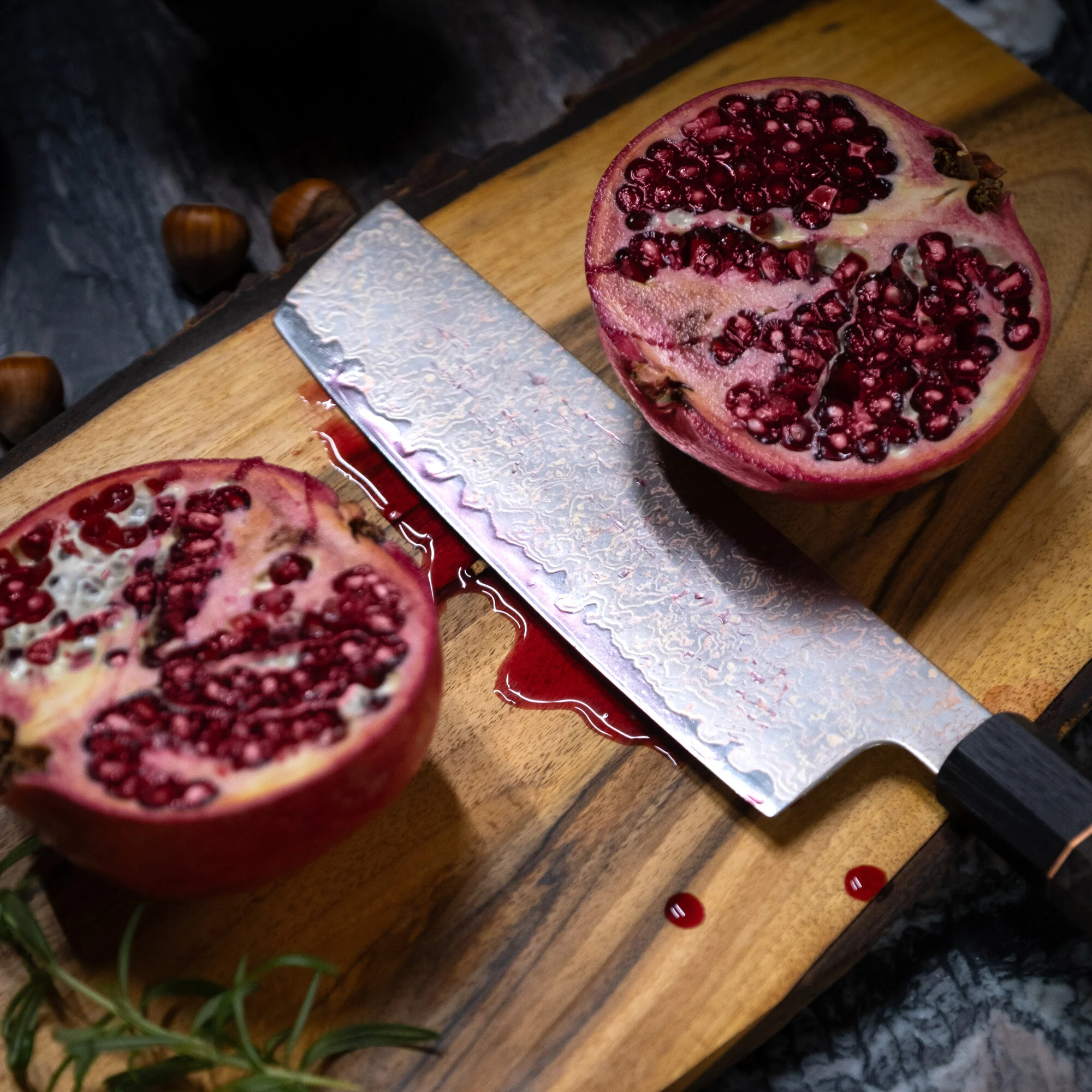


Specifications
What's inside every NIJI knife.
Blade
Handle & finish
A note on care
Hand wash and dry immediately. Wooden cutting boards only. Sharpen on a 1000/6000 whetstone three or four times a year. The full method lives in Knife School.
Other lines
If NIJI isn't quite right.
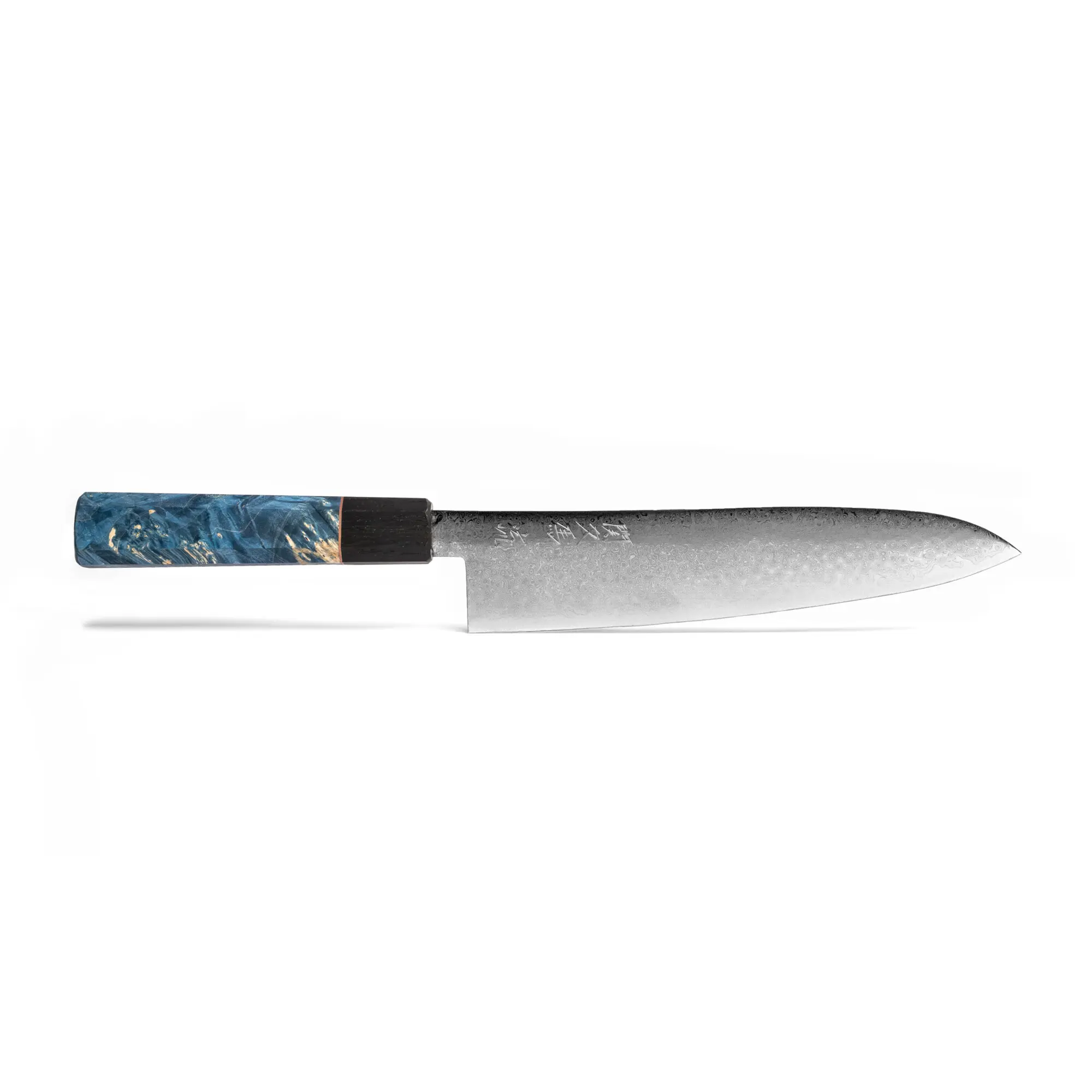
Full Damascus pattern. Available in sets. from $371

The top of the range. SG2/R2 steel. from $453

The flagship. Damascus and bog oak. from $357