Japanese Knives
Every knife here is forged by hand in Sakai or Seki — the two Japanese towns that have made blades for centuries, one since the age of the samurai, the other still turning out most of Japan’s kitchen cutlery today. We buy straight from the workshops, so a gyuto, santoku, nakiri, bunka, kiritsuke or petty reaches your board at a workshop price, not a boutique markup. The steels are the real thing — Aogami Super carbon steel and VG-10 Damascus — ground to 12–15° a side and backed by a 100-day money-back guarantee. Your first Japanese knife or your tenth, it’s built to outlast the kitchen you buy it for.
Shop Japanese Knives
Bestsellers first. Free EU shipping. 100-day money-back guarantee.
By shape
Shop by knife type
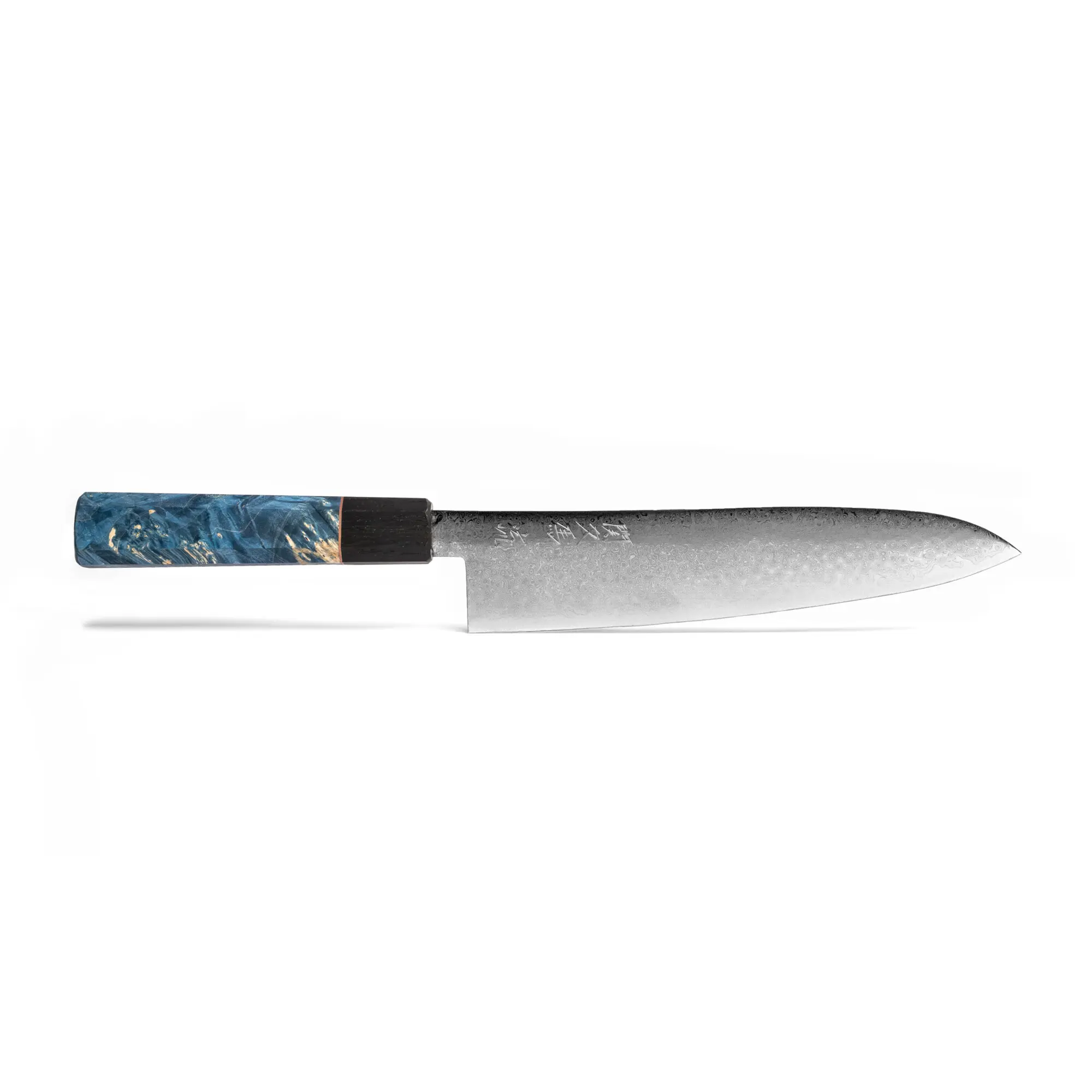
Chef's knives
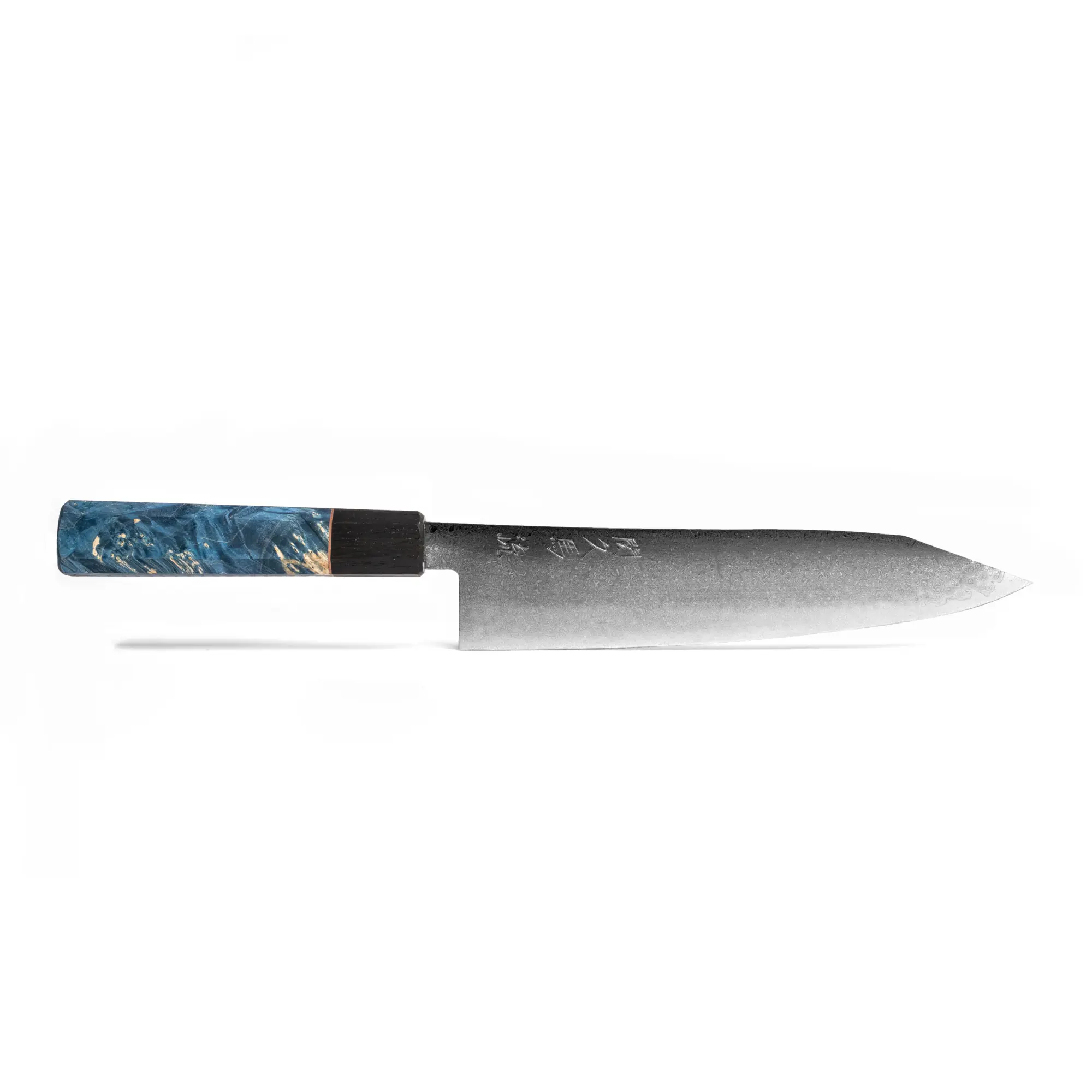
A long, gently curved edge for rocking and slicing. The one knife that does almost everything.
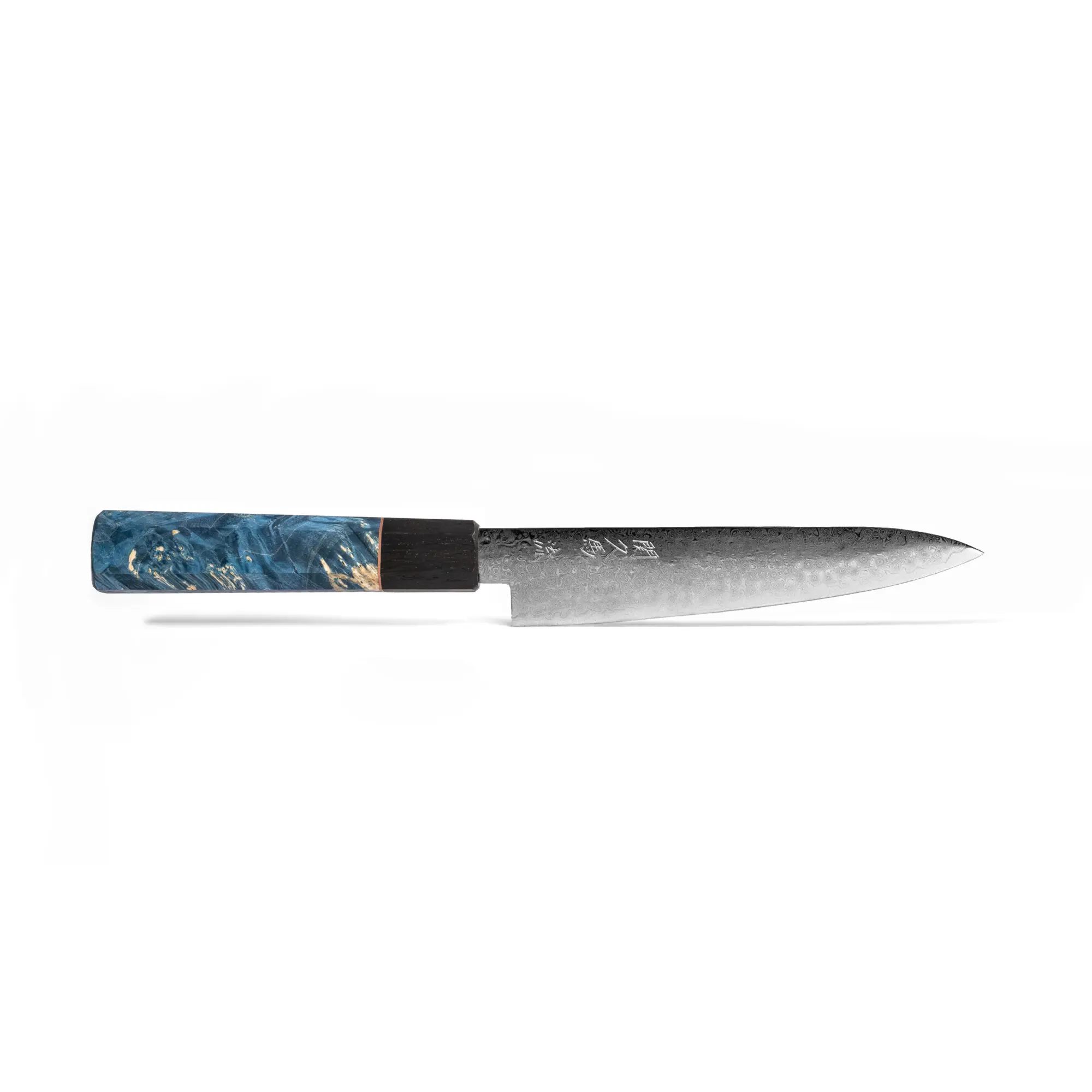
BrowseParing & petty
The small ones. Peeling, trimming, and the close work too fiddly for a big blade.
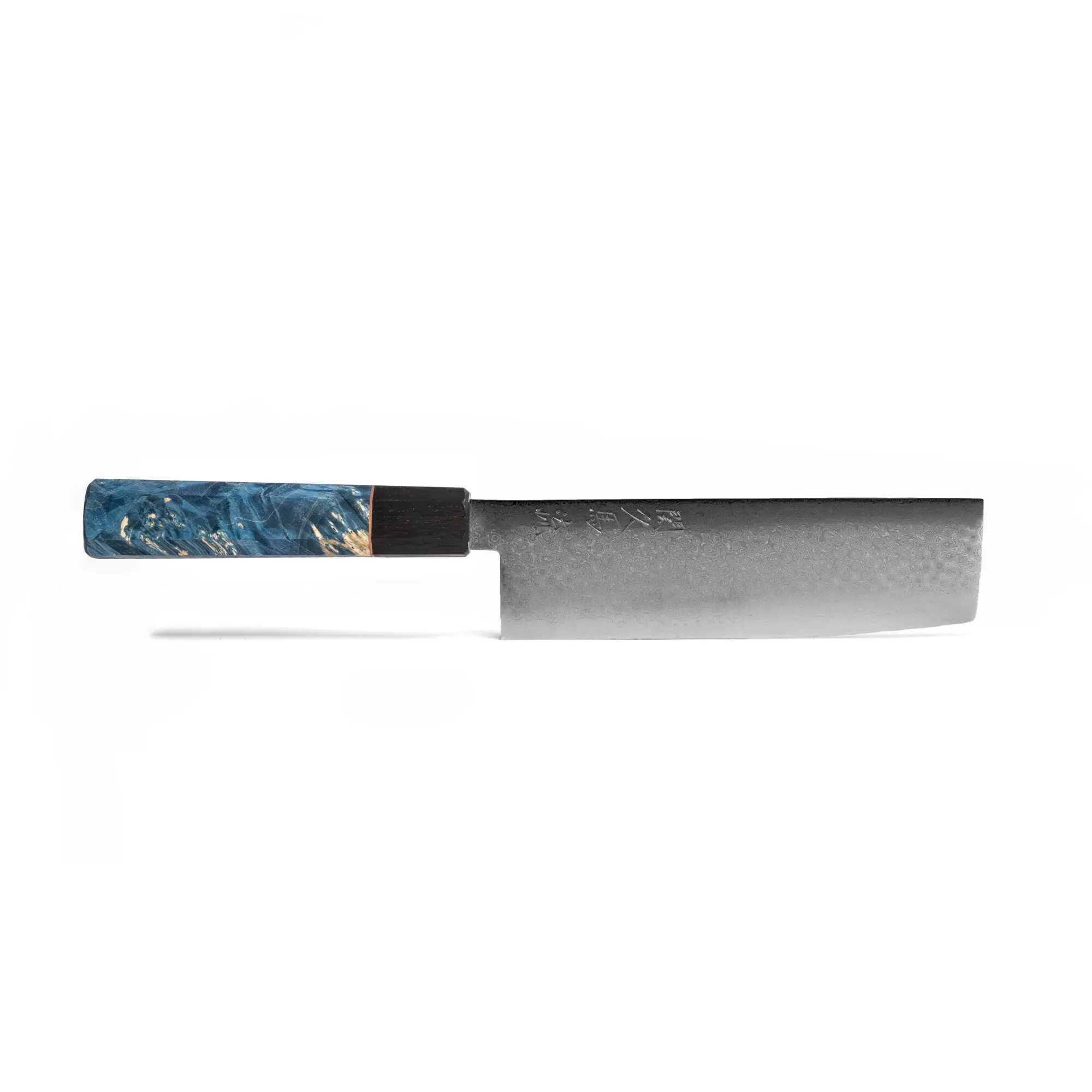
BrowseNakiri
A flat, square blade made for clean straight-down cuts through vegetables.
BrowseFilleting
A flexible, narrow blade for working close to bone and skin. For cooks who break down their own fish.
BrowseBread
A long single-steel blade with a patient edge for crust and crumb. Our PAN line.
BrowseSets
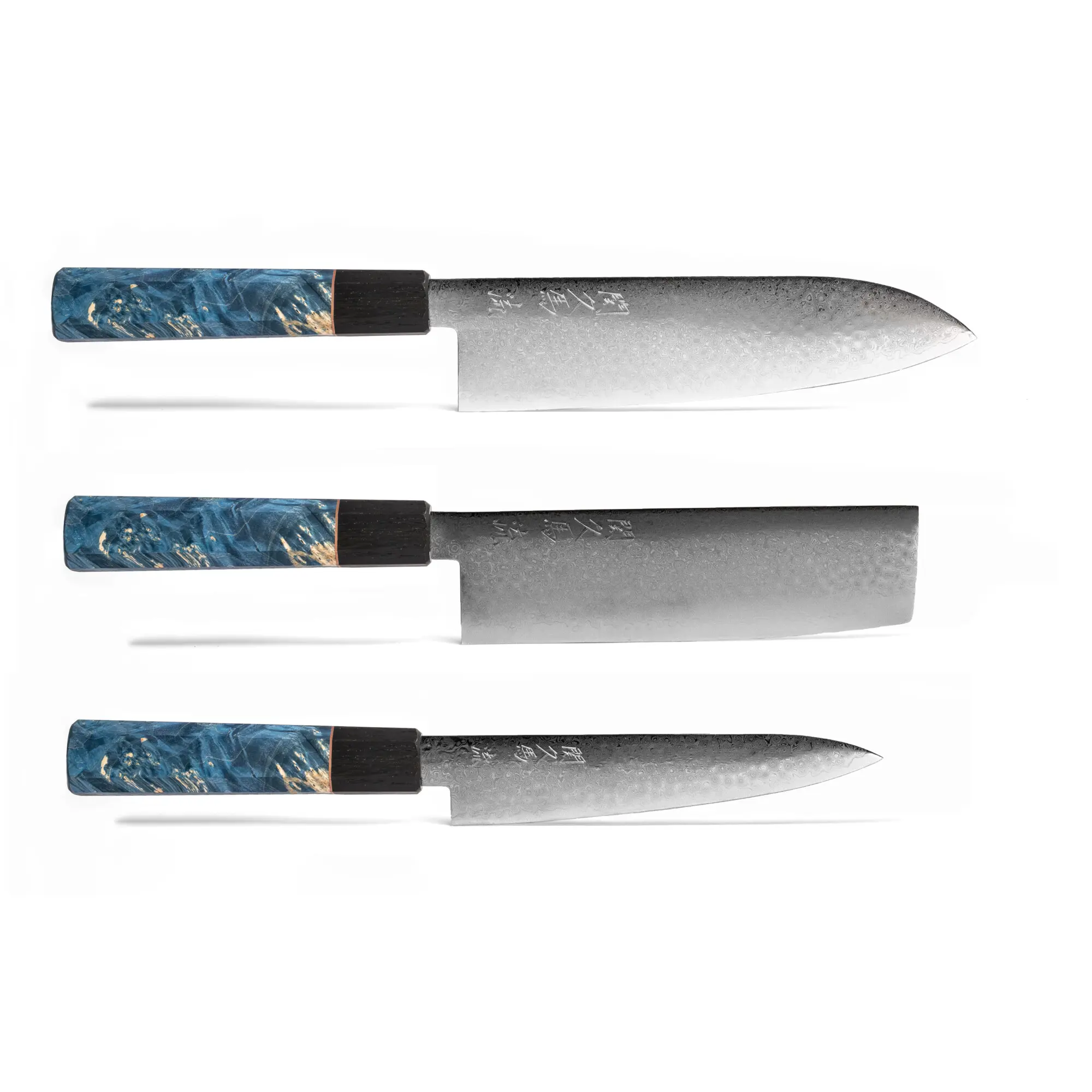
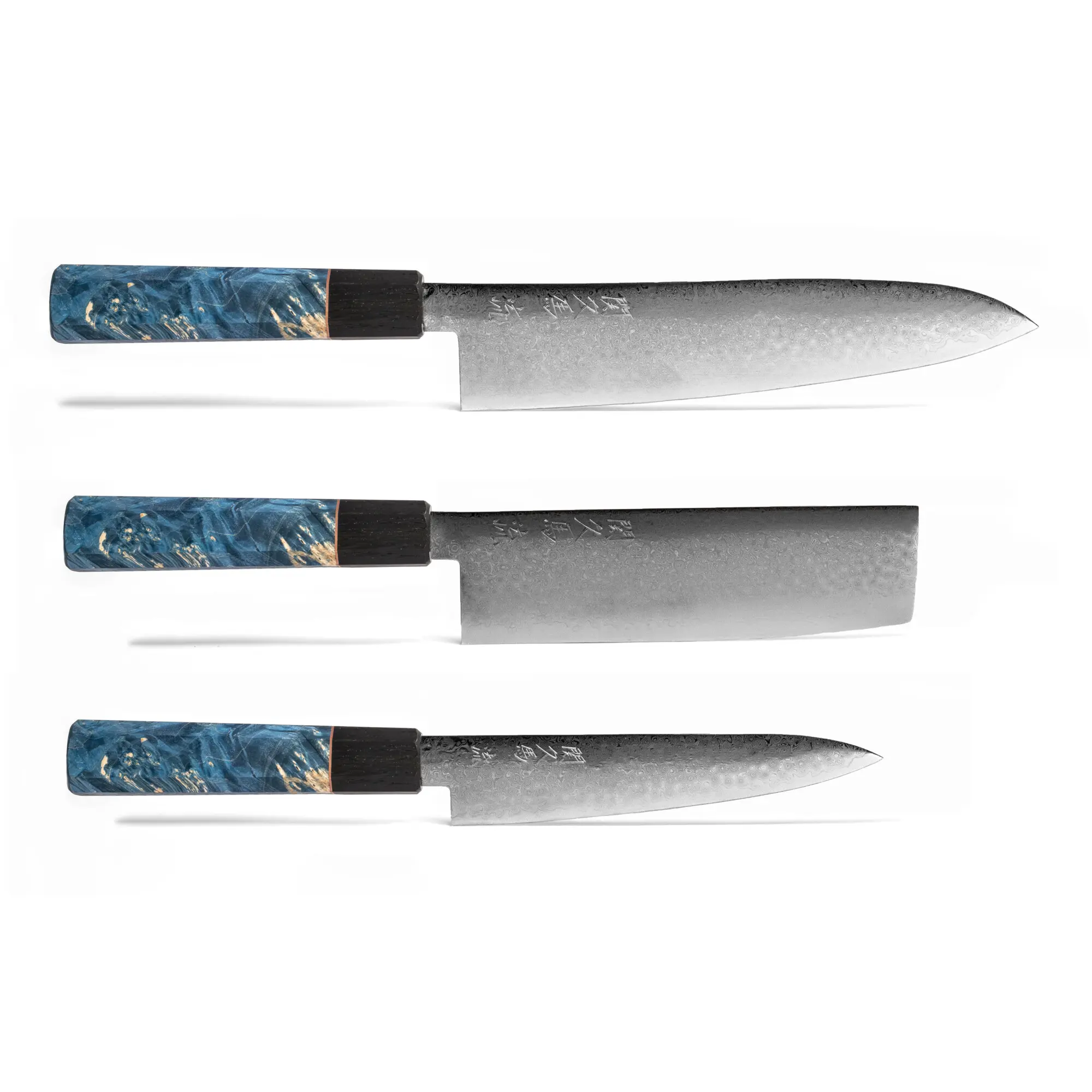
Three knives from one line, matched and boxed together. Available in KYU, KATA and RYU.
BrowseThe system
Six lines. One philosophy.
Each line is built around a specific steel and a specific feel in the hand. Open a line to choose the knife type and your handle colour.

Sakai Kyuba KYU
from $362AUS10 · 46-layer Damascus · HRC 62
The flagship, forged in Sakai. The blade you reach for when the meal matters most.

Seki Kyuba KATA
from $348VG10 · 3-layer · HRC 60–62
The everyday knife. Refined geometry, forgiving edge. Where most home cooks start.

Seki Kyuba RYU
from $376VG10 · 33-layer Damascus · HRC 62
The all-rounder. Versatile geometry, built into sets that grow a whole kitchen.

Seki Kyuba NIJI
from $44637-layer steel, brass & copper · HRC 62–63
The rainbow blade. A pattern that belongs to no other line we make.

Seki Kyuba SHIN
from $460SG2 powder steel · 31-layer Damascus · HRC 63–64
The pinnacle. The hardest, longest-holding edge we make, for cooks who want the tool to disappear.

Seki Kyuba PAN
from $2651K6 single steel · HRC 59–60
The bread knife. A long, patient edge for crust and crumb alike.

The flagship · Sakai Kyuba KYU
The blade you reach for when the meal matters most.
Forged in Sakai by hands that have shaped knives the same way for four generations. AUS10 steel, 46-layer Damascus, HRC 62. Three handle finishes.
Build a kitchen
Knife sets
Three knives from one line, matched and boxed together. Available in KYU, KATA and RYU. Each line offers two compositions.

KATA sets
from $348The everyday set. VG10 3-layer, where most cooks start. Two compositions: Bunka · Nakiri · Petty, or Santoku · Nakiri · Petty.

RYU sets
from $376The all-rounder. 33-layer Damascus, versatile geometry. Two compositions: Santoku · Nakiri · Petty, or Gyuto · Nakiri · Petty.
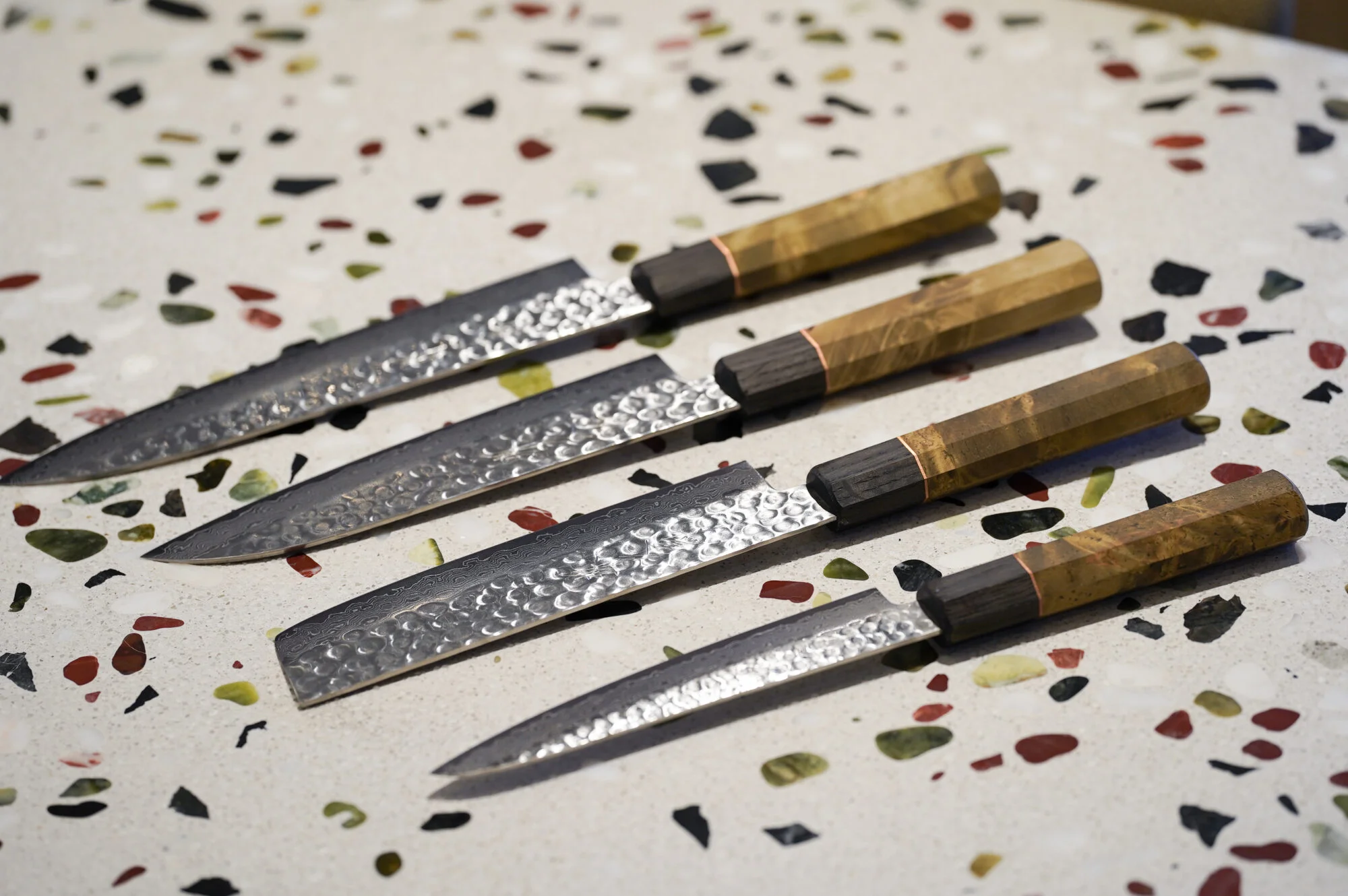
KYU sets
from $362The flagship. Sakai-forged AUS10, 46-layer Damascus. Two compositions: Santoku · Nakiri · Petty, or Gyuto · Nakiri · Petty.
Around the knife
Things worth owning beside it.
A fine knife asks for a few good things: a stone to bring the edge back, a board that's kind to it, somewhere safe to keep it, and the pieces that carry the food to the table.
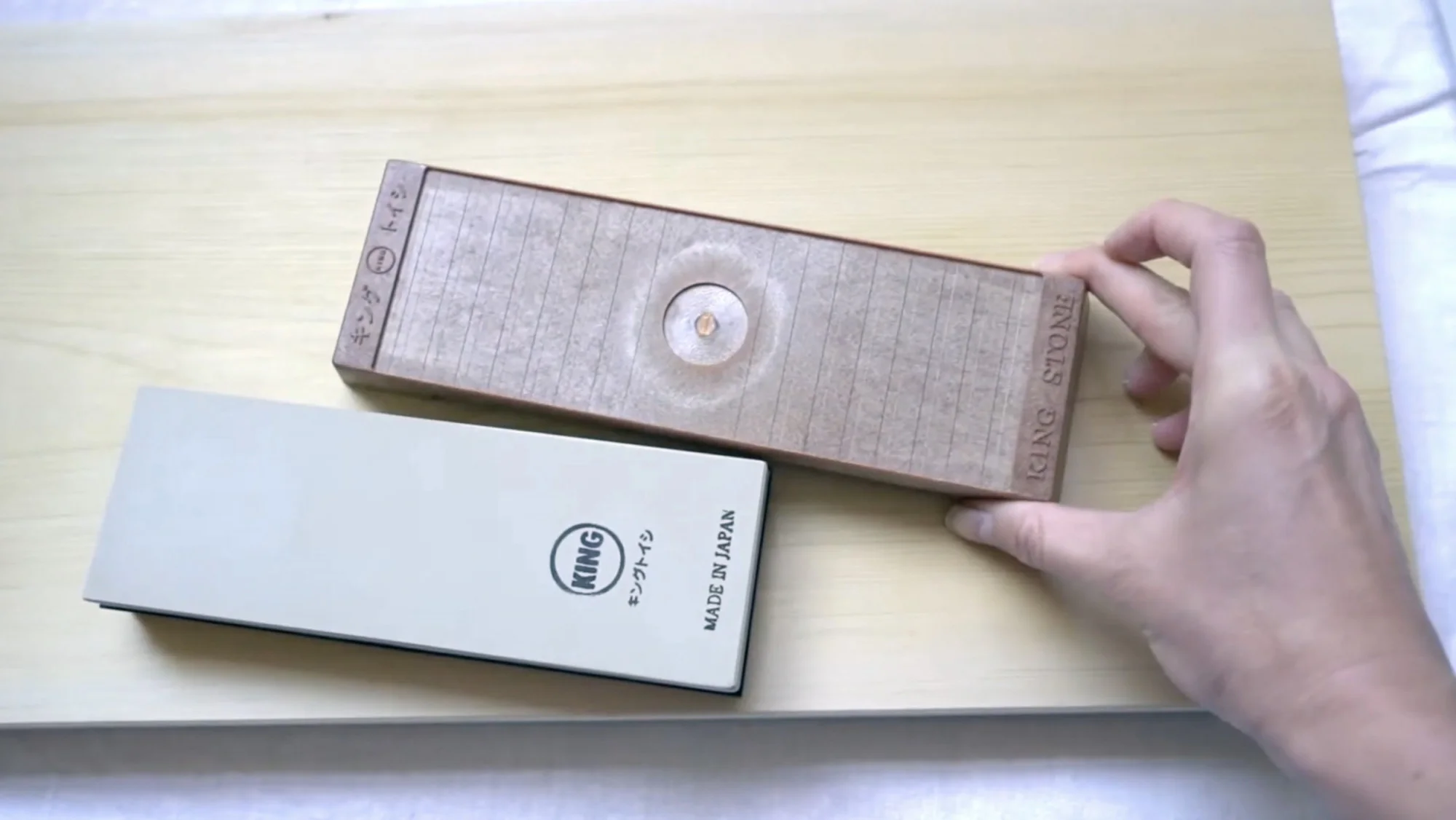
Sharpening stones
King Japanese whetstones from 1000 to 6000 grit, the proper way to bring a Japanese edge back. Learn the method in Knife School.
Explore →
Cutting boards
Aomori hiba and walnut boards, chosen for a wood that cushions the edge instead of fighting it.
Explore →
Magnetic stands & racks
Wall racks and stand blocks in oak or walnut with copper, brass or steel, plus utensil holders and trays. Somewhere to keep the edge safe and on show.
Explore →
Tableware
Kintsugi fine bone china and signature brass chopsticks, for carrying the food the knife prepared.
Explore →
Table linen
Stonewashed linen tea towels and aprons in natural or off-black, softening with every wash.
Explore →Start with the knife
The rest can wait. Find the blade that fits your hands first, and build around it.
Find your knifeWhy Choose Japanese Knives Over Western Knives
Pick up a Japanese chef’s knife after years of a Western one and the difference lands straight away — and it has nothing to do with looks. It comes from a different idea of what a blade is for.
Harder steel, sharper edges. Japanese blades run 58–63 HRC against 54–58 for most Western knives. Harder steel takes a finer angle — 12–15° a side rather than 20° or more — so it parts food instead of shoving through it.
Thinner and lighter. That hardness lets the blade be ground thin without buckling, so there’s less metal fighting its way through an onion. Herbs don’t bruise, tomato skin gives without crushing the flesh, and your hand isn’t aching forty minutes into prep.
Purpose-built precision. Western kitchens reach for one do-everything knife; Japanese ones keep a shape for vegetables, a shape for fish, a shape for fine slicing. Each does its own job better than a single blade ever could.
Better edge retention. Hard steel holds its edge longer, so you sharpen less and cook more. When it is finally time, the right whetstone grit brings it back in minutes.
Types of Japanese Knives
Gyuto — The Japanese Chef Knife
The gyuto is the one most people start with and the one most cooks keep reaching for. It's Japan's answer to the Western chef's knife — a gently curved blade that moves happily between meat, fish and vegetables. In 21cm for a home board or 24cm if you cook big, it carries the bulk of the work.
Santoku — The Three Virtues
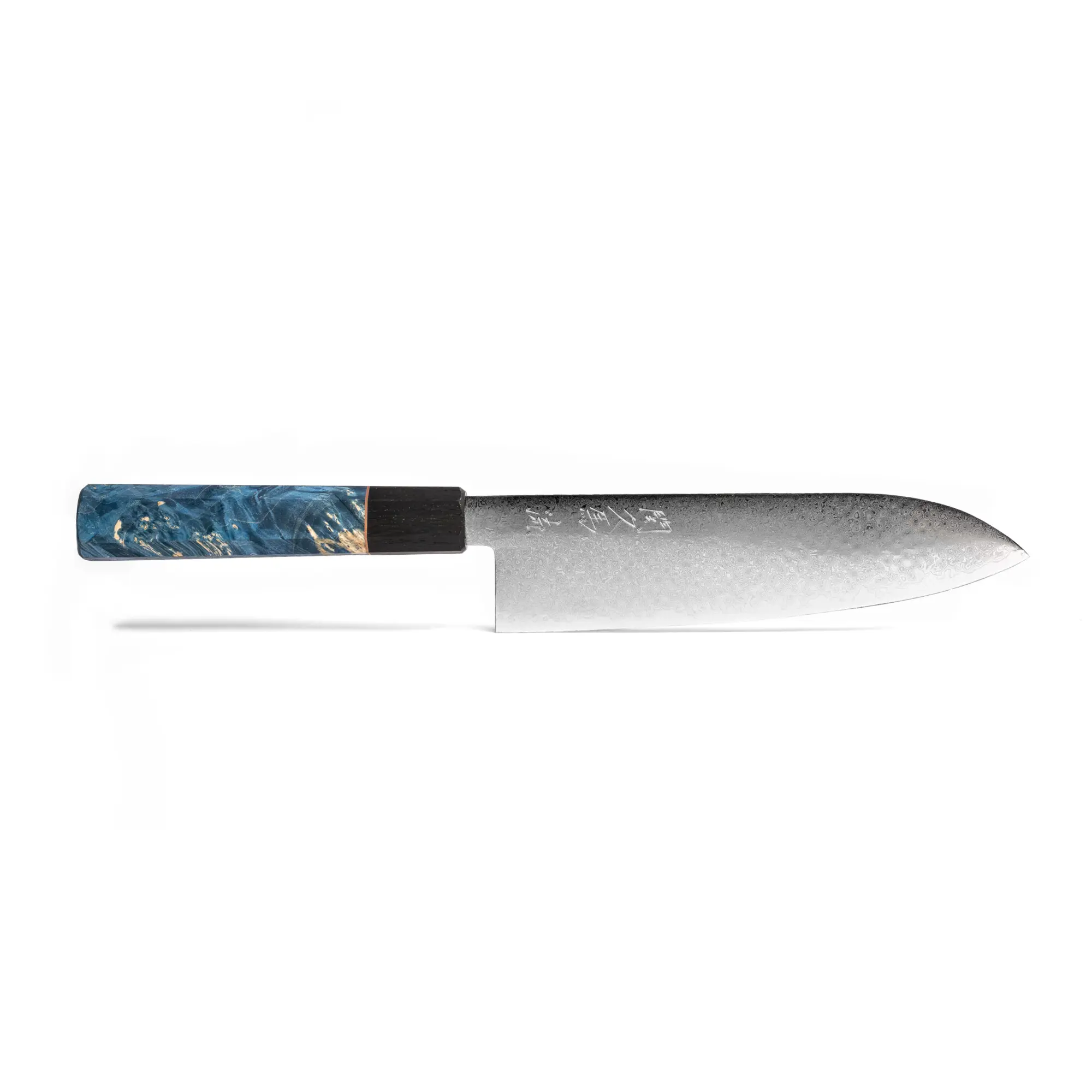
Santoku means “three virtues”: slicing, dicing and mincing. It's shorter and flatter than a gyuto, which is exactly why cooks who find long blades unwieldy reach for it. Compact, nimble and a genuine all-rounder in a smaller kitchen.
Nakiri — The Vegetable Specialist
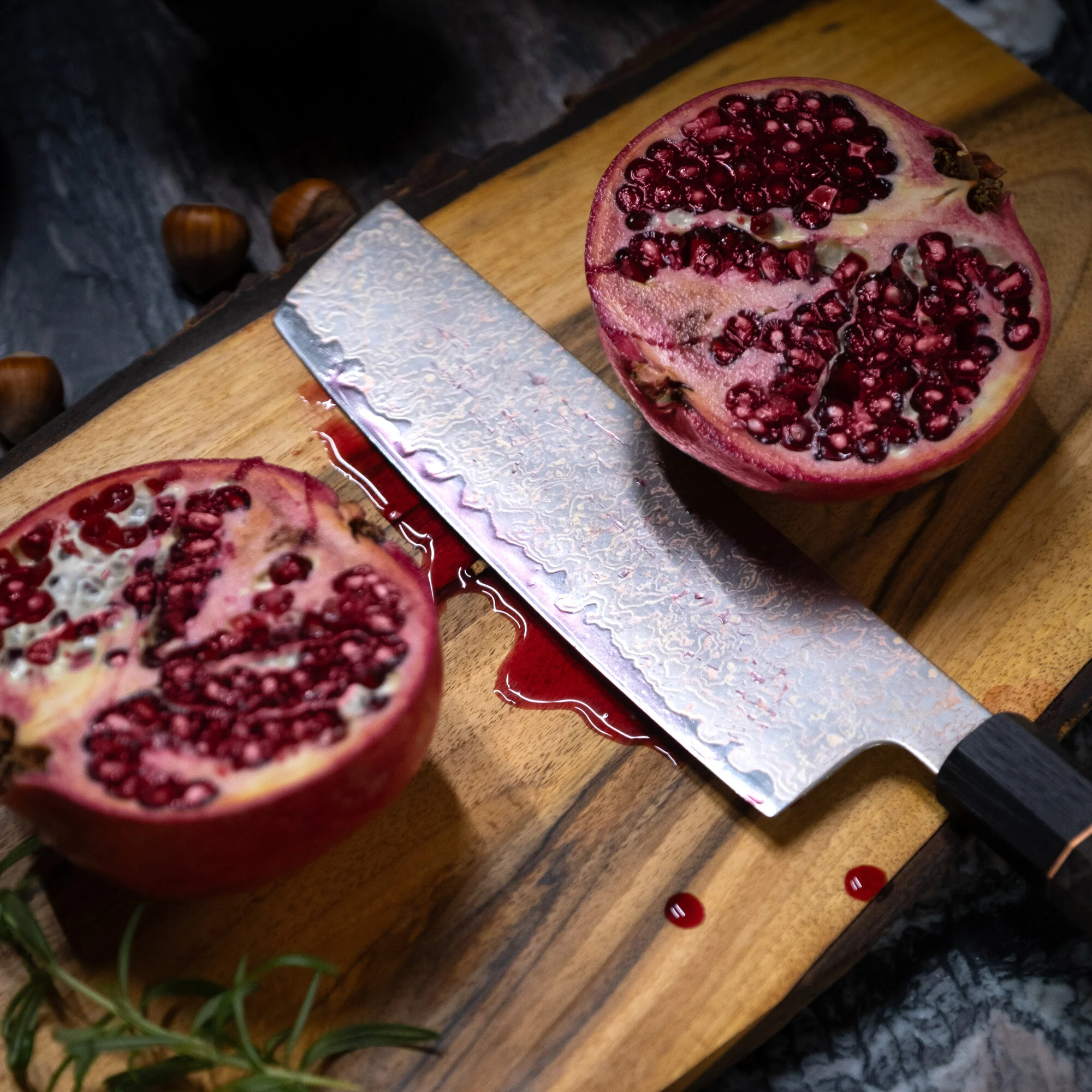
The nakiri is a flat, rectangular blade made for one thing: vegetables. Its straight edge meets the board along its whole length in a single downward push — no rocking, no half-cut celery hanging on. Cook a lot of plants and it quietly changes your prep.
Bunka — The Versatile Workhorse
Think of the bunka as a santoku with a sharp, angled reverse-tanto tip. You get the broad, flat belly for everyday chopping plus a fine point for scoring, detail work and anything that needs the tip to do the talking.
Kiritsuke — The Statement Blade
Long like a gyuto, flat like a nakiri, finished with that sword-like angled tip — the kiritsuke was traditionally the head chef's knife, and it still asks a little skill of you. Give it that and it slices long and preps vegetables with equal confidence.
Petty — The Precision Tool
The petty is the small knife you'll use more than you expect — peeling, trimming, deveining, breaking down a shallot. It takes on every fiddly job a full-size blade makes awkward, and does it better than any Western paring knife.
How to Choose Your First Japanese Knife
Choosing the best Japanese knife for you is simpler than the options make it look.
Start with one blade that does most jobs. A 21cm gyuto or a santoku will handle 80–90% of what you cook. Add the specialists later.
Match it to what’s on your board. Mostly vegetables? A nakiri earns its keep fast. Lots of meat and fish? The gyuto’s length and curve win. A bit of everything? The santoku.
Decide how much fuss you want. Carbon steel (our KYU line) takes a keener edge and grows character, but wants drying after use. Stainless (our KATA line) asks almost nothing of you. Neither is “better” — it’s your routine.
You’re not paying the usual markup. Buying straight from the forge is why these sit well below the price of comparable Japanese knives on the high street. For the long version, see our complete guide to buying your first Japanese knife.
Buying as a gift
Every knife arrives in a handcrafted oak box with a hanko stamp and a 5 yen coin. The coin answers the old superstition about gifting blades: the receiver pays it back, the bond stays whole. And five yen said aloud is go-en, which also means connection. Gift message and delivery date at checkout.
Frequently Asked Questions
What makes Japanese knives different from Western knives?
Which Japanese knife should I buy first?
How do I care for and sharpen my Japanese knife?
Are your knives actually made in Japan?
Do you offer a money-back guarantee?
Is a Japanese knife set better value than buying individual knives?
A knife you keep is a knife you care for.
Whetstone sharpening, monthly handle oiling, the few habits that keep an Oishya blade for a lifetime. It’s all in Knife School, free to read.


