

Seki Kyuba
PAN
The bread knife. Hand-forged in Seki for the loaves that deserve a clean slice.
For the loaves you spent four hours making, and the ones you spent forty pounds on.
PAN is the line we built for people who take bread seriously. A bakery sourdough with a crust that crackles. A morning croissant. A challah from the place down the road. The brioche somebody else made for your birthday.
An ordinary bread knife tears bread. The crumb compresses. The crust shatters into the wrong kind of pieces. The slice comes out uneven and the moment is slightly diminished.
This one doesn’t do that. The serrated edge is designed to cut, not to saw. One smooth pass, with the weight of the knife doing the work. Clean crust. Intact crumb. The slice that holds the butter properly.
Walk into the workshop
A serrated edge cut by hand in Seki.
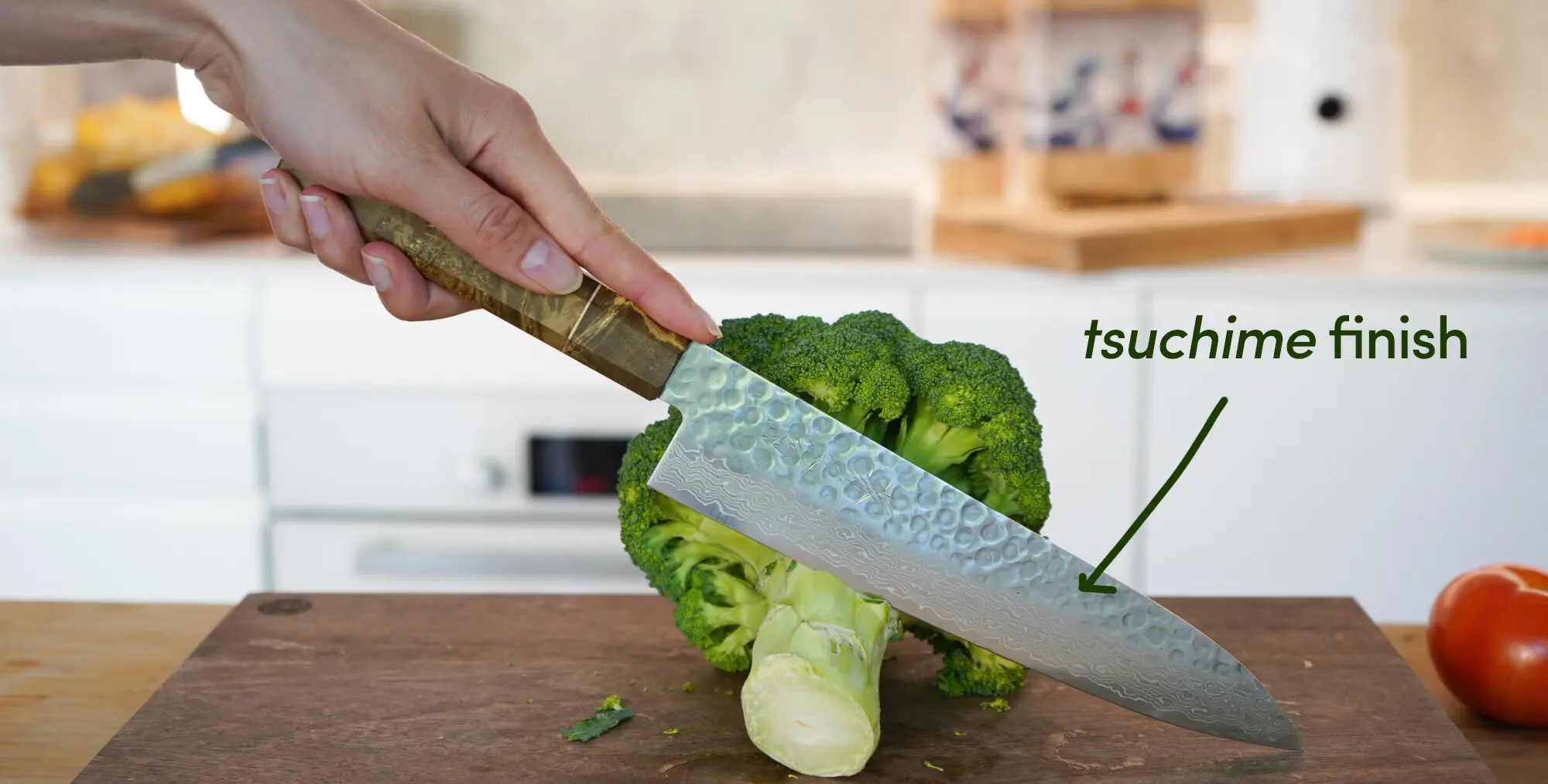


A good serrated knife is harder to make than a smooth-edged one. Every tooth has to be set individually. Done well, it slices a tomato as cleanly as it slices a baguette.
The materials
1K6 carbon-rich steel. The handle that completes every Oishya.
1K6 steel
A carbon-rich Japanese steel chosen specifically for serrated blades. Holds an edge well under the repeated drag of bread cutting. Tougher than a thin chef’s blade because bread knives live differently.

The Oishya handle: maple burl, copper, bog oak
The same construction as every Oishya knife. A stabilised maple burl body. A 5,000-year-old bog oak ferrule, known as the kakumaki. A hand-fitted copper ring between them. Octagonal, balanced, made to sit in the hand the way a knife should.
Shop PAN
One knife. One job. Done properly.

Specifications
What's inside every PAN knife.
Blade
Handle & finish
A note on care
Hand wash and dry immediately. A serrated edge does not need a whetstone. It stays sharp for years. If individual teeth dull, a professional can re-set them. The full method lives in Knife School.
Other lines
If a chef's knife is what you really need.

The everyday line. Most start here. from $343
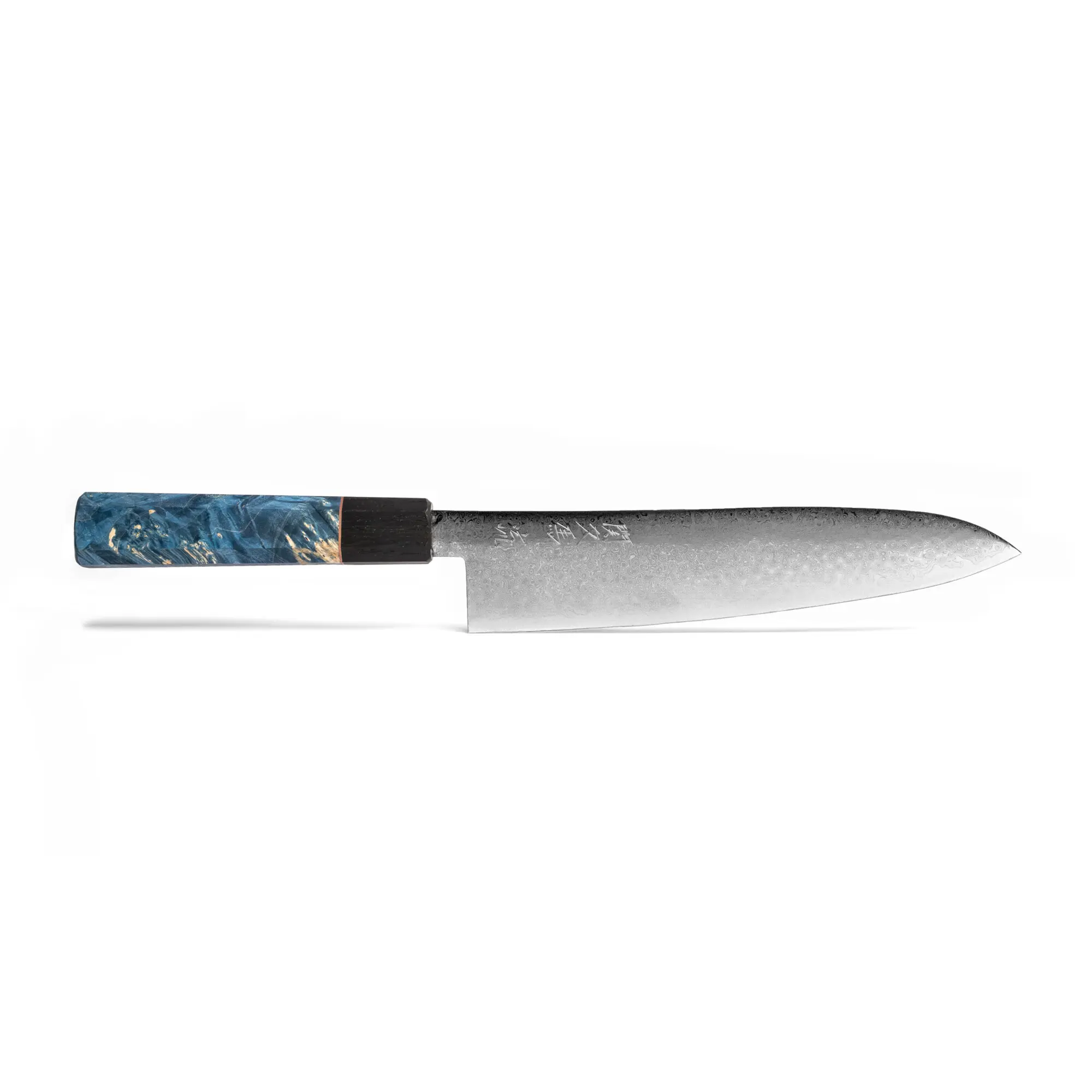
Full Damascus pattern. Available in sets. from $371

The top of the range. SG2/R2 steel. from $453