
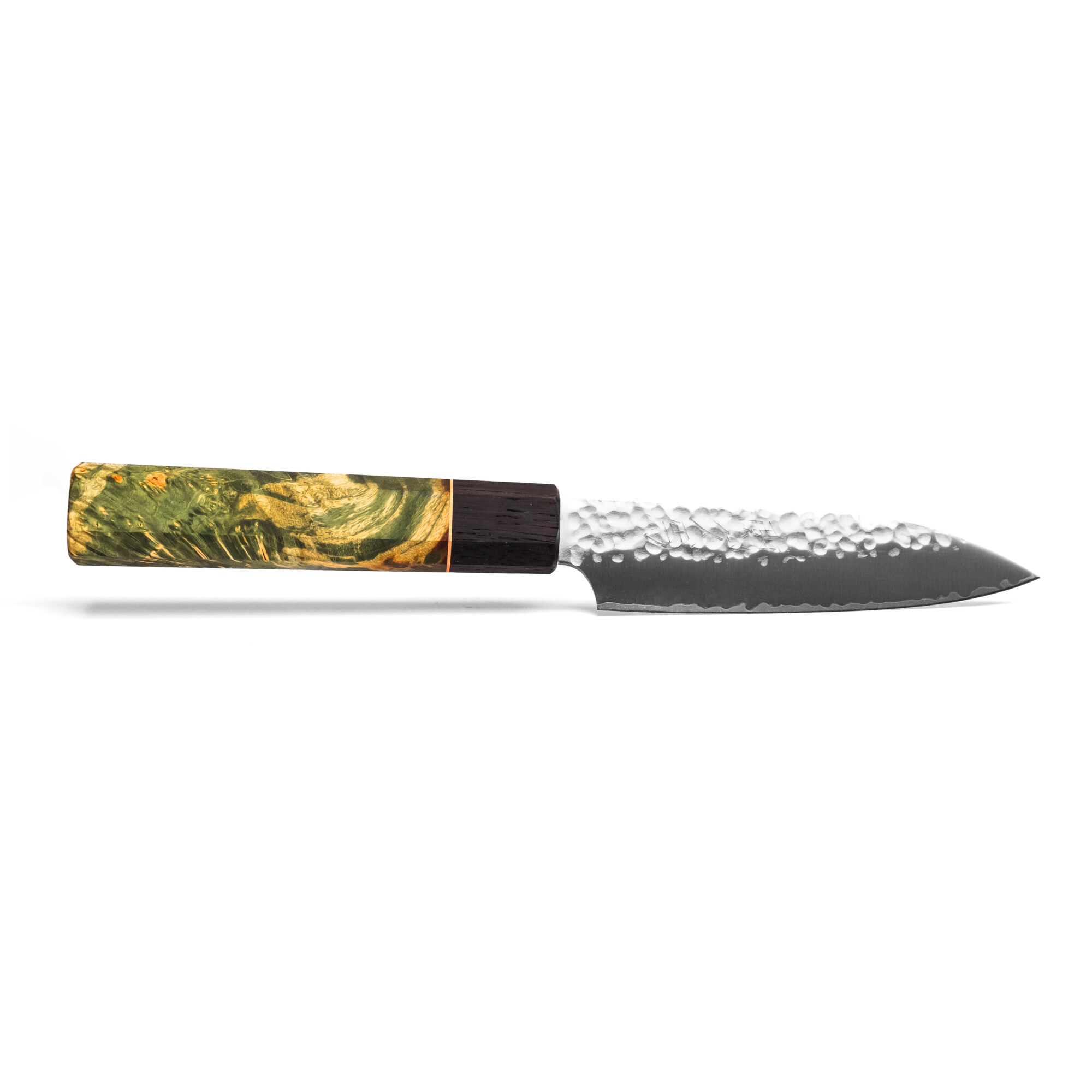


Seki Kyuba KATA Paring Knife Petty 12cm
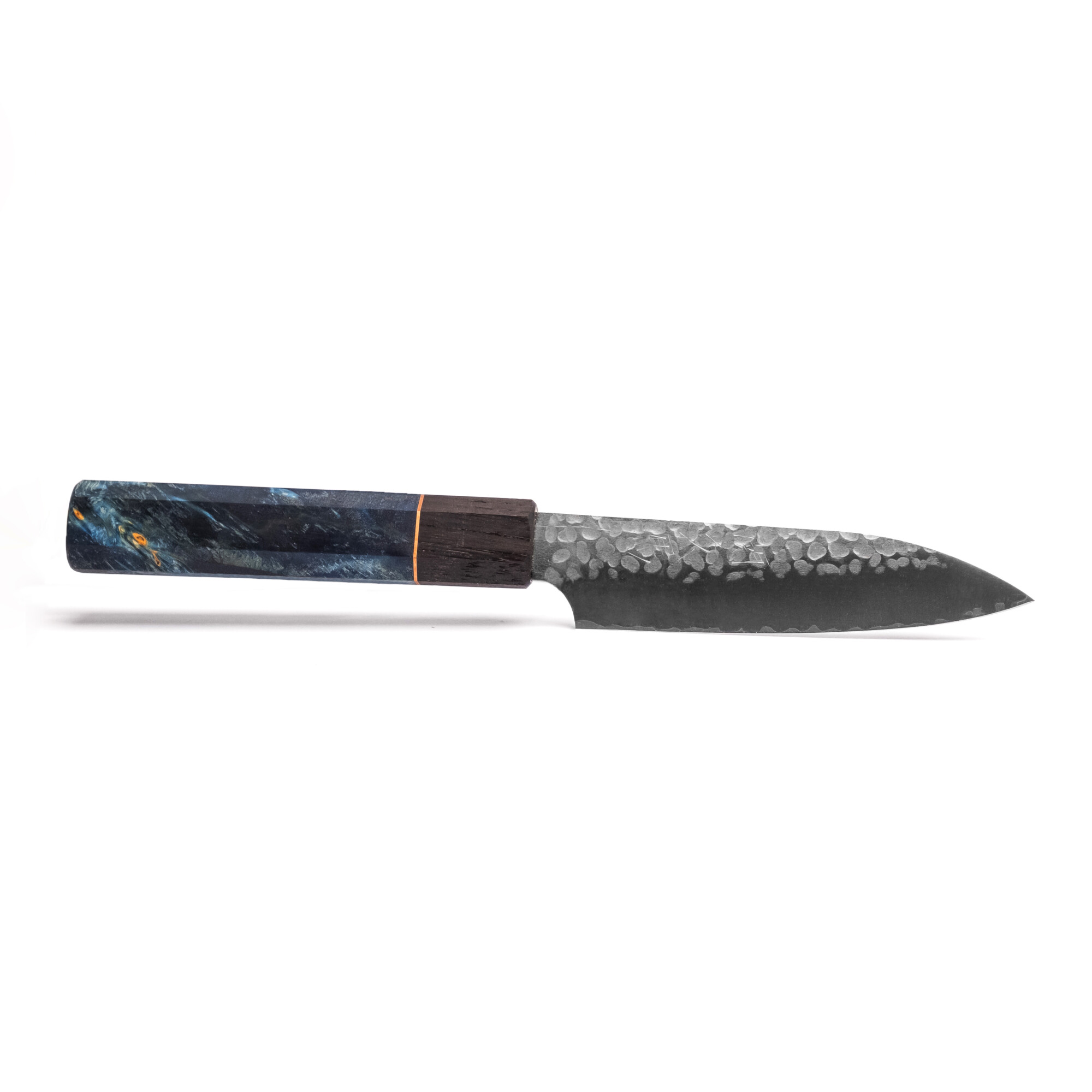
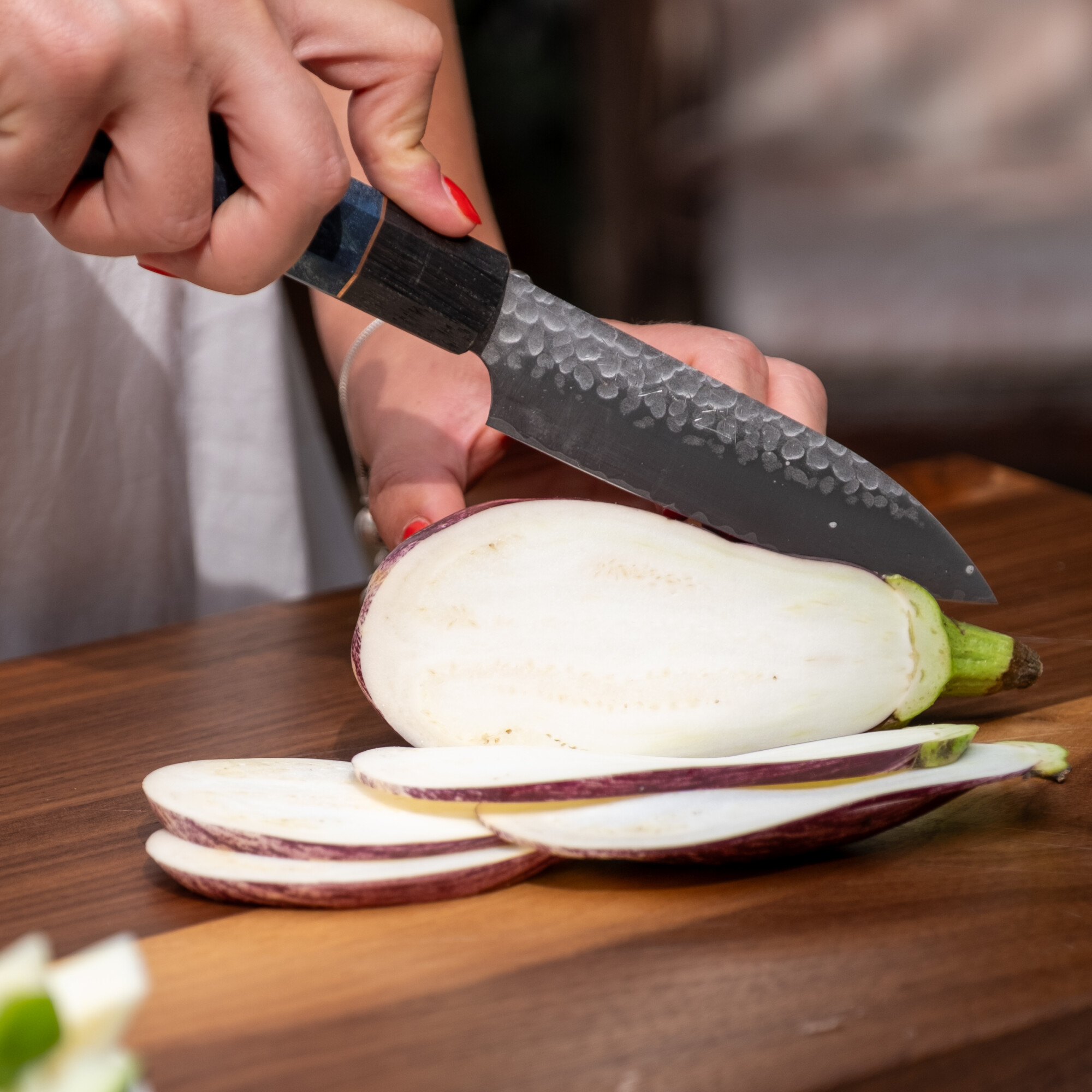
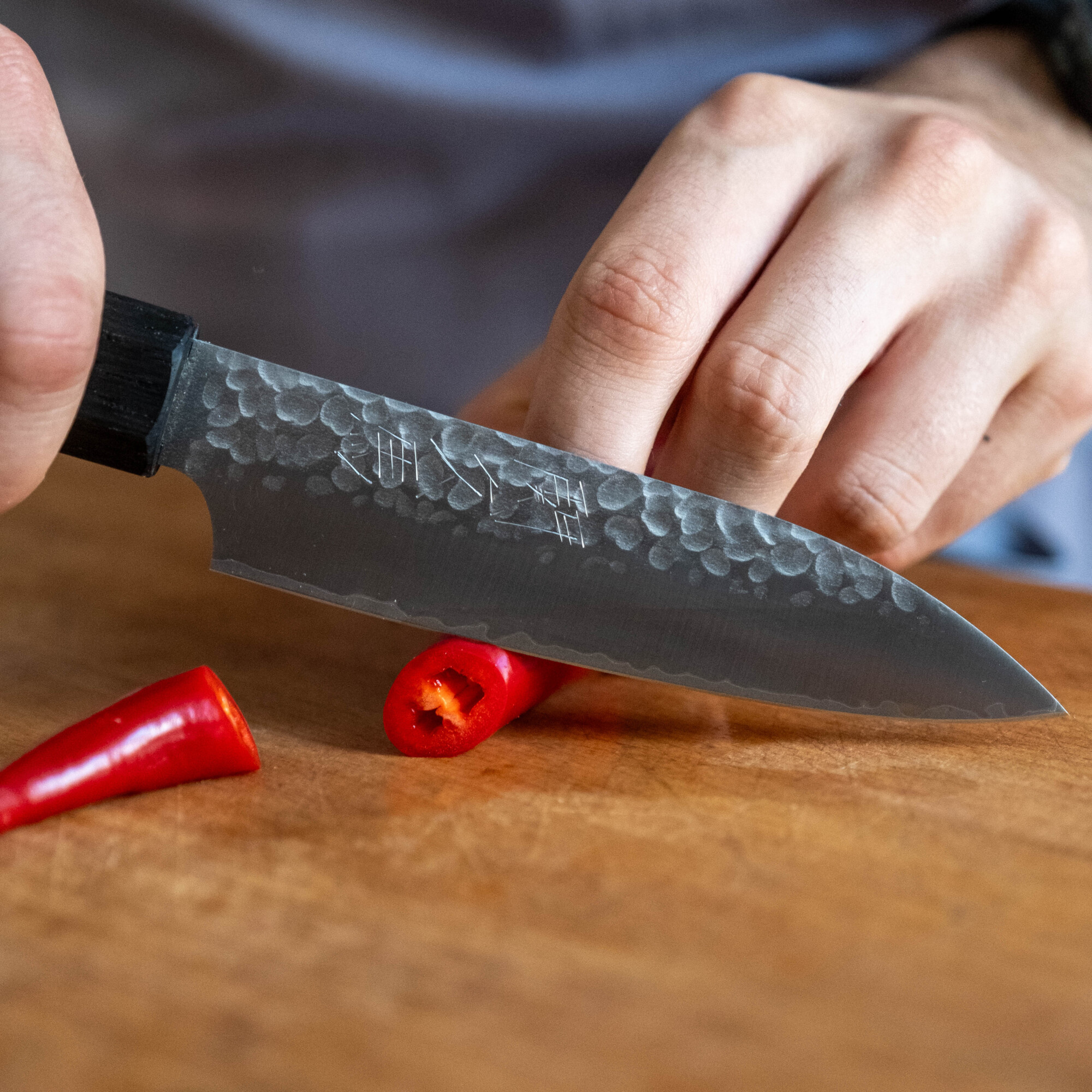
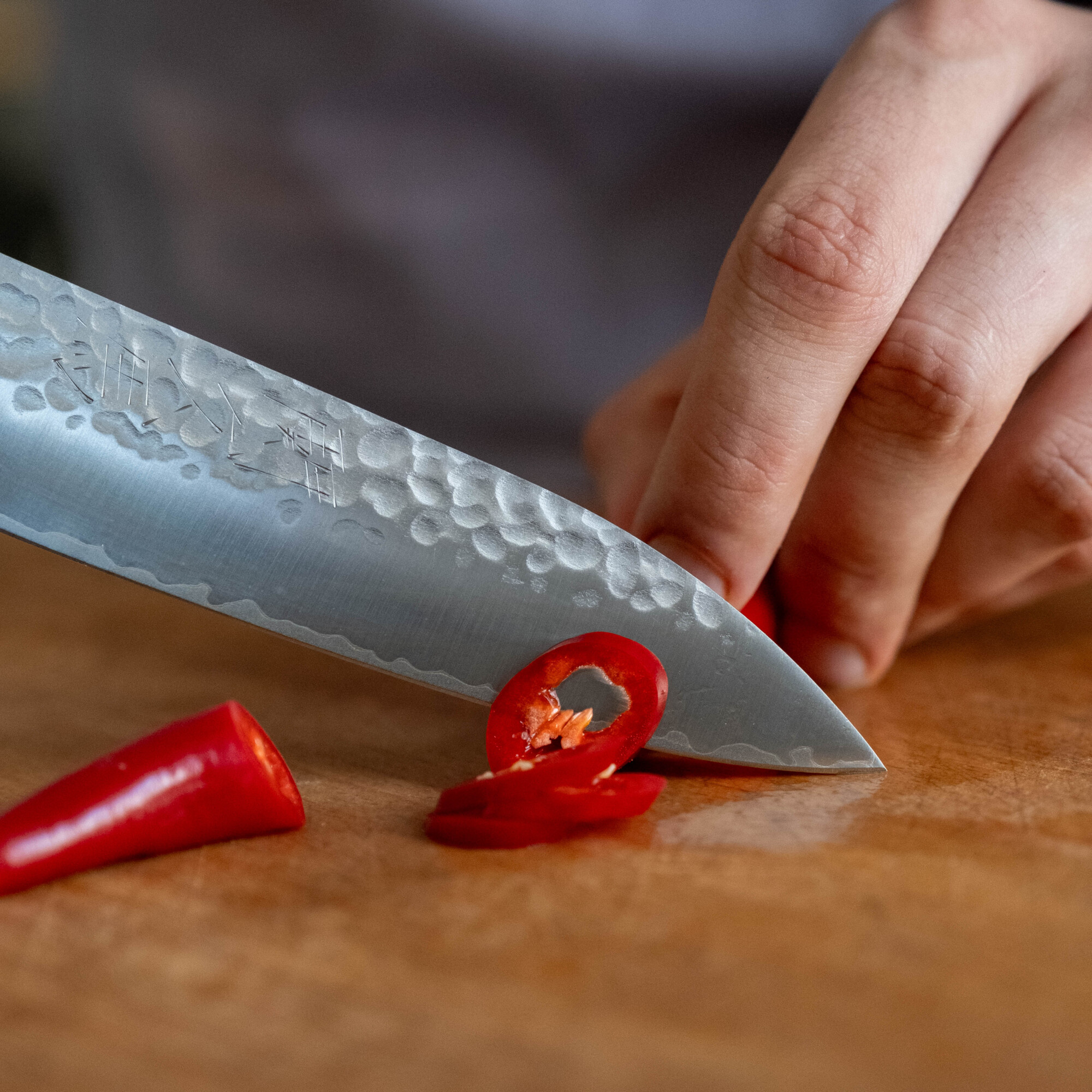
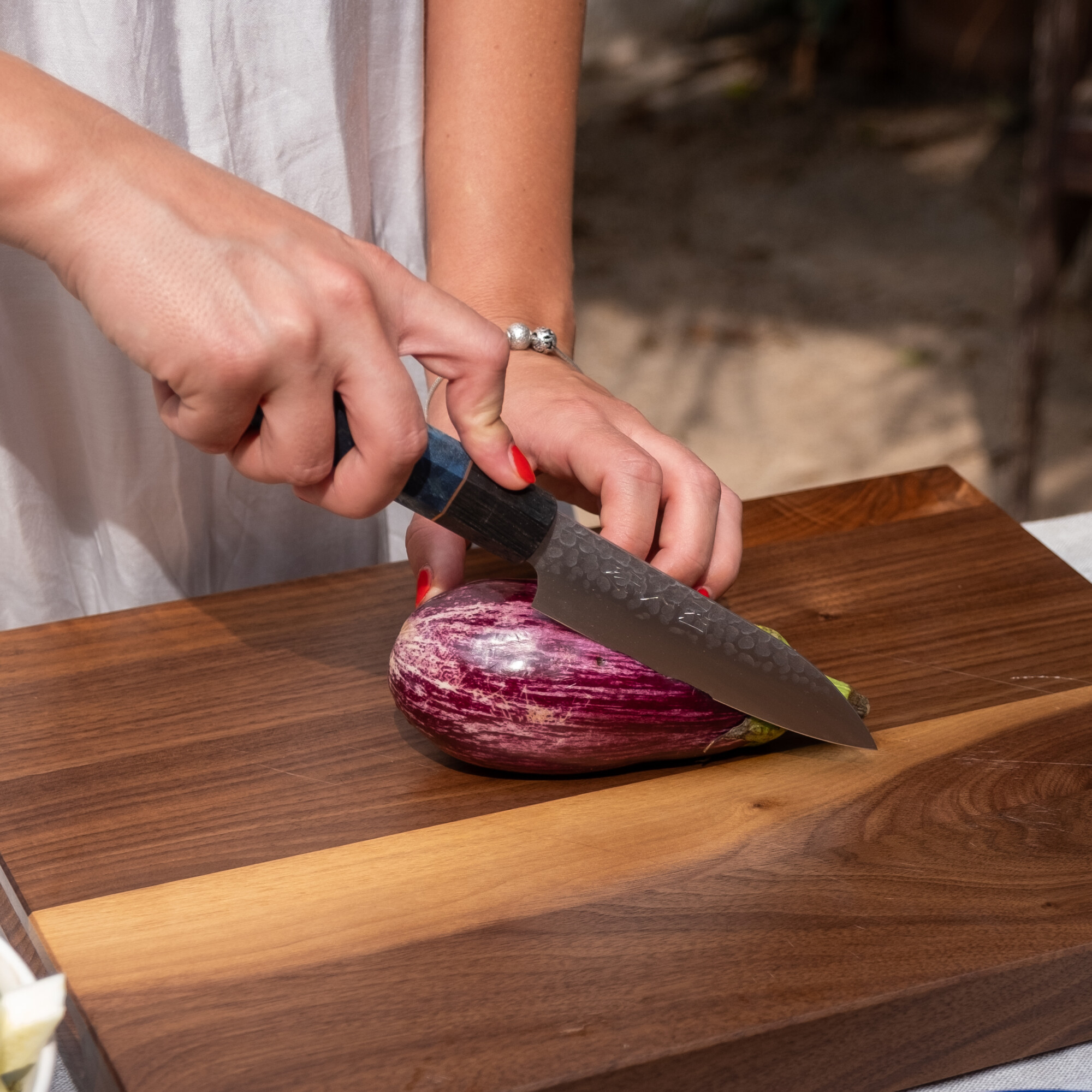
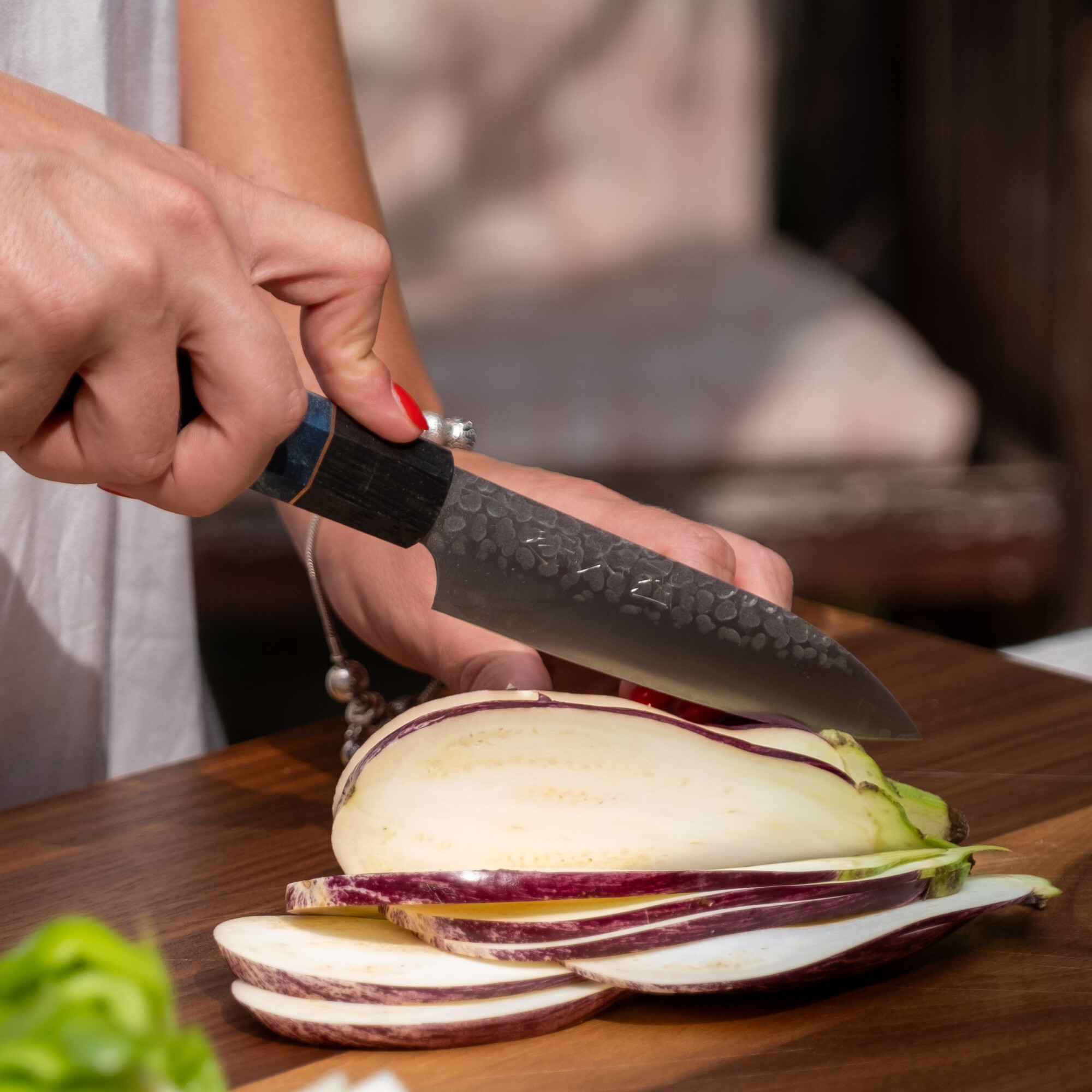
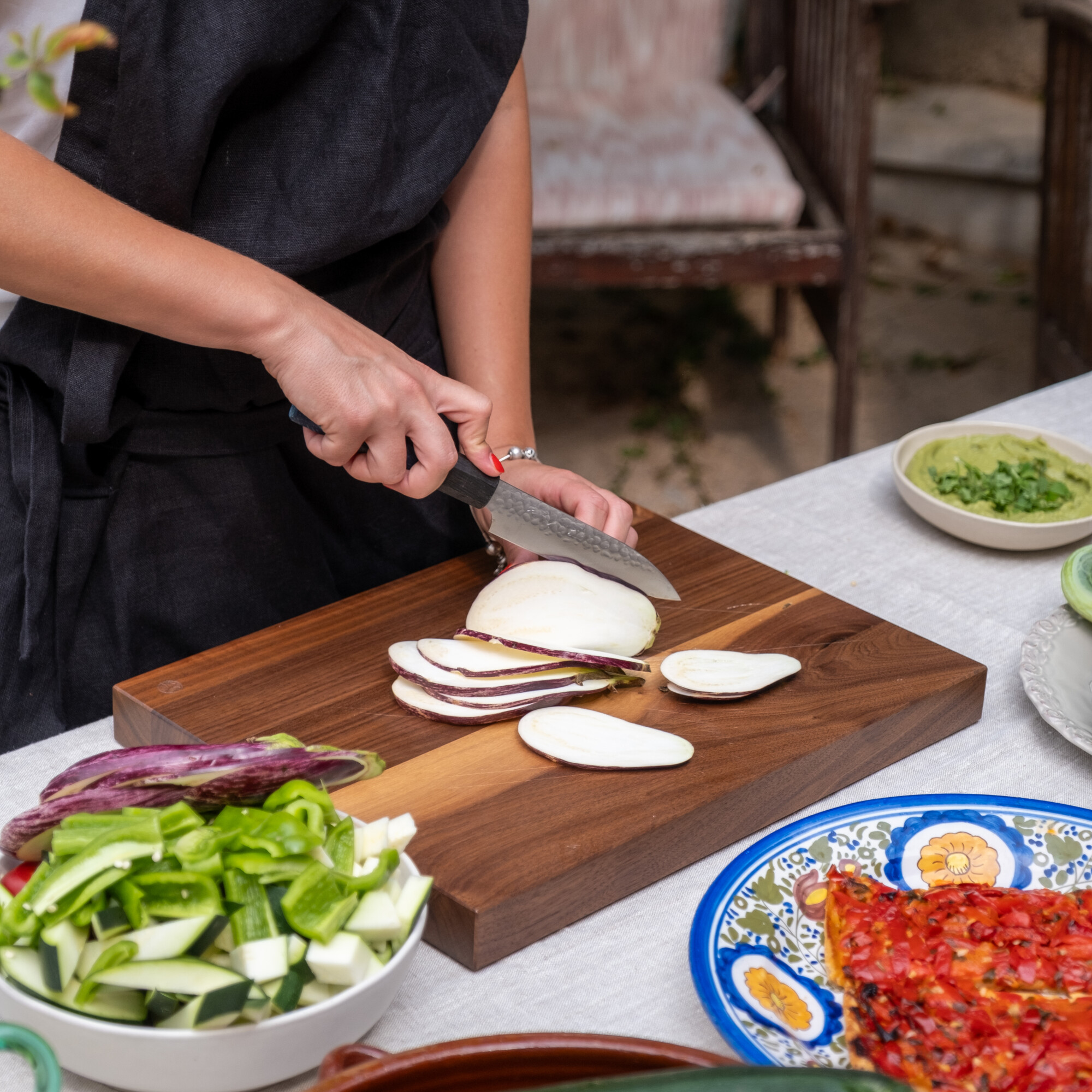
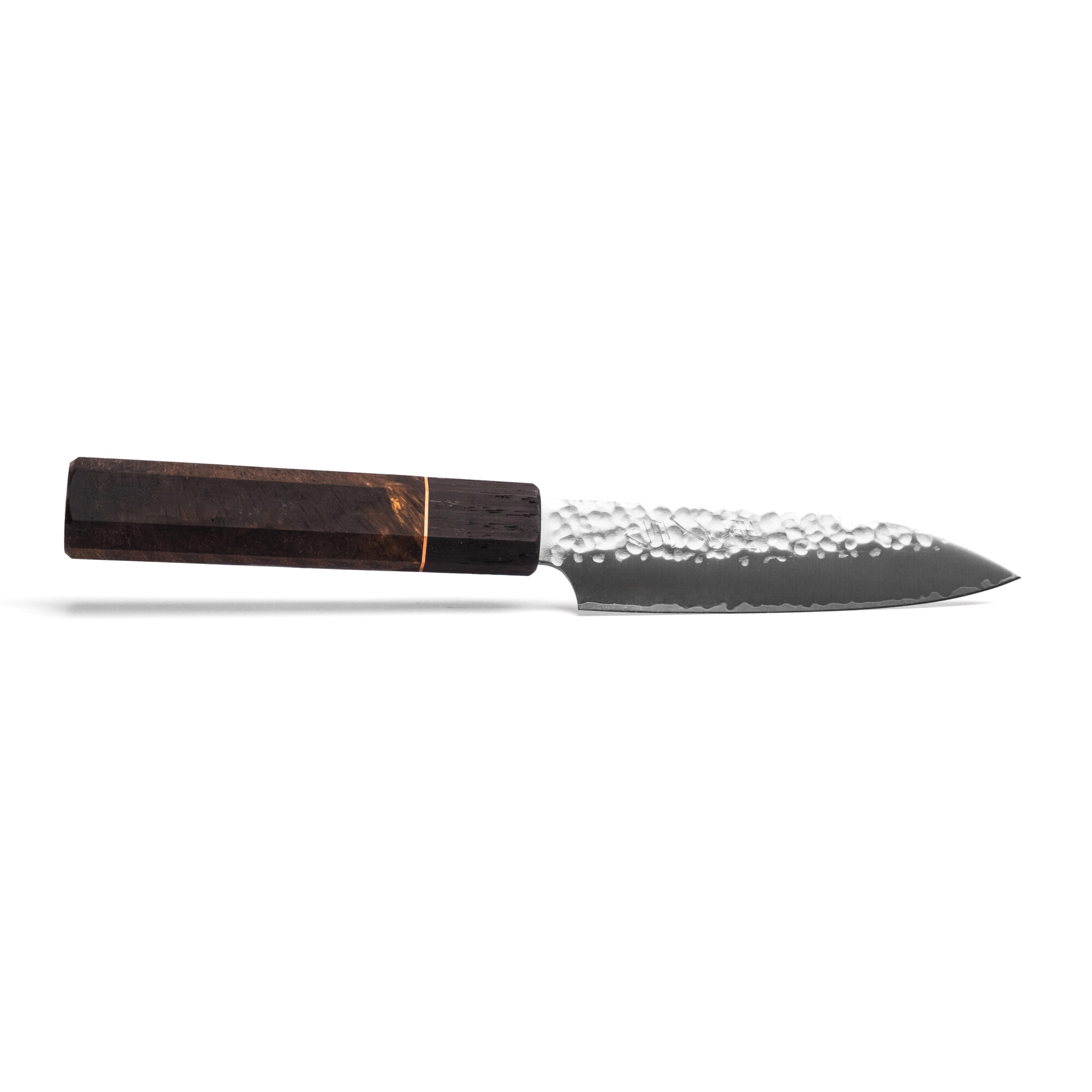
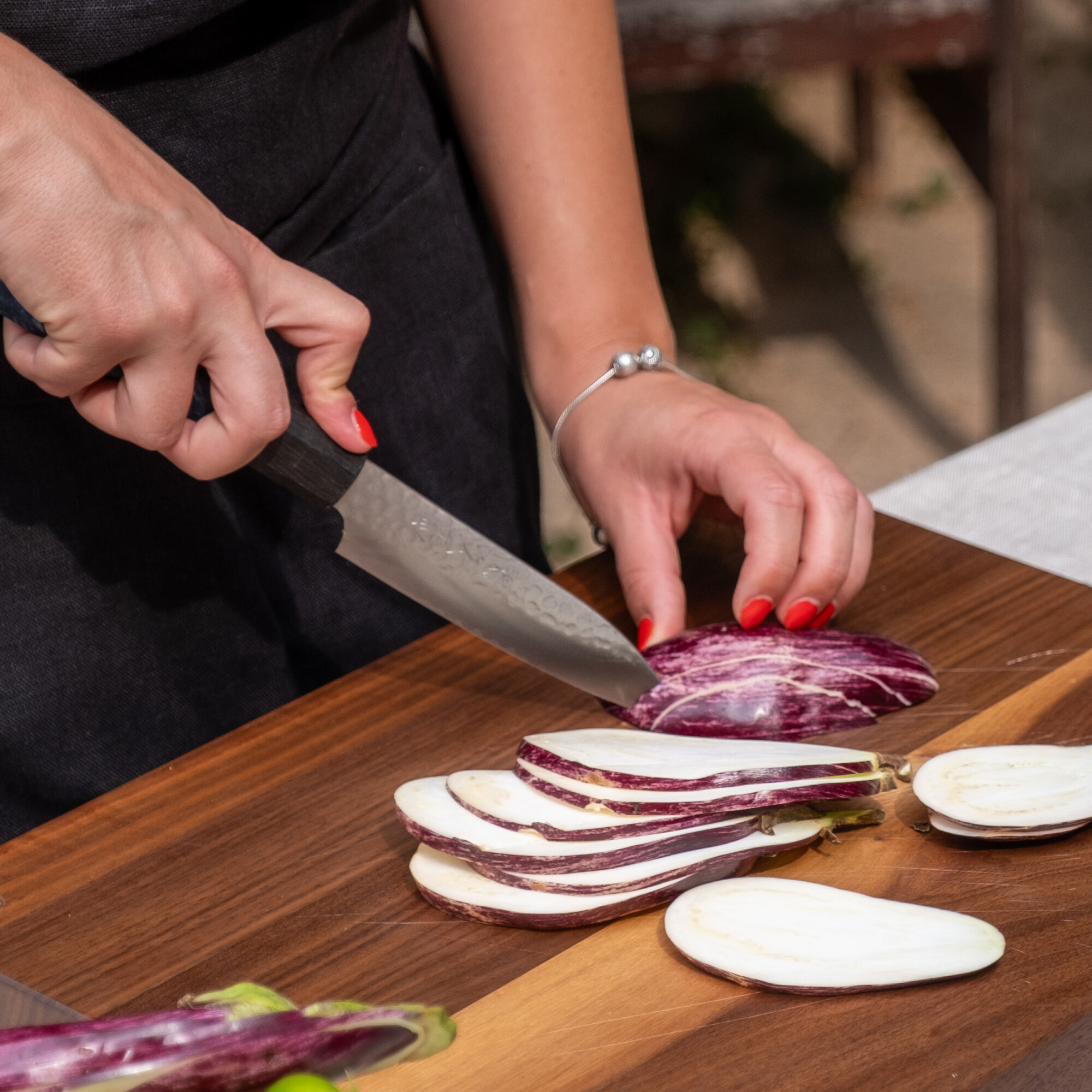
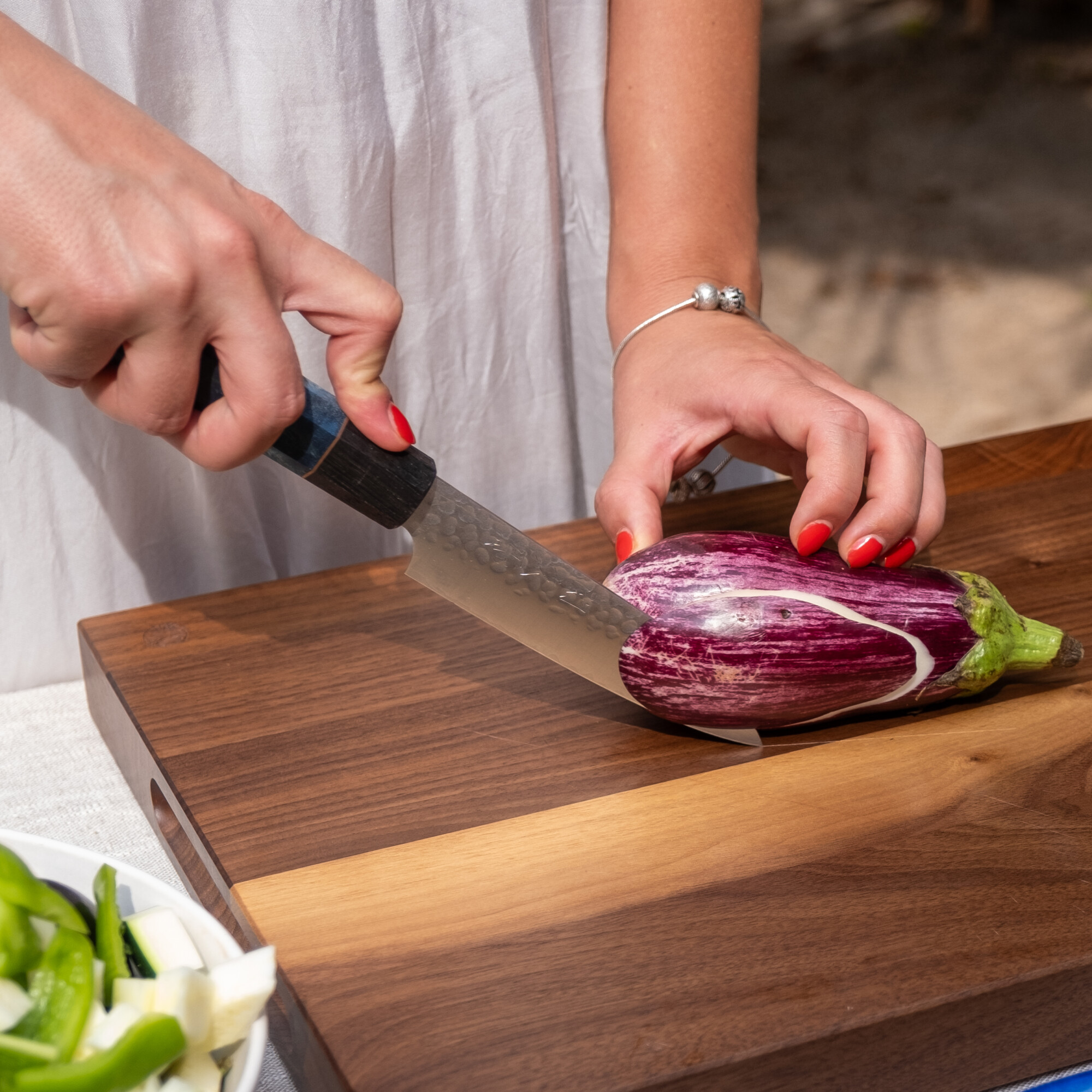
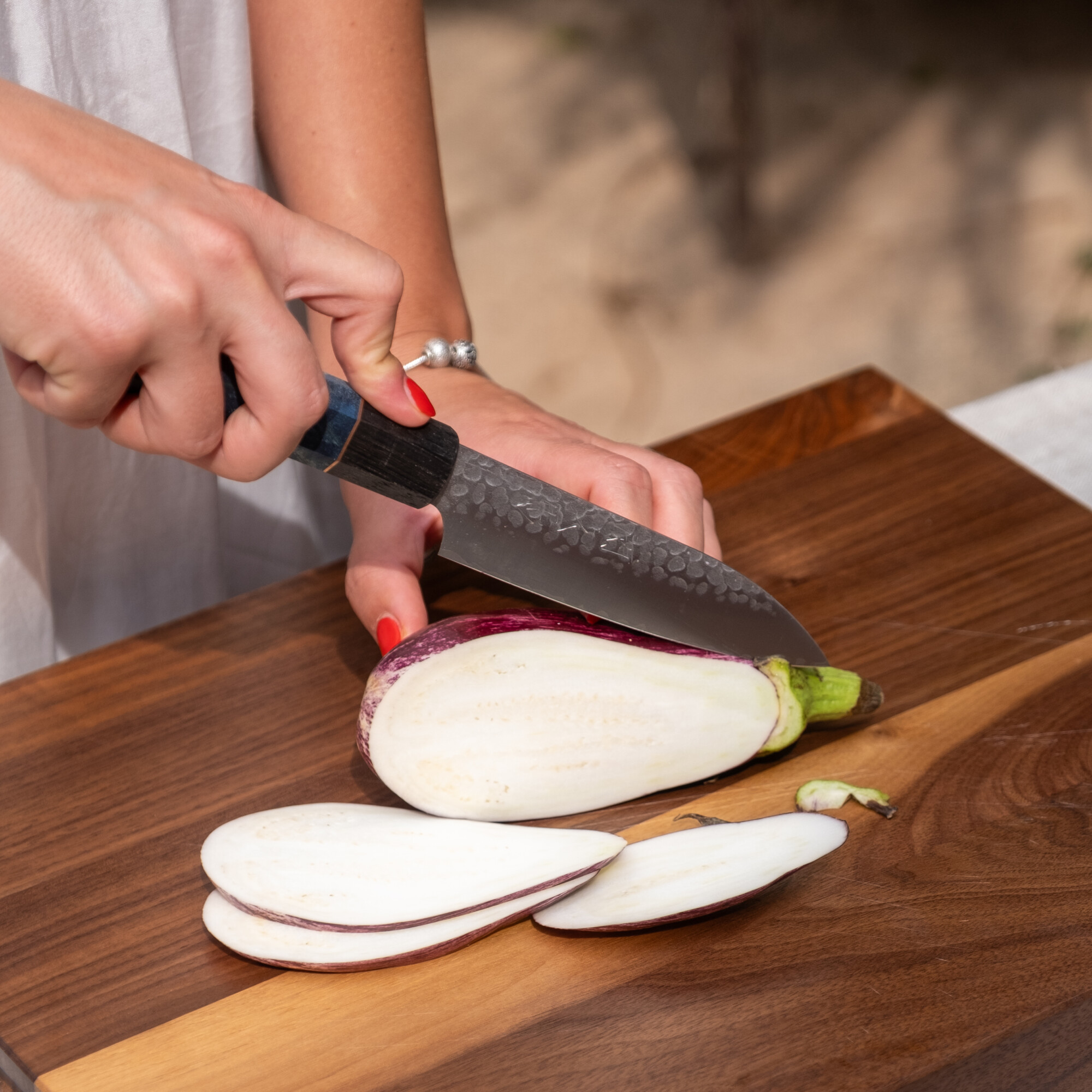
A 12cm Petty: the small, agile knife for the jobs a chef’s knife is too big for: peeling, trimming, garnishes and delicate fruit. VG10 core, 3-layer, HRC 60–61, with a hammered finish that keeps slices from sticking. (‘Petty’ comes from the French petit.)
Buying it as a gift? It arrives in its wooden box, so there is nothing to wrap. Tell us in the order notes at checkout.Ein Geschenk? Das Messer kommt in seiner Holzbox, es muss also nichts verpackt werden. Schreiben Sie es uns einfach in die Bestellnotiz an der Kasse.
- Lifetime guaranteeAgainst manufacturing defects.Lebenslange GarantieGegen Herstellungsfehler.
- 100-day returnsUse it first.100 Tage RückgabeErst ausprobieren.
- Check it on arrivalReport any defect within 24 hours.Bei Ankunft prüfenMängel innerhalb von 24 Stunden melden.
- Free deliveryOver the threshold for your country.Kostenloser VersandAb dem Mindestbestellwert für Ihr Land.
- Lifetime guaranteeEvery knife, every line.Lebenslange GarantieFür jedes Messer, jede Linie.
- 100-day returnsCook with it first.100 Tage RückgabeErst damit kochen.
- Free deliveryOver the threshold for your country.Kostenloser VersandAb dem Mindestbestellwert für Ihr Land.
- Lifetime sharpeningSend it to us; you cover shipping.Lebenslanger SchleifserviceSchicken Sie es uns; Sie tragen nur den Versand.
Details & specificationsDetails & Spezifikationen
In the boxIm Lieferumfang
- The knife, sharpened and ready to use
- The three knives, each sharpened and ready to use
- A hand-finished wooden box
- A hand-finished wooden set box
- A certificate of authenticity carrying our hanko stamp
- A five-yen coin, for the old gift tradition
- Nothing to wrap if it is a gift; tell us in the order notes
- Das Messer, geschärft und einsatzbereit
- Die drei Messer, jedes geschärft und einsatzbereit
- Eine handveredelte Holzbox
- Eine handveredelte Set-Holzbox
- Ein Echtheitszertifikat mit unserem Hanko-Stempel
- Eine Fünf-Yen-Münze, nach altem Geschenkbrauch
- Als Geschenk muss nichts verpackt werden; ein Hinweis in der Bestellnotiz genügt
Shipping & returnsVersand & Rückgabe
In-stock orders leave us within 1–2 business days; handcrafted pieces follow the processing time shown above. Transit is usually 2–7 business days within Europe and 6–21 days to the US and the rest of the world.
100 days to return it for a full refund. Sharpening stones can’t be returned once they’ve shipped; please report any defect within 24 hours of delivery. Shipping · Returns
Lagerware verlässt uns innerhalb von 1–2 Werktagen; handgefertigte Stücke folgen der oben angegebenen Bearbeitungszeit. Der Versand dauert innerhalb Europas meist 2–7 Werktage, in die USA und den Rest der Welt 6–21 Tage.
100 Tage Rückgabe mit voller Erstattung. Schleifsteine können nach dem Versand nicht zurückgegeben werden; bitte melden Sie Mängel innerhalb von 24 Stunden nach der Lieferung. Versand · Rückgabe
CarePflege
Hand wash, dry straight away, keep it to wooden boards and sharpen it on a whetstone. Never the dishwasher, never a honing rod. Knife School
Von Hand spülen, sofort abtrocknen, nur auf Holzbrettern schneiden und auf dem Wasserstein schärfen. Niemals in die Spülmaschine, niemals mit dem Wetzstahl. Messerschule
| Weight | 0.7 kg |
|---|---|
| Dimensions | 45 × 10 × 6 cm |
| Knife Type | |
| Blade Length | |
| Steel Type | |
| HRC | |
| Knife Bevel | Double |
| Hand Feature | Ambidextrous |
| Handle Waterproof | Yes |
| Made in | Japan |
| Maker | Oishya, Seki Kyuba |
| Knife Handle Material |
In the set
Three knives, one set.
Each one is also sold on its own; tap a knife to see it in detail.
Im Set
Drei Messer, ein Set.
Jedes gibt es auch einzeln; tippen Sie auf ein Messer, um es im Detail zu sehen.
Anatomy
The KATA Petty, part by part.
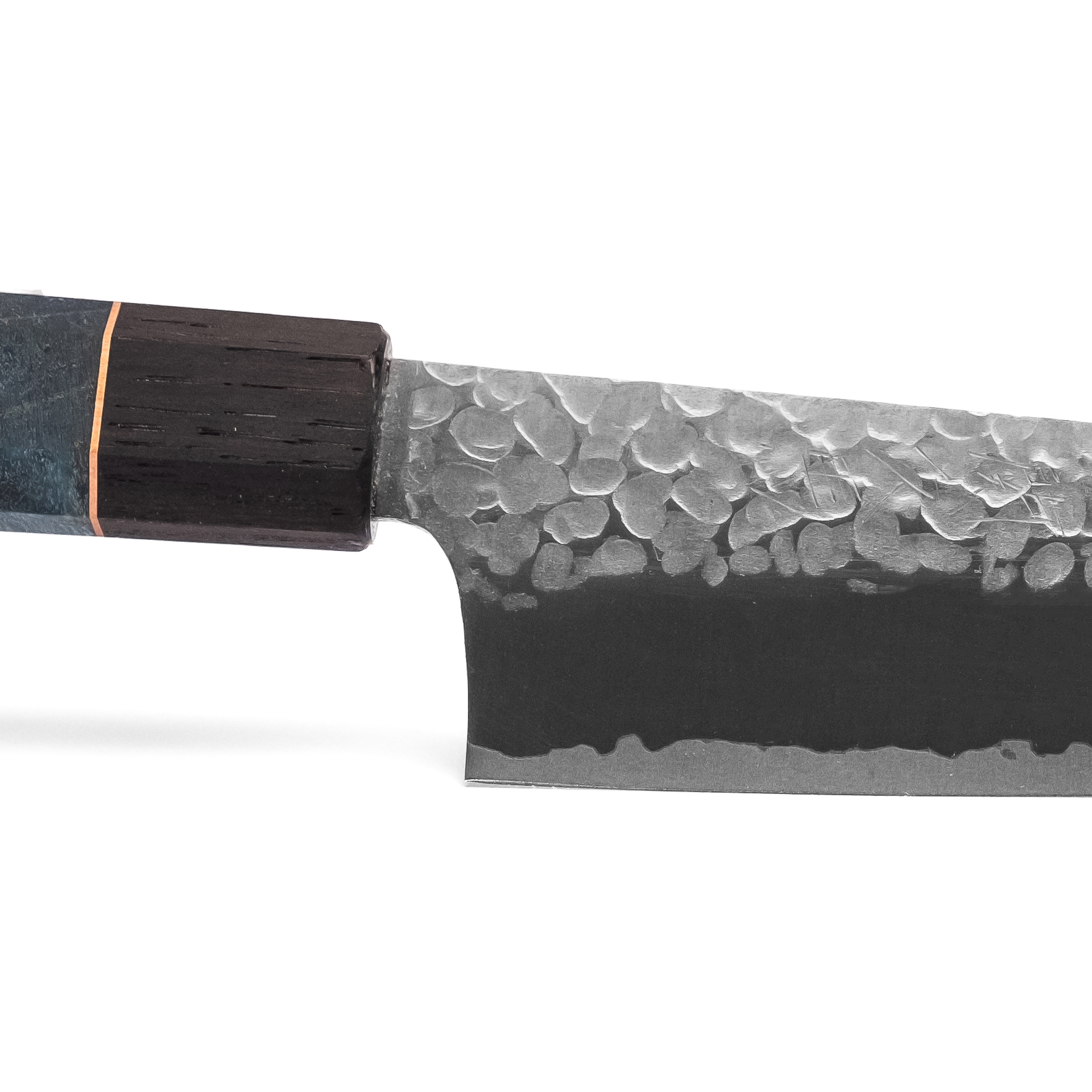
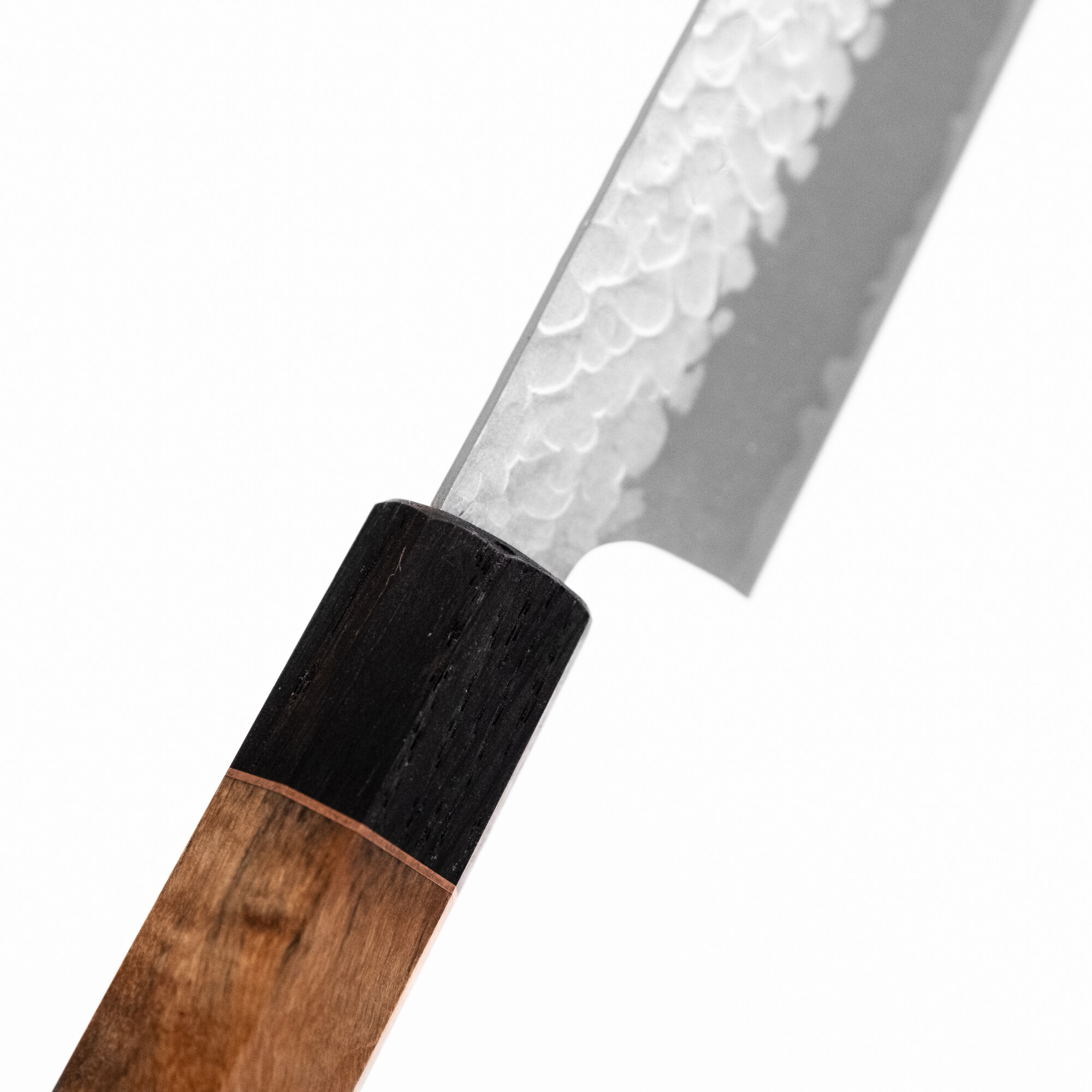
A VG10 core forged in Seki, a hammered face, and a handle made and mounted in Poland from stabilised maple burl and bog oak, joined by a single copper ring.
The handle is octagonal and symmetrical, for either hand, and the blade carries the line name, engraved by the blacksmith.
Change the handle colour above and the label follows.

The Petty
“Petty” is derived from the French “petit”, meaning small, which describes this knife’s role as a smaller, more agile counterpart to larger chef’s knives. The compact 12cm blade is ideal for intricate tasks where bigger knives feel unwieldy, peeling, trimming, and detailed cutting, making it well suited to garnish preparation, delicate fruit work and precise meat trimming.


The Blade
KATA blades are handcrafted in Seki, Gifu around a VG10 high-carbon stainless core with a 3-layer construction, a premium steel prized for edge retention and corrosion resistance. At HRC 60–61 the edge holds through regular use with little upkeep, and the subtle hammered finish helps stop food sticking during delicate cutting.
The hands that make it
Seki. Nearly eight hundred years of blade-making.
Seki, in Gifu, has forged blades since the thirteenth century, first swords, then kitchen knives. The workshop we work with there forges five of our six lines.
The handle is made in Poland: a stabilised maple burl body and a bog oak ferrule, meeting the blade at a hand-fitted copper ring in an octagonal profile.
Meet our craftsmenDie Hände dahinter
Seki. Fast achthundert Jahre Klingenschmiedekunst.
In Seki, in der Präfektur Gifu, werden seit dem dreizehnten Jahrhundert Klingen geschmiedet, zuerst Schwerter, dann Küchenmesser. Die Werkstatt, mit der wir dort arbeiten, schmiedet fünf unserer sechs Linien.
Der Griff entsteht in Polen: ein Körper aus stabilisierter Ahornmaser und eine Zwinge aus Mooreiche, die an einem von Hand eingepassten Kupferring auf die Klinge trifft, im achteckigen Profil.
Unsere Handwerker kennenlernenThe hands that make it
Sakai. Six hundred years of blade-making.
Sakai, in Osaka, is the birthplace of the traditional Japanese kitchen knife, a craft passed down for six hundred years from the methods used to forge samurai swords. KYU is forged there by a master blacksmith whose family has been at this work since 1927. We make his blades under the name Sakai Kyuba.
The steel is AUS10, folded into 46 hammered Damascus layers and hardened to HRC 62. Each blade passes through around two hundred and twenty steps over roughly three months; the hammering, finishing and sharpening are done by hand.
The handle is made in Poland: a stabilised maple burl body and a bog oak ferrule, meeting the blade at a hand-fitted copper ring in an octagonal profile.
Meet our craftsmenDie Hände dahinter
Sakai. Sechshundert Jahre Klingenschmiedekunst.
Sakai in Osaka ist der Geburtsort des traditionellen japanischen Küchenmessers, ein Handwerk, das seit sechshundert Jahren weitergegeben wird und auf die Schmiedetechnik der Samuraischwerter zurückgeht. KYU wird dort von einem Schmiedemeister geschmiedet, dessen Familie dieses Handwerk seit 1927 ausübt. Wir führen seine Klingen unter dem Namen Sakai Kyuba.
Der Stahl ist AUS10, in 46 gehämmerten Damaszenerlagen gefaltet und auf HRC 62 gehärtet. Jede Klinge durchläuft rund zweihundertzwanzig Arbeitsschritte über etwa drei Monate; Hämmern, Veredeln und Schärfen geschehen von Hand.
Der Griff entsteht in Polen: ein Körper aus stabilisierter Ahornmaser und eine Zwinge aus Mooreiche, die an einem von Hand eingepassten Kupferring auf die Klinge trifft, im achteckigen Profil.
Unsere Handwerker kennenlernenWhat you receive
In the box.
Everything arrives together in its wooden box.
Was Sie erhalten
Im Lieferumfang.
Alles kommt zusammen in der Holzbox.
- The knifeSharpened and ready to use.
- The three knivesEach sharpened and ready to use.
- A hand-finished wooden boxHolds the knife securely, and needs no wrapping as a gift.
- A hand-finished wooden set boxHolds all three securely, and needs no wrapping as a gift.
- A certificate of authenticityUnder the Seki Kyuba name, carrying our hanko stamp.
- A five-yen coinGo-en, a good connection. The receiver hands it back, so the knife counts as a purchase and the old superstition about gifting blades is answered.
- Your lifetime guaranteeEvery Oishya knife, every line, for life.
- Das MesserGeschärft und einsatzbereit.
- Die drei MesserJedes geschärft und einsatzbereit.
- Eine handveredelte HolzboxHält das Messer sicher und muss als Geschenk nicht verpackt werden.
- Eine handveredelte Set-HolzboxHält alle drei sicher und muss als Geschenk nicht verpackt werden.
- Ein EchtheitszertifikatUnter dem Namen Seki Kyuba, mit unserem Hanko-Stempel.
- Eine Fünf-Yen-MünzeGo-en, eine gute Verbindung. Die beschenkte Person gibt sie zurück, so gilt das Messer als gekauft, und dem alten Aberglauben über verschenkte Klingen ist Genüge getan.
- Ihre lebenslange GarantieJedes Oishya-Messer, jede Linie, ein Leben lang.
From the people who cook with it
Reviews.
Von den Menschen, die damit kochen
Bewertungen.
Show only reviews in English (2)
This site uses Akismet to reduce spam. Learn how your comment data is processed.
Is it dishwasher safe?
How often will I need to sharpen it?
Can I use it to cut meat?
How long does shipping take?
What if it isn't right for my kitchen?
What if it isn't right for my kitchen?
Can I return a sharpening stone?
Ist es spülmaschinenfest?
Wie oft muss ich es schärfen?
Kann ich damit Fleisch schneiden?
Wie lange dauert der Versand?
Und wenn es nicht passt?
Kann ich einen Schleifstein zurückgeben?
Und wenn es nicht zu meiner Küche passt?
Goes well with
The things that look after it.
Passt dazu
Was es gut pflegt.
Customers also bought
 from $207



2 reviews for Seki Kyuba KATA Paring Knife Petty 12cm
There are no reviews yet