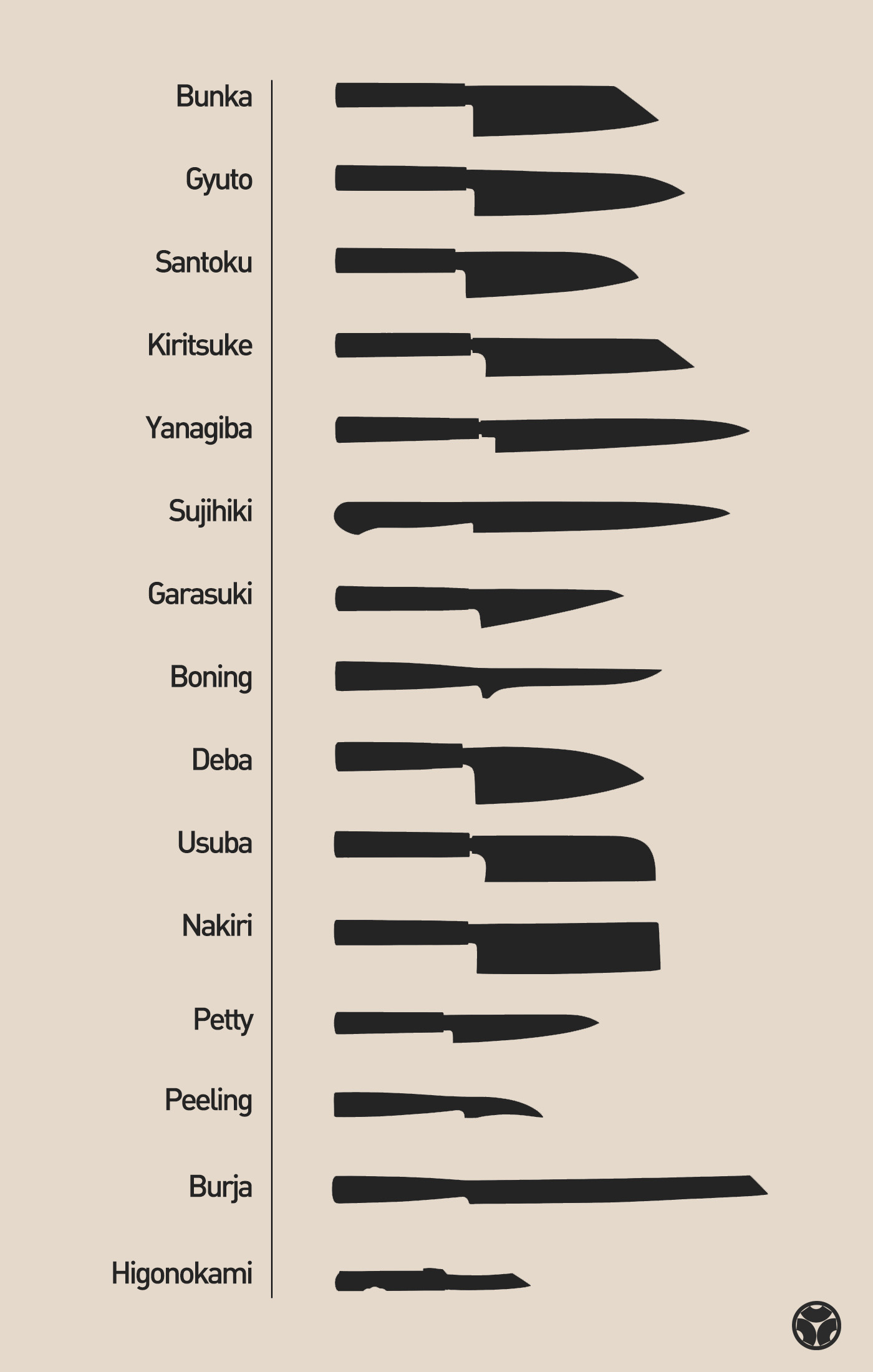
Japanese knives represent centuries of refinement, with each blade shape evolved to perfection for specific culinary tasks. Unlike Western knife sets that often include multiple redundant pieces, every Japanese knife type serves a distinct purpose, born from the precision and specialisation inherent in Japanese cooking culture. In this guide, we’ll explore every major Japanese knife type. If you’re ready to buy, jump straight to our complete buying guide for your first Japanese knife. Otherwise, read on as we explore every major Japanese knife type – from the versatile workhorses found in both home and professional kitchens to the specialised blades used by master chefs and traditional craftsmen.
The Essential All-Purpose Knives
Gyuto (牛刀) – The Japanese Chef’s Knife

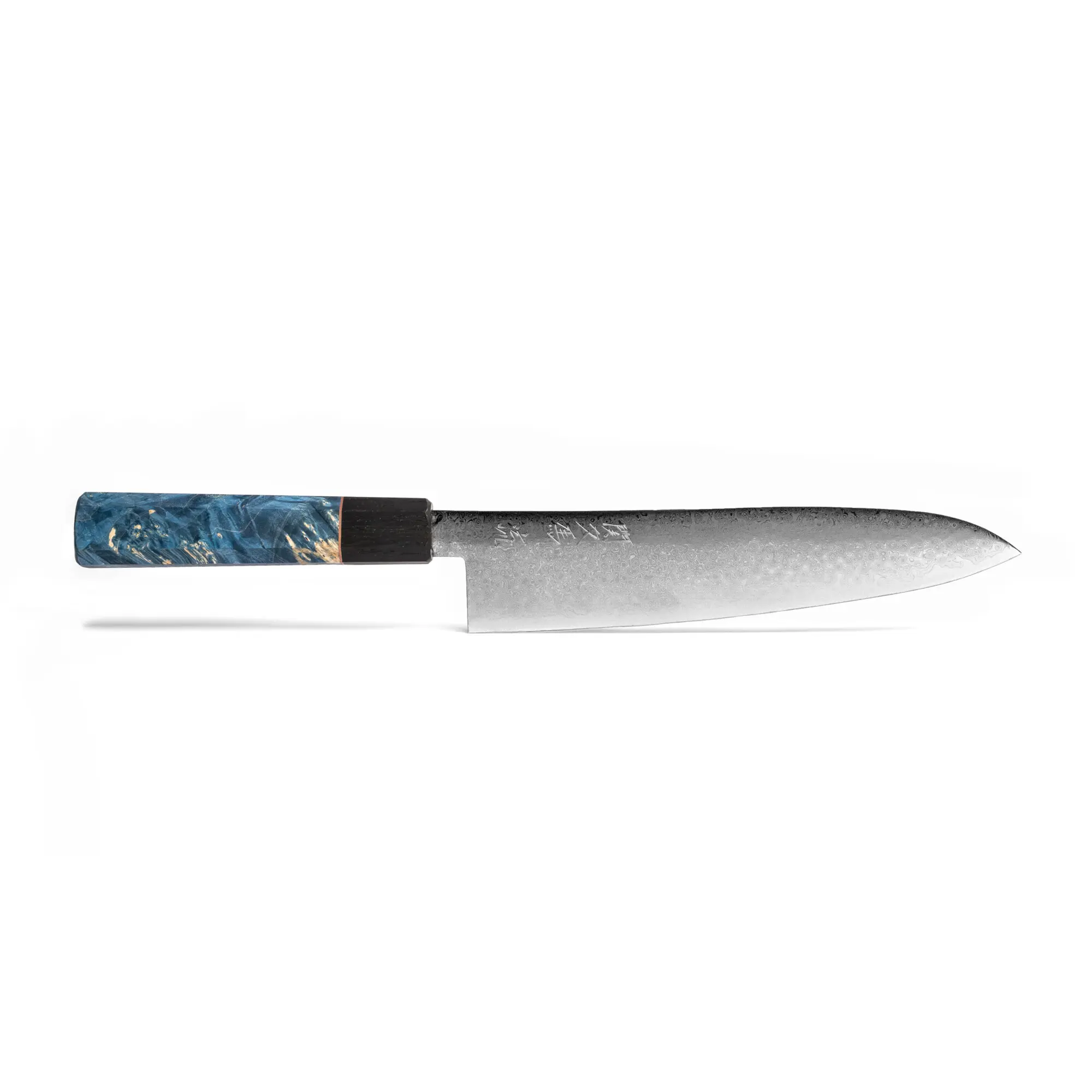
The Gyuto, literally meaning “cow sword,” is Japan’s interpretation of the Western chef’s knife, refined through Japanese blade-making expertise. With its elegant curved blade typically ranging from 21cm to 27cm, the Gyuto has become the cornerstone of modern Japanese kitchens.
- What makes it special: The Gyuto combines the rocking motion capability of Western chef’s knives with Japanese sharpness and precision. Its pointed tip excels at detailed work, while the curved belly allows for efficient rocking cuts through herbs and vegetables. The thinner blade profile compared to Western equivalents reduces drag and enables cleaner, more precise cuts.
- Best for: Slicing meat, dicing vegetables, mincing herbs, breaking down proteins, and general kitchen tasks. If you’re investing in just one premium knife, the Gyuto is the most versatile choice. Can’t decide between a Gyuto and a Santoku? See our Santoku vs Gyuto comparison.
- Typical lengths: 21cm (8.3″), 24cm (9.5″), 27cm (10.6″)
Santoku (三徳) – The Three Virtues
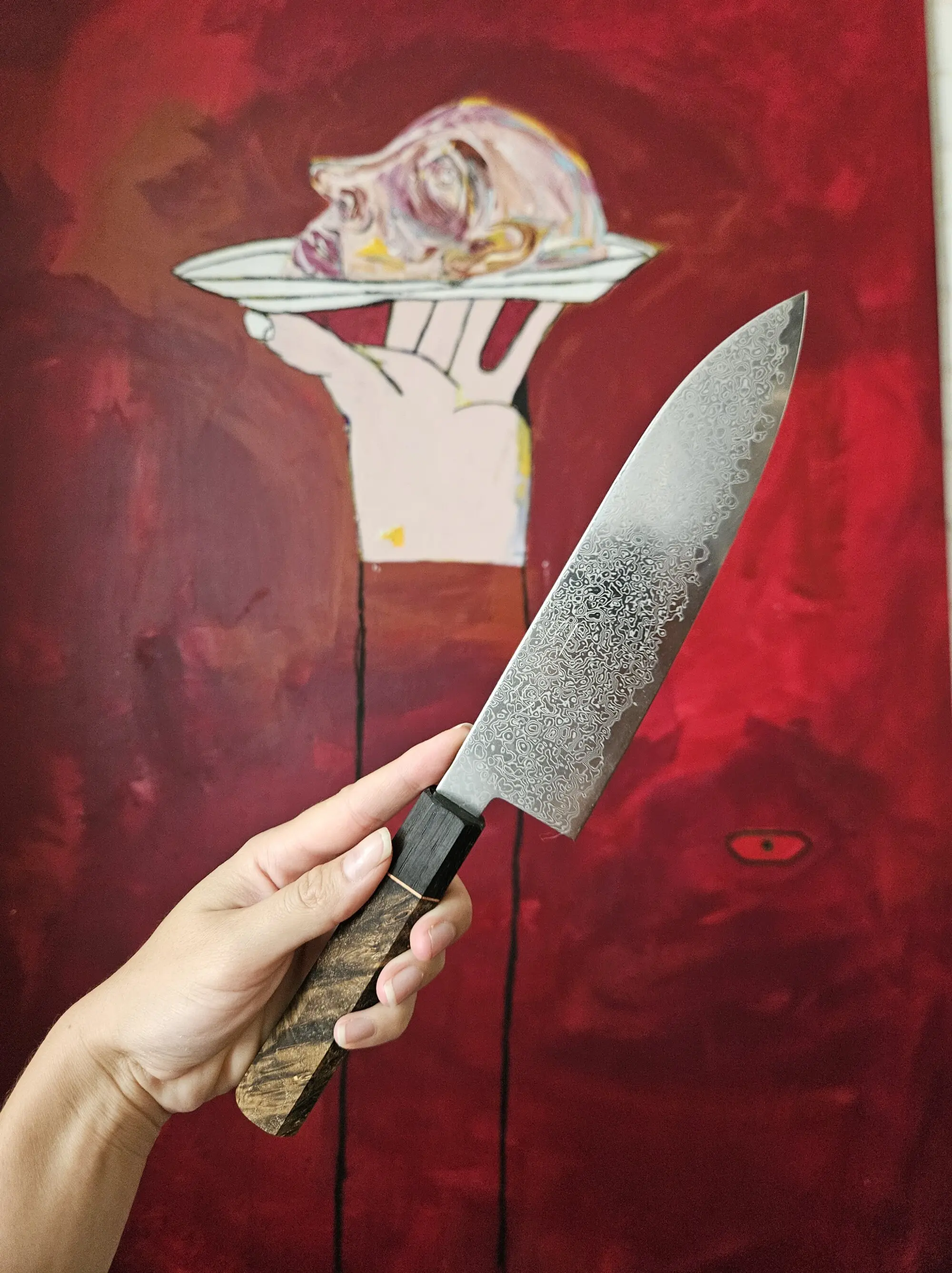
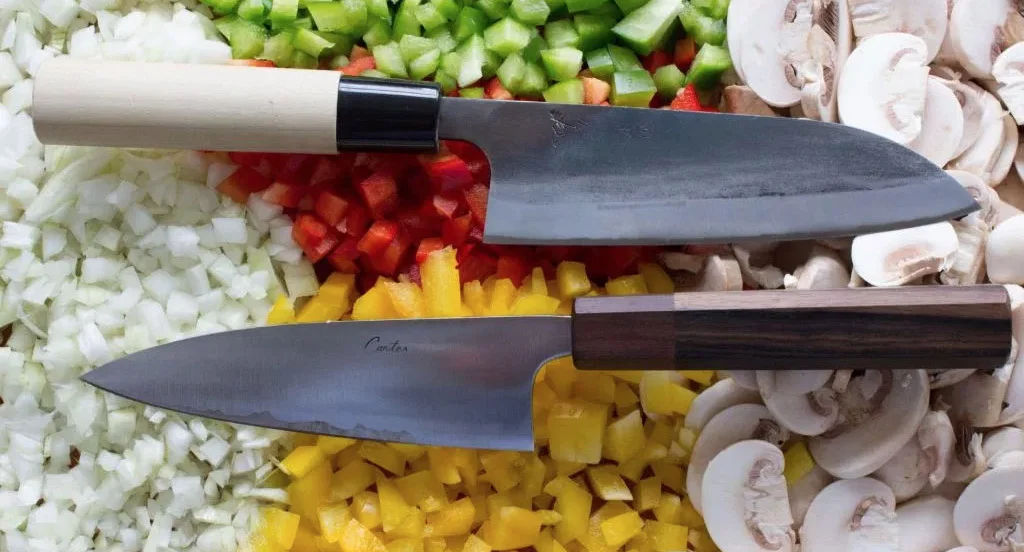
Perhaps the most recognisable Japanese knife shape worldwide, the Santoku’s name means “three virtues,” referring to its proficiency with meat, fish, and vegetables. This is Japan’s answer to the all-purpose knife, designed specifically for the modern home kitchen.
- What makes it special: Shorter and lighter than a Gyuto (typically 16.5-18cm), the Santoku features a flatter edge profile with less curve, making it perfect for up-and-down chopping rather than rocking cuts. The wide blade provides excellent knuckle clearance, and many feature hollow-ground indentations (granton edge) that prevent food from sticking.
- Best for: Precision slicing, dicing vegetables, preparing fish, cutting boneless meats. Ideal for cooks who prefer a more compact, manoeuvrable blade or have smaller hands. Curious how Japanese knives compare to Western ones? Read our German vs Japanese knives comparison.
- Typical lengths: 16.5cm (6.5″), 17cm (6.7″), 18cm (7″)
Bunka (文化) – The Cultural Knife

A modern creation that has quickly become beloved by contemporary chefs, the Bunka features a distinctive reverse tanto (angled) tip that gives it a striking, purposeful appearance. “Bunka” means “culture” or “cultural,” reflecting its role as a versatile modern knife.
- What makes it special: The sharp, angular tip provides exceptional precision for detailed work – from scoring meat and making precision vegetable cuts to piercing tough ingredients. The relatively flat profile works beautifully for push-cutting, while the tall blade height offers good knuckle clearance.
- Best for: Detailed vegetable preparation, precision cuts, scoring meat, intricate prep work. A favorite among creative cooks who appreciate both functionality and distinctive aesthetics.
- Typical lengths: 16.5cm (6.5″), 18cm (7″), 20cm (7.9″)
Kiritsuke (切付) – The Prestigious Multi-Purpose Blade
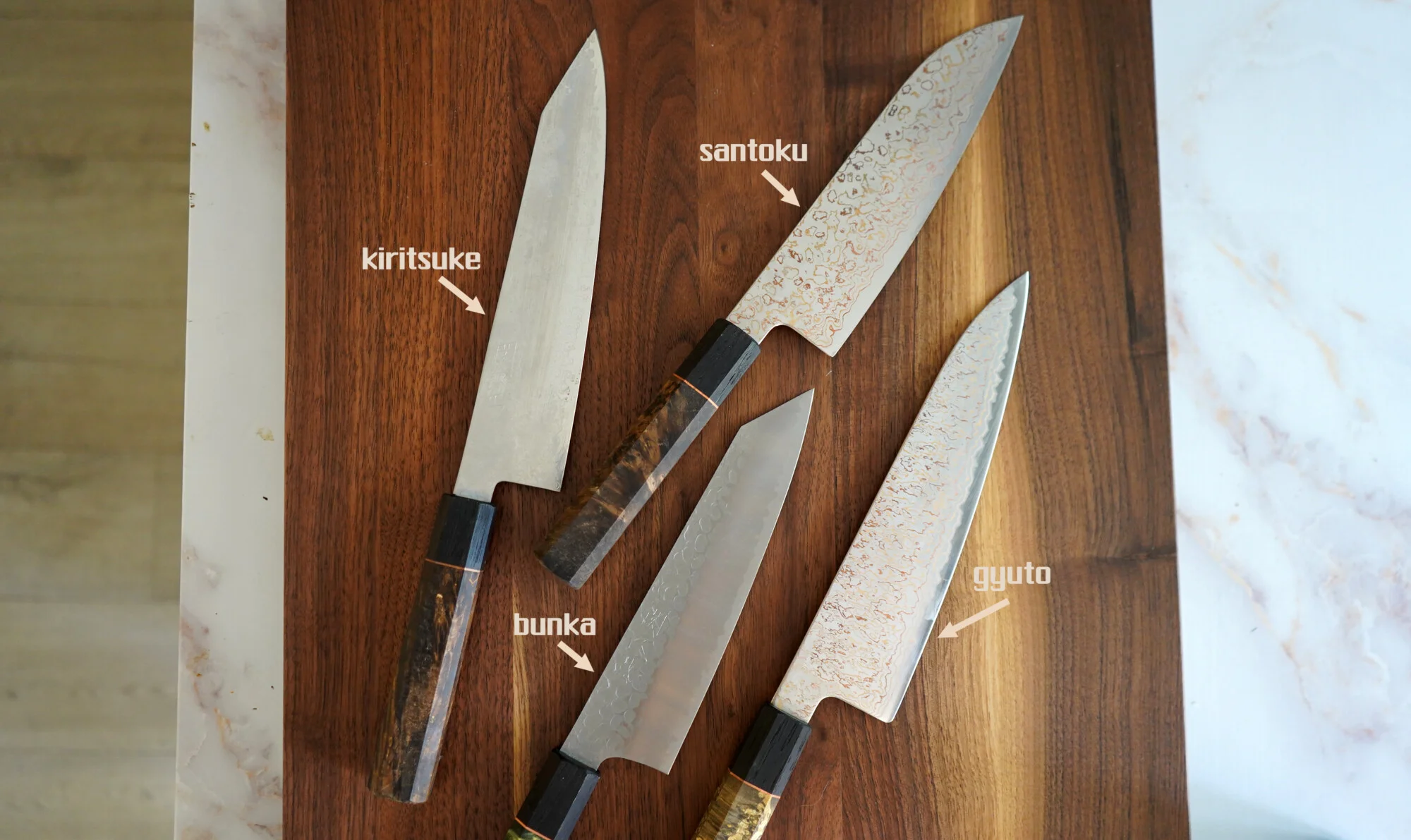
Traditionally, the Kiritsuke could only be used by executive chefs (head chefs) in Japanese kitchens – a symbol of their status and skill. This long, elegant blade combines elements of both Yanagiba (slicing) and Usuba (vegetable) knives, requiring considerable skill to wield properly.
- What makes it special: The Kiritsuke features a long, flat blade with minimal curve and a distinctive angled tip. This flat edge demands excellent technique – you must use push-cutting motions rather than rocking. The blade’s length and geometry make it exceptional for clean, single-stroke cuts that preserve ingredient integrity.
- Best for: Slicing proteins with single draws, push-cutting vegetables, precise portioning. Best suited for experienced cooks who appreciate its unique capabilities.
- Typical lengths: 21cm (8.3″), 24cm (9.5″), 27cm (10.6″)
Specialised Slicing Knives

Yanagiba (柳刃) – The Willow Leaf Slicer
Named for its resemblance to a willow leaf, the Yanagiba is the quintessential sashimi knife. Its long, narrow, single-beveled blade is designed for one purpose: creating perfect slices of raw fish in a single, smooth draw.
- What makes it special: The extreme length (often 27-30cm) allows for complete slicing strokes without any sawing motion, which would damage the delicate structure of raw fish. The single bevel creates incredibly clean cuts that preserve the fish’s texture and appearance.
- Best for: Slicing sashimi and sushi, portioning raw fish, creating thin, precise slices. Essential for serious sushi preparation.
- Typical lengths: 24cm (9.5″), 27cm (10.6″), 30cm (11.8″)
Sujihiki (筋引) – The Muscle Slicer
The Sujihiki, meaning “muscle puller,” is a double-beveled slicing knife designed primarily for cooked proteins. Think of it as Japan’s carving knife, but with far superior precision.
- What makes it special: The long, narrow blade glides through cooked meats with minimal friction, creating beautiful, uniform slices. Unlike the single-bevel Yanagiba, the double bevel makes it suitable for both right and left-handed users and provides more versatility beyond just slicing raw fish.
- Best for: Slicing roasted meats, carving poultry, portioning cooked proteins, trimming silver skin. Perfect for anyone who regularly prepares large cuts of meat.
- Typical lengths: 24cm (9.5″), 27cm (10.6″), 30cm (11.8″)
Vegetable Specialists
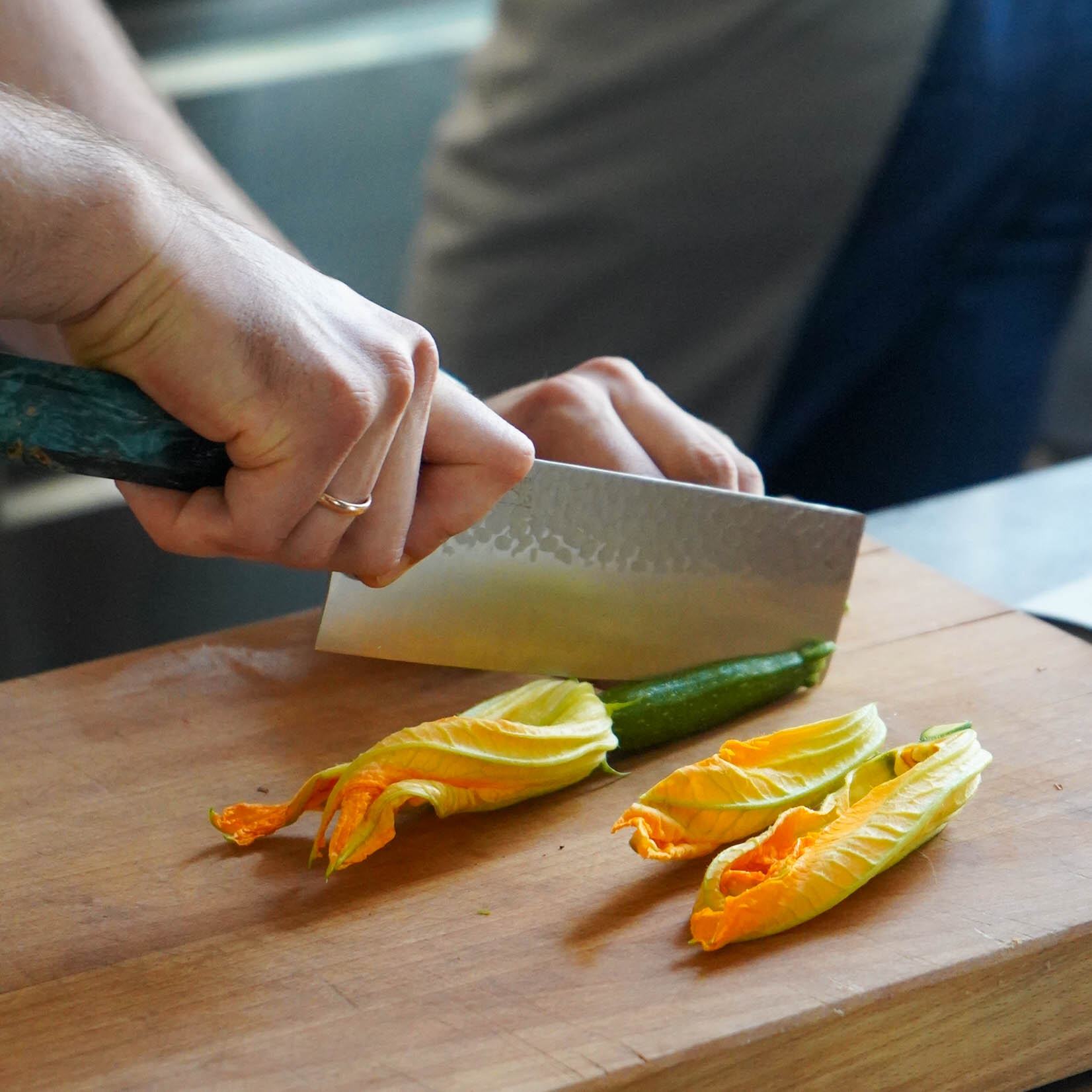
Nakiri (菜切) – The Vegetable Chopper
The Nakiri, literally “vegetable cutter,” features a distinctive rectangular blade that looks almost cleaver-like but is designed exclusively for vegetables. This is the knife of choice in traditional Japanese homes.
- What makes it special: The completely flat edge and tall blade profile make it perfect for push-cutting through vegetables in a single downward motion – no rocking required. The height provides excellent knuckle clearance, and the blade’s weight does most of the work. The thin profile glides through vegetables with minimal resistance.
- Best for: Chopping vegetables, precision vegetable cuts, preparing stir-fry ingredients, any task involving lots of vegetable prep. Essential for plant-forward cooking.
- Typical lengths: 16cm (6.3″), 17cm (6.7″), 18cm (7″)
Usuba (薄刃) – The Thin Blade
The Usuba is the professional chef’s vegetable knife, featuring a tall, thin, single-beveled blade. More demanding to use than the Nakiri, it rewards skill with exceptional precision.
- What makes it special: The extreme thinness and single bevel allow for incredibly fine, decorative vegetable cuts used in traditional Japanese cuisine. Master chefs use Usuba knives for creating paper-thin sheets of vegetables (katsuramuki) and intricate garnishes.
- Best for: Advanced vegetable techniques, decorative cuts, traditional Japanese preparations. Best suited for experienced professionals.
- Typical lengths: 16.5cm (6.5″), 18cm (7″), 21cm (8.3″)
Butchery and Protein Preparation

Deba (出刃) – The Fish Butchery Knife
The Deba is a heavy, sturdy knife designed for breaking down whole fish. Its thick spine and single-beveled edge make it ideal for precise work while being robust enough for cutting through fish bones.
- What makes it special: The substantial weight and thickness allow the Deba to handle tasks that would chip or damage thinner knives. Despite its heft, the blade remains remarkably sharp for precise filleting.
- Best for: Breaking down whole fish, removing fish heads, cutting through small bones, filleting. Essential if you regularly prepare whole fish.
- Typical lengths: 15cm (5.9″), 16.5cm (6.5″), 18cm (7″)
Garasuki (ガラスキ) – The Poultry Boning Knife
Designed specifically for breaking down poultry, the Garasuki features a pointed blade with substantial thickness near the spine, tapering to a sharp edge.
- What makes it special: The robust construction handles cutting through chicken joints and cartilage, while the pointed tip navigates around bones with precision. It’s heavier than Western boning knives, using weight to assist in separation.
- Best for: Breaking down whole chickens, deboning poultry, separating joints. Perfect for anyone who buys whole birds.
- Typical lengths: 15cm (5.9″), 16.5cm (6.5″)
Honesuki / Boning – The Boning Specialist
This triangular-bladed knife is designed for separating meat from bone with precision. The thick, sturdy blade can withstand the lateral pressure of working around bones.
- What makes it special: The triangular shape provides strength while maintaining a sharp point for precise work. The relatively short length offers excellent control when working close to bones.
- Best for: Deboning meats, removing silver skin, breaking down larger cuts into smaller portions.
- Typical lengths: 14cm (5.5″), 15cm (5.9″)
Utility and Precision Knives

Petty (ペティ) – The Utility Knife
Borrowed from the French “petit,” the Petty is Japan’s small utility knife – an essential complement to larger blades. Despite its size, it’s indispensable for detailed work.
- What makes it special: The compact size provides exceptional control for delicate tasks. Many chefs find themselves reaching for their Petty knife constantly throughout meal preparation for tasks where larger knives feel clumsy.
- Best for: Peeling, trimming, small vegetable cuts, mincing garlic, creating garnishes, any detailed work. Often the second knife people buy after their main chef’s knife.
- Typical lengths: 12cm (4.7″), 13cm (5.1″), 15cm (5.9″)
Peeling Knife – The Precision Peeler
Similar to a Petty but often with a more curved blade, peeling knives are designed specifically for removing skins from fruits and vegetables with minimal waste.
- What makes it special: The shorter blade and pronounced curve make it perfect for peeling round fruits and vegetables, following contours naturally.
- Best for: Peeling apples, potatoes, and other produce; creating citrus garnishes; fine detail work.
- Typical lengths: 7cm (2.8″), 9cm (3.5″)
Specialized Traditional Knives
Burja – The Slicing Specialist
A long, narrow blade designed for creating uniform slices with smooth, drawing cuts. Similar in concept to the Sujihiki but with its own distinctive geometry.
- What makes it special: The extreme length allows for complete slicing strokes, creating clean cuts without sawing motion.
- Best for: Slicing proteins, creating uniform cuts, portioning.
- Typical lengths: 27cm (10.6″), 30cm (11.8″)
Higonokami (肥後守) – The Traditional Folding Knife
Unlike the other knives on this list, the Higonokami is a traditional Japanese folding pocket knife with a simple lever mechanism. Originally from the Meiji era, it represents traditional Japanese metalworking applied to an everyday carry tool.
- What makes it special: Its historical significance and simple, elegant design. While not primarily a cooking knife, it represents the broader tradition of Japanese blade-making.
- Best for: General utility tasks, outdoor use, traditional crafts.
Understanding Knife Steel
The blade shape is only half the story — the steel determines how sharp your knife gets, how long it stays sharp, and how much maintenance it needs.
- Stainless steel (VG10, AUS10): Low maintenance, corrosion-resistant, excellent for home cooks. See our VG10 vs AUS10 comparison.
- Carbon steel (Aogami, Shirogami): Takes the sharpest edge, but needs more care. See our Aogami #2 vs Super Blue comparison.
- Ceramic: Extremely hard but brittle. See our ceramic vs steel knives guide.
For the full reference, browse our knife steel composition chart covering 50+ steels, or learn about handle types and materials to complete the picture.
The Most Popular Choices for Modern Kitchens
While the variety of Japanese knife types is impressive, six knives dominate both home and professional kitchens worldwide: Gyuto, Santoku, Bunka, Kiritsuke, Nakiri, and Petty.
These six have become the most popular for good reason:
- Gyuto and Santoku serve as versatile all-purpose blades that can handle 90% of kitchen tasks. Most knife collections start with one of these two – Gyuto for those who prefer longer blades and rocking cuts, Santoku for those who want something more compact and suitable for straight chopping.
- Bunka and Kiritsuke represent modern versatility combined with distinctive aesthetics. The Bunka has surged in popularity among home cooks and professional chefs alike, appreciated for its beautiful balance of form and function. The Kiritsuke, once reserved for head chefs, has found new appreciation among experienced cooks who master its demanding technique.
- Nakiri is essential for anyone who prepares significant amounts of vegetables. Its specialised shape makes vegetable prep faster, easier, and more enjoyable – particularly for those cooking plant-forward meals.
- Petty rounds out the collection as the perfect complement to any larger knife, handling all the detailed work that feels awkward with a full-sized blade.
- At Oishya, these six knife types form the core of our collections precisely because they represent the perfect balance of versatility, specialisation, and everyday utility. Whether you’re building your first knife collection or expanding an existing one, starting with these proven shapes ensures you’ll have the right tool for virtually any culinary task.
The specialised knives – Yanagiba, Deba, Usuba, and others – certainly have their place, particularly for those passionate about specific cuisines or techniques. But for most cooks, the six popular types provide everything needed to cook beautifully, precisely, and joyfully for years to come.
Ready to find your perfect blade? Explore our collections of Gyuto, Santoku, Bunka, Kiritsuke, Nakiri, and Petty knives – each crafted by master bladesmiths to become treasured tools in your kitchen.
Care for Your Japanese Knife
A quality Japanese knife will last a lifetime with proper care. Learn everything about sharpening, cleaning, and storage in our complete knife care and maintenance guide.
To understand the centuries of craftsmanship and philosophy behind these blades, explore our guide to Japanese kitchen culture.
Handcrafted Japanese Knives by Oishya
Forged by master craftsmen in Seki and Sakai, Japan. Free shipping worldwide • 100-day money-back guarantee • Lifetime warranty