When it comes to upgrading your kitchen tools, Japanese knives represent one of the most transformative investments you can make. But with dozens of traditional blade types—each designed for specific tasks. Choosing the right Japanese knife for home cooking can feel overwhelming. Which knife truly delivers the best value, versatility, and performance for everyday home use?
In this comprehensive guide, we’ll break down the best Japanese knife options for home cooks, explain what makes each type special, and help you make an informed decision that will elevate your cooking for decades to come.
Why Choose Japanese Knives for Home Cooking?
Before diving into specific knife types, it’s worth understanding what sets Japanese knives apart from Western alternatives.
Japanese kitchen knives are crafted using blade-making techniques refined over centuries, originally developed for samurai swords. This heritage translates into several distinct advantages:
- Superior sharpness: Japanese knives typically feature harder steel (60-64 HRC compared to 56-58 HRC for Western knives), allowing them to achieve and maintain exceptional sharpness. This means cleaner cuts, better ingredient integrity, and less effort required during prep work.
- Lighter weight: Japanese knives are generally lighter than their Western counterparts, reducing hand fatigue during extended cooking sessions. This makes them particularly appealing for home cooks who may not have the hand strength or endurance of professional chefs.
- Thinner blade geometry: The slimmer profile creates less resistance when cutting, resulting in effortless slicing and dicing. This precision is especially noticeable when working with delicate ingredients like tomatoes, herbs, or raw fish.
- Exceptional craftsmanship: Many Japanese knives are still handcrafted by master blacksmiths using traditional techniques, ensuring each blade receives individual attention and quality control.
For home cooks looking to take their kitchen skills seriously, Japanese knives offer professional-grade performance without requiring professional-level expertise.
The Four Best Japanese Knives for Home Cooks
Whilst Japanese cuisine features dozens of specialised knife types, four knives stand out as ideal for home cooking: the Gyuto, Santoku, Nakiri, and Petty. Let’s explore each in detail.
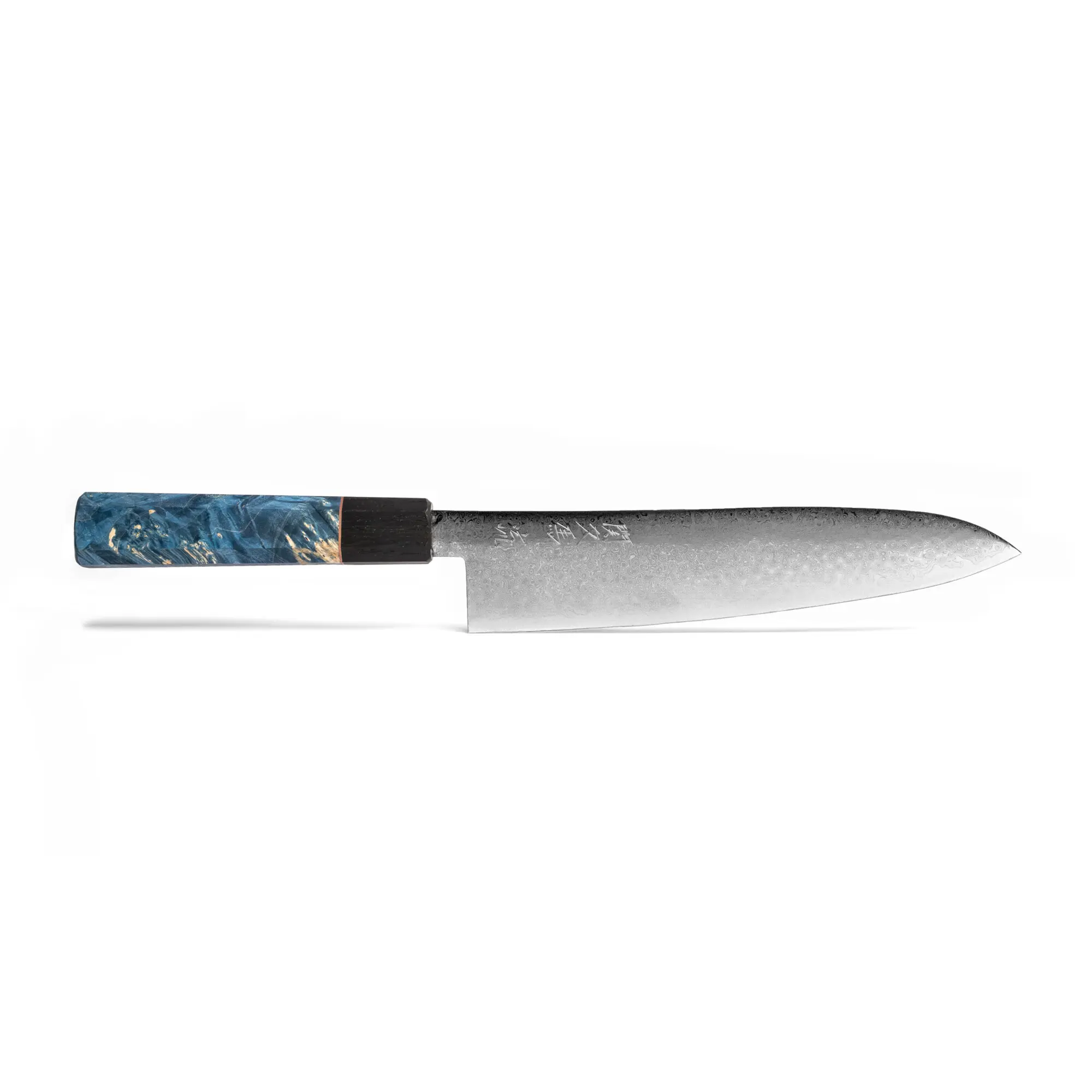
1. Gyuto (牛刀) – The Japanese Chef’s Knife

Best for: All-purpose kitchen tasks, home cooks transitioning from Western knives
If you’re buying only one Japanese knife for your home kitchen, the Gyuto should be your first choice. As Japan’s answer to the Western chef’s knife, the Gyuto combines familiar functionality with superior Japanese craftsmanship.
Key Features:
- Blade length: Typically 21cm (8.3″) or 24cm (9.5″) for home use
- Blade shape: Curved edge with pointed tip
- Weight: Medium-light, balanced towards the handle
- Steel hardness: Usually 60-64 HRC
- Edge type: Double-bevelled (suitable for both right and left-handed users)
What Makes It Perfect for Home Cooks:
The Gyuto’s versatile shape handles approximately 90% of kitchen tasks with ease. The curved belly allows for efficient rocking cuts when mincing herbs or garlic, whilst the pointed tip excels at detailed work like trimming fat or deveining prawns. The blade length provides enough surface area for cutting larger vegetables like cabbage or butternut squash, yet remains manageable in smaller home kitchens.
Unlike specialised single-bevel Japanese knives that require specific techniques, the Gyuto’s double-bevel edge works just like Western chef’s knives, making the transition seamless. Home cooks can immediately benefit from the superior sharpness and lighter weight without learning entirely new cutting methods.
Ideal tasks: Slicing meat, dicing onions, mincing garlic, chopping vegetables, breaking down chicken, slicing fish, general prep work
Price range: Quality Gyuto knives for home use typically range from £250-425
2. Santoku (三徳) – The Three Virtues Knife

Best for: Home cooks who prefer compact, versatile knives; smaller kitchens; cooks with smaller hands
The Santoku has become the most popular Japanese knife worldwide, and for good reason. Its name means “three virtues,” referring to its proficiency with meat, fish, and vegetables—the three main food categories in most home cooking.
Key Features:
- Blade length: Typically 16.5-18cm (6.5-7″)
- Blade shape: Flatter edge with rounded tip (sheep’s foot)
- Weight: Light and manoeuvrable
- Steel hardness: Usually 60-62 HRC
- Edge type: Double-bevelled
- Special features: Often features granton edge (hollow indentations) to prevent sticking
What Makes It Perfect for Home Cooks:
The Santoku’s shorter length and lighter weight make it less intimidating and more manoeuvrable than longer chef’s knives. Many home cooks find it easier to control, especially when working on standard home chopping boards that may not accommodate longer blades comfortably.
The flatter edge profile is ideal for up-and-down chopping motions rather than rocking cuts, which many home cooks find more natural and intuitive. The wide blade provides excellent knuckle clearance, protecting your fingers during fast prep work.
The rounded tip reduces the risk of accidental punctures—a safety consideration that matters in busy home kitchens where multiple people may be cooking or children might be present.
Ideal tasks: Dicing vegetables, slicing boneless proteins, mincing herbs, preparing fish, most daily cooking tasks
Price range: Quality Santoku knives typically range from £250-295
Gyuto vs. Santoku: Which Should You Choose?
This is the most common question for home cooks buying their first Japanese knife. Here’s a simple way to decide:
Choose a Gyuto if you:
- Have experience with Western chef’s knives and like them
- Prefer longer blades for bigger ingredients
- Use rocking cuts frequently
- Have average to large hands
- Cook for larger groups regularly
Choose a Santoku if you:
- Prefer a more compact, lighter knife
- Have smaller hands or less hand strength
- Like straight up-and-down chopping
- Have limited worktop or storage space
- Want something less intimidating to start with
Honestly, both are excellent choices, and many serious home cooks eventually own both, using them for slightly different tasks.
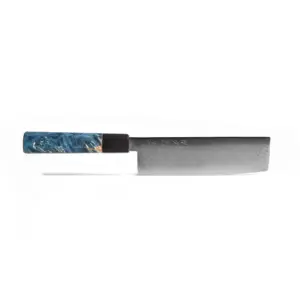
3. Nakiri (菜切) – The Vegetable Specialist
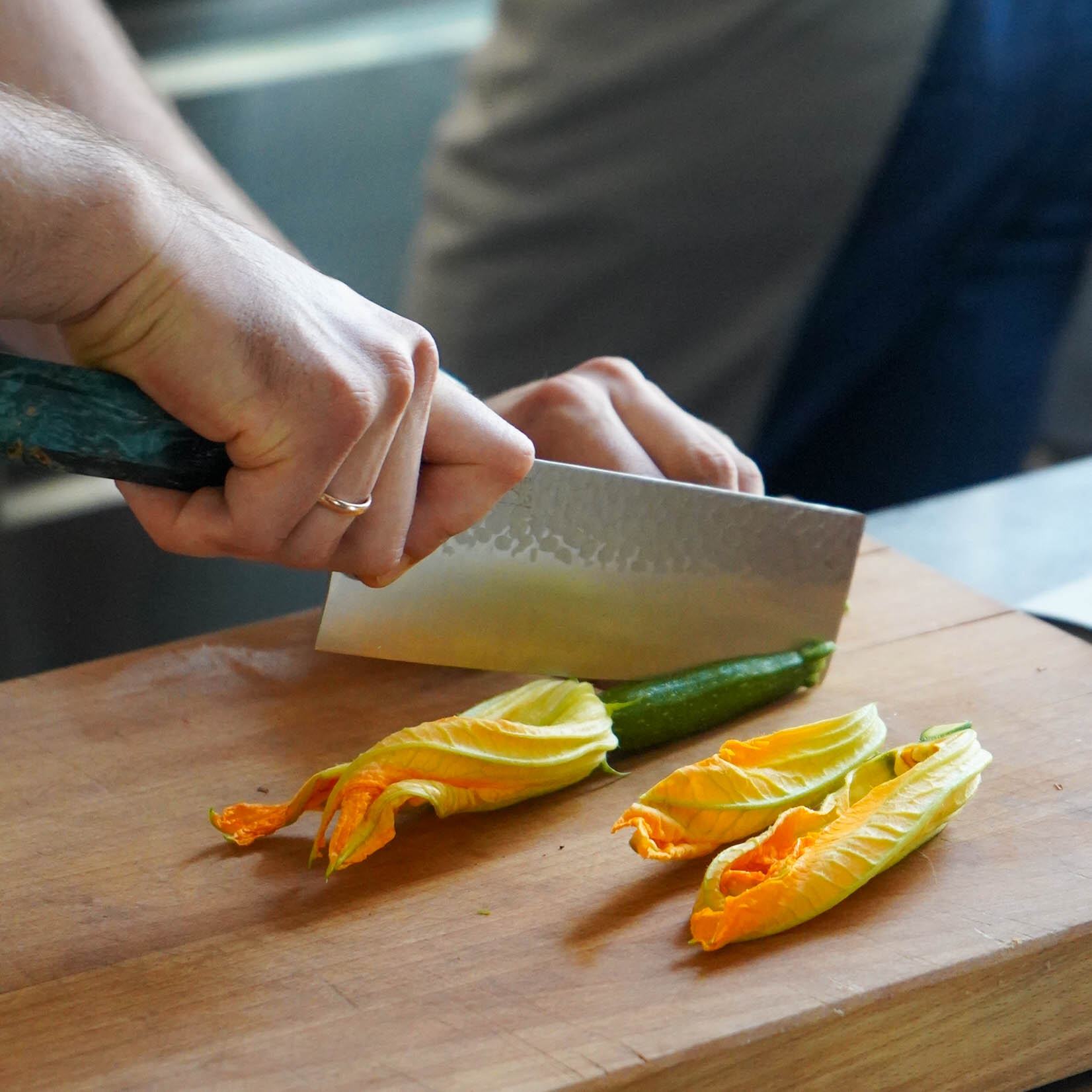
Best for: Home cooks who prepare lots of vegetables; plant-based cooking enthusiasts; precision vegetable work
If you cook vegetable-forward meals, prepare salads regularly, or simply want to make vegetable prep faster and more enjoyable, the Nakiri is an essential addition to your knife collection.
Key Features:
- Blade length: Typically 16.5-18cm (6.5-7″)
- Blade shape: Rectangular with completely flat edge
- Weight: Light to medium
- Steel hardness: Usually 60-62 HRC
- Edge type: Double-bevelled (home versions)
- Blade height: Tall, providing excellent knuckle clearance
What Makes It Perfect for Home Cooks:
The Nakiri’s rectangular shape and flat edge are specifically engineered for vegetables. Unlike curved blades that require rocking motion, the Nakiri cuts straight down through vegetables in one clean motion. This makes quick work of meal prep, especially when processing large quantities of produce.
The tall blade height means your knuckles never come close to the chopping board, enabling faster cutting with complete safety. This height also makes the knife perfect for scooping chopped vegetables from the chopping board directly into your pan or bowl.
Despite its cleaver-like appearance, the Nakiri is surprisingly thin and lightweight, gliding through vegetables with minimal effort. The thin profile creates less compression as you cut, meaning your vegetables maintain better texture and release less moisture—important for crisp stir-fries and salads.
Ideal tasks: Chopping vegetables, precision vegetable cuts, preparing stir-fries, making salads, any task involving significant vegetable prep
Not ideal for: Cutting through bones, breaking down large proteins (the thin blade isn’t designed for this)
Price range: Quality Nakiri knives typically range from £250-330
Should Home Cooks Buy a Nakiri?
If you already own a Gyuto or Santoku, a Nakiri makes an excellent second knife, especially if you:
- Follow plant-based or vegetable-forward diets
- Meal prep vegetables for the week
- Make fresh salads regularly
- Want to speed up vegetable preparation
- Cook Asian cuisines frequently
For home cooks who rarely prepare vegetables beyond basic chopping, a Gyuto or Santoku alone may be sufficient.
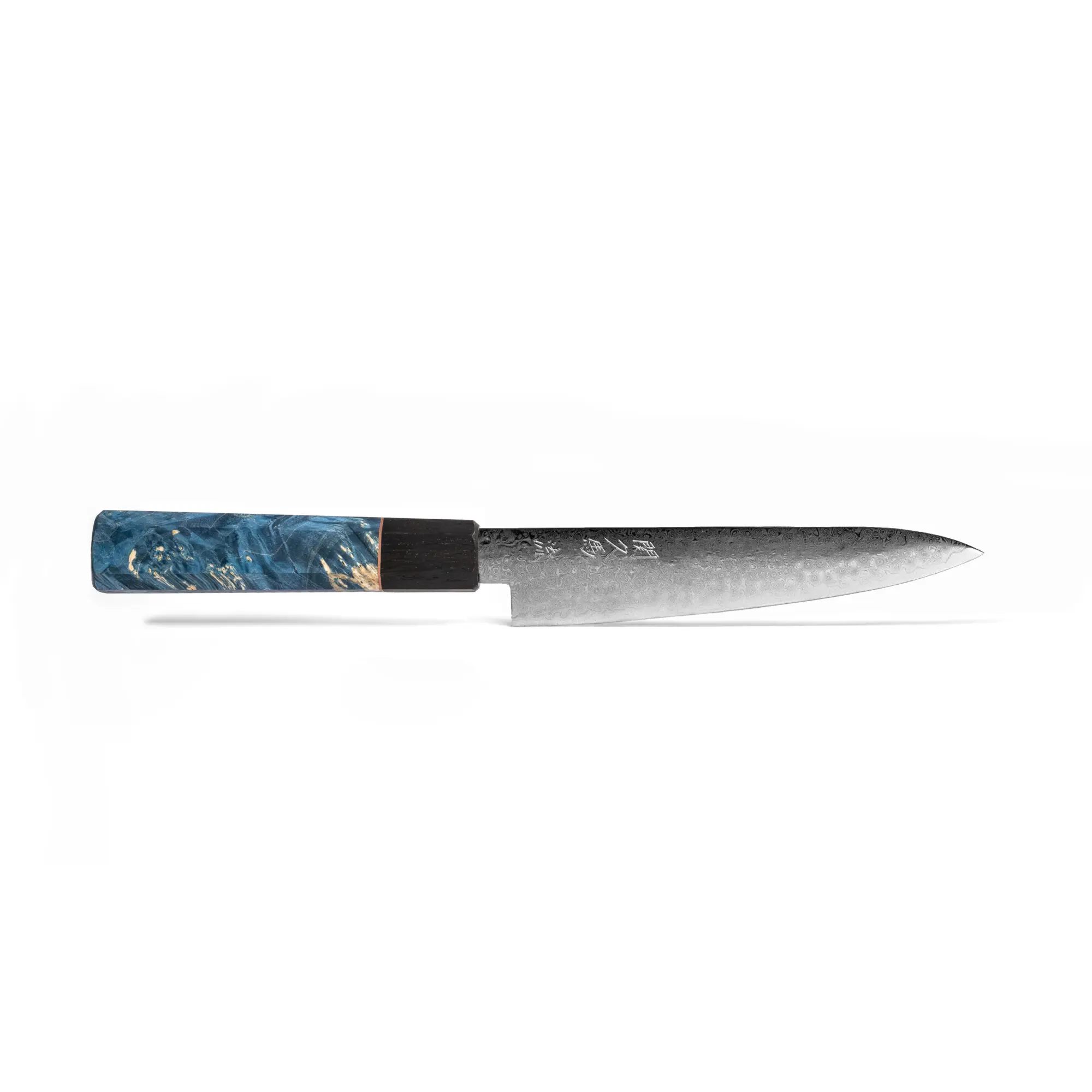
4. Petty (ペティ) – The Precision Utility Knife

Best for: Detail work, peeling, trimming; the perfect complement to any larger knife
Whilst often overlooked, the Petty knife is arguably the most-used knife in many home kitchens. This small utility knife handles all the detailed tasks that feel awkward with a full-sized chef’s knife.
Key Features:
- Blade length: Typically 12-15cm (4.7-5.9″)
- Blade shape: Similar to a chef’s knife but scaled down
- Weight: Very light and manoeuvrable
- Steel hardness: Usually 60-64 HRC
- Edge type: Double-bevelled
What Makes It Perfect for Home Cooks:
The Petty’s compact size provides exceptional control for intricate work. Home cooks find themselves reaching for their Petty knife dozens of times throughout meal preparation—for tasks like hulling strawberries, deveining prawns, mincing garlic, trimming green beans, or creating garnishes.
The shorter blade length allows you to work more precisely and safely when handling small items. Try peeling a shallot with a 24cm Gyuto versus a 13cm Petty—the difference in control and comfort is immediately obvious.
For home cooks with limited kitchen space, the Petty serves as an excellent secondary knife that doesn’t take up much room in storage. It’s also typically the least expensive Japanese knife, making it an easy addition to any collection.
Ideal tasks: Peeling fruits and vegetables, trimming, mincing small amounts of garlic or ginger, detailed vegetable work, creating garnishes, small cuts
Price range: Quality Petty knives typically range from £250-320
The Perfect Two-Knife Setup for Home Cooks:
For most home cooks, the ideal starting combination is:
- Gyuto or Santoku (your main workhorse)
- Petty (for detailed work)
This combination covers virtually every task in a home kitchen whilst remaining affordable and manageable.
What to Look for in a Japanese Knife for Home Use
When selecting your Japanese knife, consider these key factors:
Steel Type and Hardness
Most quality Japanese knives for home use feature VG10, AUS10, or SG2/R2 powder steel. These high-carbon stainless steels offer:
- Excellent edge retention (you won’t need to sharpen constantly)
- Good corrosion resistance (suitable for home environments)
- Hardness ratings of 60-64 HRC (sharper than Western knives)
For home cooks, stainless steel is more practical than traditional carbon steel, which requires more maintenance to prevent rust.
Construction
Damascus construction (multiple layers of steel) offers several benefits:
- Beautiful aesthetic appeal
- Additional blade strength
- Reduced food sticking
- Corrosion resistance
3-layer construction provides core performance steel with protective outer layers—excellent for home use at a more accessible price point.
Handle Design
Look for:
- Ambidextrous handles (octagonal or D-shaped) that work for both left and right-handed users
- Waterproof, stabilised wood that won’t crack or harbour bacteria
- Balanced weight distribution that feels comfortable during extended use
- Secure grip even when wet
Blade Finish
Hammered (Tsuchime) finish: Creates tiny air pockets that reduce food sticking—very practical for home cooking
Damascus pattern: Beautiful water-like flowing pattern across the blade
Standard finish: Functional and often more affordable
For home cooks, function matters more than finish, but there’s no reason you can’t have both.
Caring for Your Japanese Knife at Home
Japanese knives require slightly more care than Western knives, but maintaining them is straightforward:
Do:
- Hand wash immediately after use with mild soap and warm water
- Dry thoroughly before storing
- Use wooden or quality plastic chopping boards
- Sharpen regularly (or have professionally sharpened)
- Store properly (knife block, magnetic strip, or blade guards)
Don’t:
- Put in the dishwasher (ever)
- Use on glass, marble, or ceramic chopping boards
- Cut frozen foods or bones
- Leave wet or dirty
- Store loose in drawers
With proper care, a quality Japanese knife will last generations and actually improve with age as you develop a patina and perfect edge through use and maintenance.
Our Recommendations: The Best Japanese Knives for Home Cooks
Based on craftsmanship, performance, and value, here are our top recommendations for home cooks:
For Your First Japanese Knife:
- Sakai Kyuba KYU Gyuto 21cm or Santoku 18cm – Premium Japanese steel with Damascus construction, lifetime warranty, and authentic Sakai craftsmanship. The perfect introduction to Japanese knives.
For Serious Home Cooks:
- Seki Kyuba KATA Collection – Step-up performance with VG10 steel and minimalist design
- Seki Kyuba RYU Collection – Full Damascus pattern with 33-layer construction for those who appreciate both artistry and performance
For Vegetable Lovers:
- Seki Kyuba NIJI Nakiri 18cm – Stunning rainbow Damascus pattern with exceptional cutting performance
For Detailed Work:
- Seki Kyuba SHIN Petty 15cm or KATA Petty 12cm – Professional-grade precision in a compact package
The Complete Home Kitchen Set: Consider the Seki Kyuba RYU Set (Gyuto 21cm, Nakiri 17.5cm, Petty 15cm) for a comprehensive collection that covers all bases in modern home cooking.
Frequently Asked Questions
- Do I need different knives for different tasks? Whilst specialised knives optimise specific tasks, most home cooks can accomplish everything with a good Gyuto or Santoku plus a Petty knife. Additional knives like the Nakiri become valuable as you cook more and develop specific preferences.
- Are Japanese knives harder to maintain than Western knives? Slightly, but not significantly. The main difference is that Japanese knives should never go in the dishwasher and require regular sharpening. Hand washing and proper storage take just a few extra seconds.
- Can left-handed people use Japanese knives? Yes! Double-bevelled knives (Gyuto, Santoku, Nakiri, Petty) work equally well for both hands. Only traditional single-bevel knives are handed.
- How often do Japanese knives need sharpening? With proper care and regular honing, professional sharpening 1-2 times per year is sufficient for home use. High-quality steel holds edges well.
- Are Japanese knives worth the investment for home cooking? Absolutely. A quality Japanese knife will last decades with proper care, making it one of the best value investments for your kitchen. The improvement in cutting performance, efficiency, and enjoyment is immediate and lasting.
Conclusion: Which Japanese Knife Should You Buy?
For most home cooks, the answer is simple: start with either a Gyuto (21cm) or Santoku (18cm) depending on your preference for blade length, then add a Petty knife for detailed work.
This two-knife combination handles virtually every task in a home kitchen whilst remaining affordable and manageable. As your skills and interest grow, consider adding a Nakiri if you prepare lots of vegetables.
The most important factors are:
- Quality construction (VG10 or better steel, proper heat treatment)
- Comfortable handle (balanced, secure grip)
- Appropriate size (21cm Gyuto or 18cm Santoku for most home cooks)
- Reputable maker (authentic Japanese craftsmanship)
Every Oishya knife comes with a lifetime warranty, Certificate of Authenticity with hand-stamped hanko seal, and a 5 yen coin honouring the ancient tradition of knife gifting—all presented in a handcrafted European oak box.
Explore our collections of Japanese knives crafted by master blacksmiths in Sakai and Seki; Japan’s legendary blade-making regions. Each knife is designed to become a treasured tool that lasts for generations.
Handcrafted Japanese Knives by Oishya
Forged by master craftsmen in Seki and Sakai, Japan. Free shipping worldwide • 100-day money-back guarantee • Lifetime warranty