





The system
Six lines. One philosophy.
Each line is built around a specific steel and a specific feel in the hand. Open a line to choose the knife type and your handle colour.

Sakai Kyuba KYU
from $365AUS10 · 46-layer Damascus · HRC 62
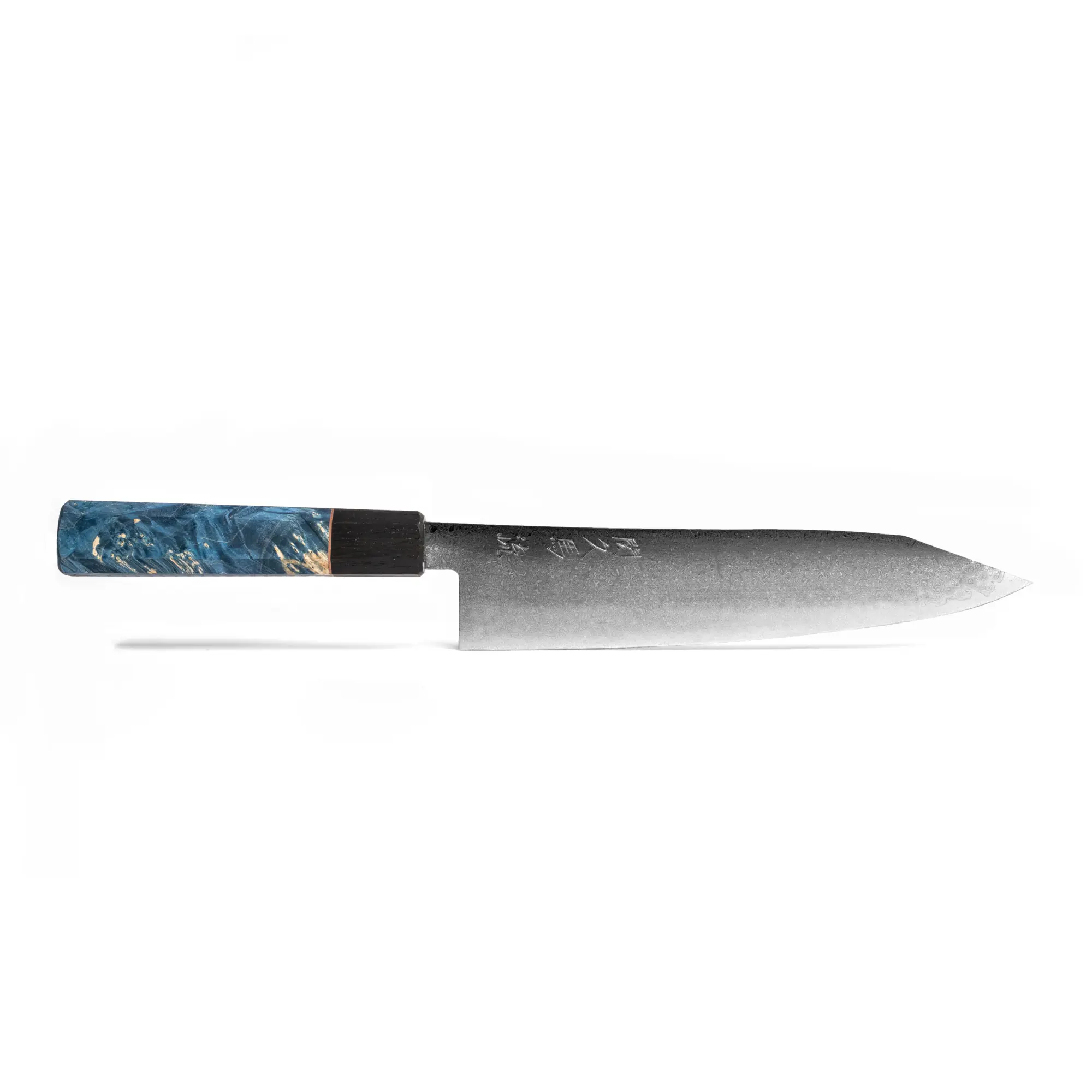
The flagship, forged in Sakai. The blade you reach for when the meal matters most.

Seki Kyuba KATA
from $351VG10 · 3-layer · HRC 60–62
The everyday knife. Refined geometry, forgiving edge. Where most home cooks start.

Seki Kyuba RYU
from $379VG10 · 33-layer Damascus · HRC 62
The all-rounder. Versatile geometry, built into sets that grow a whole kitchen.

Seki Kyuba NIJI
from $44937-layer steel, brass & copper · HRC 62–63
The rainbow blade. A pattern that belongs to no other line we make.

Seki Kyuba SHIN
from $463SG2 powder steel · 31-layer Damascus · HRC 63–64
The pinnacle. The hardest, longest-holding edge we make, for cooks who want the tool to disappear.

Seki Kyuba PAN
from $2671K6 single steel · HRC 59–60
The bread knife. A long, patient edge for crust and crumb alike.

Build a kitchen
Knife sets
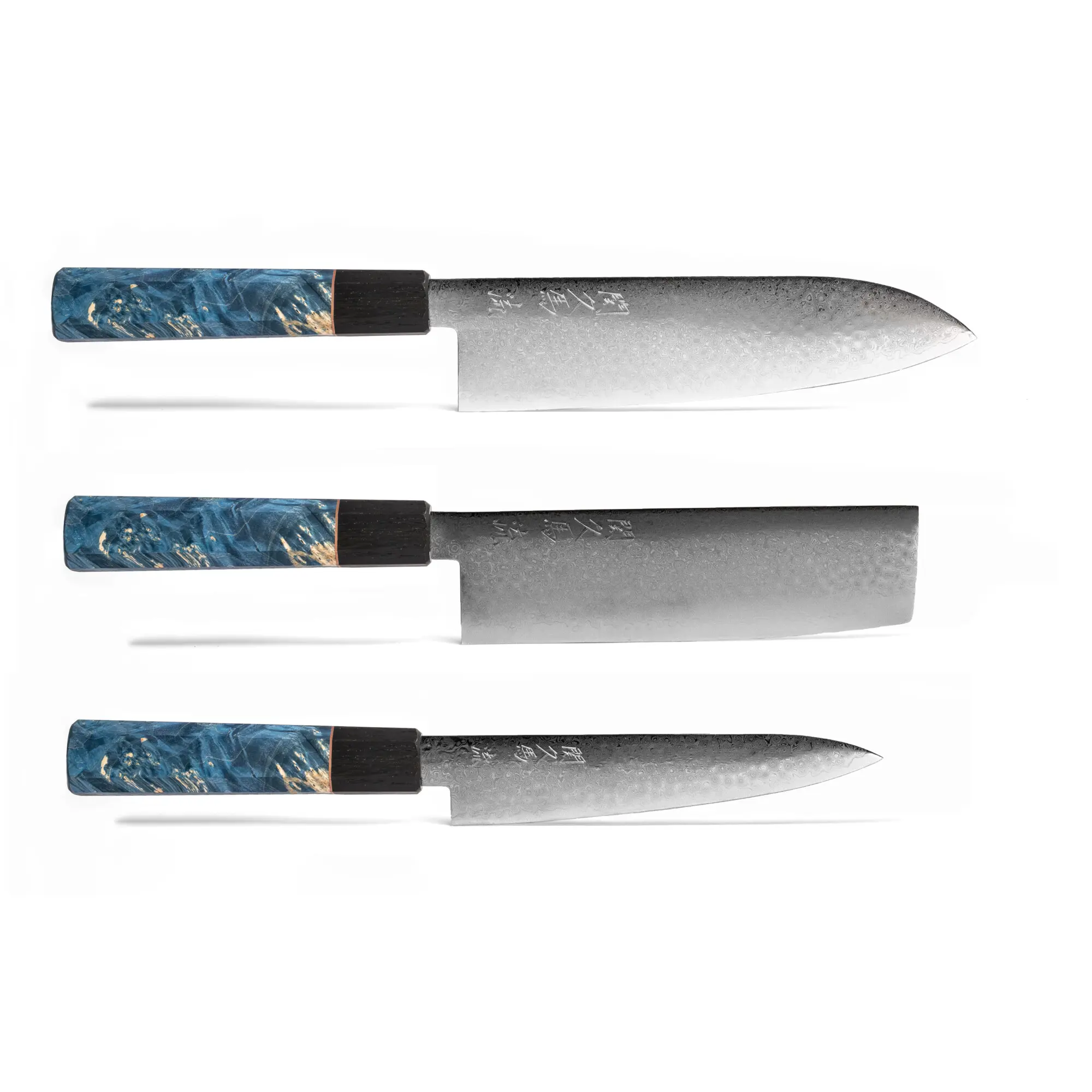
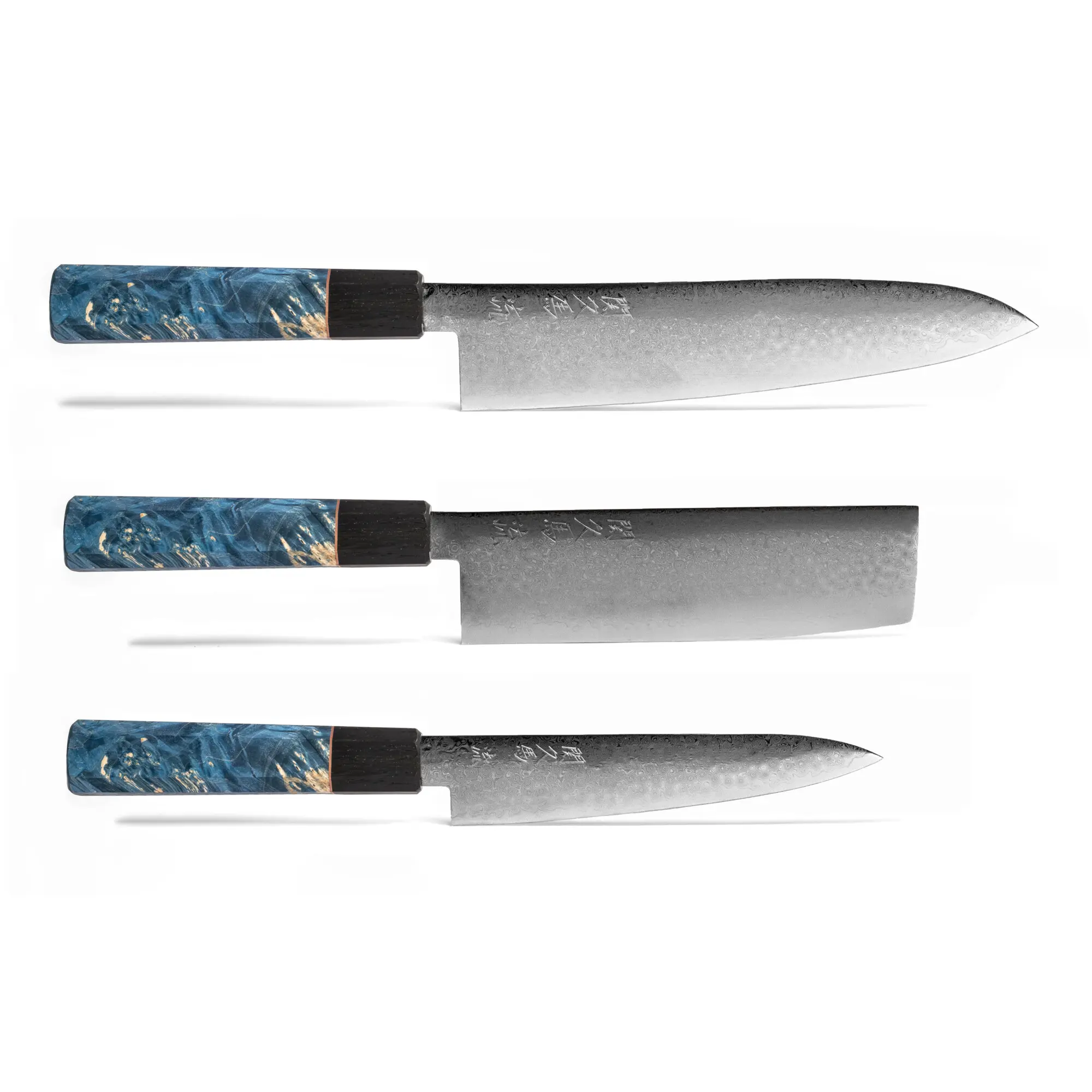
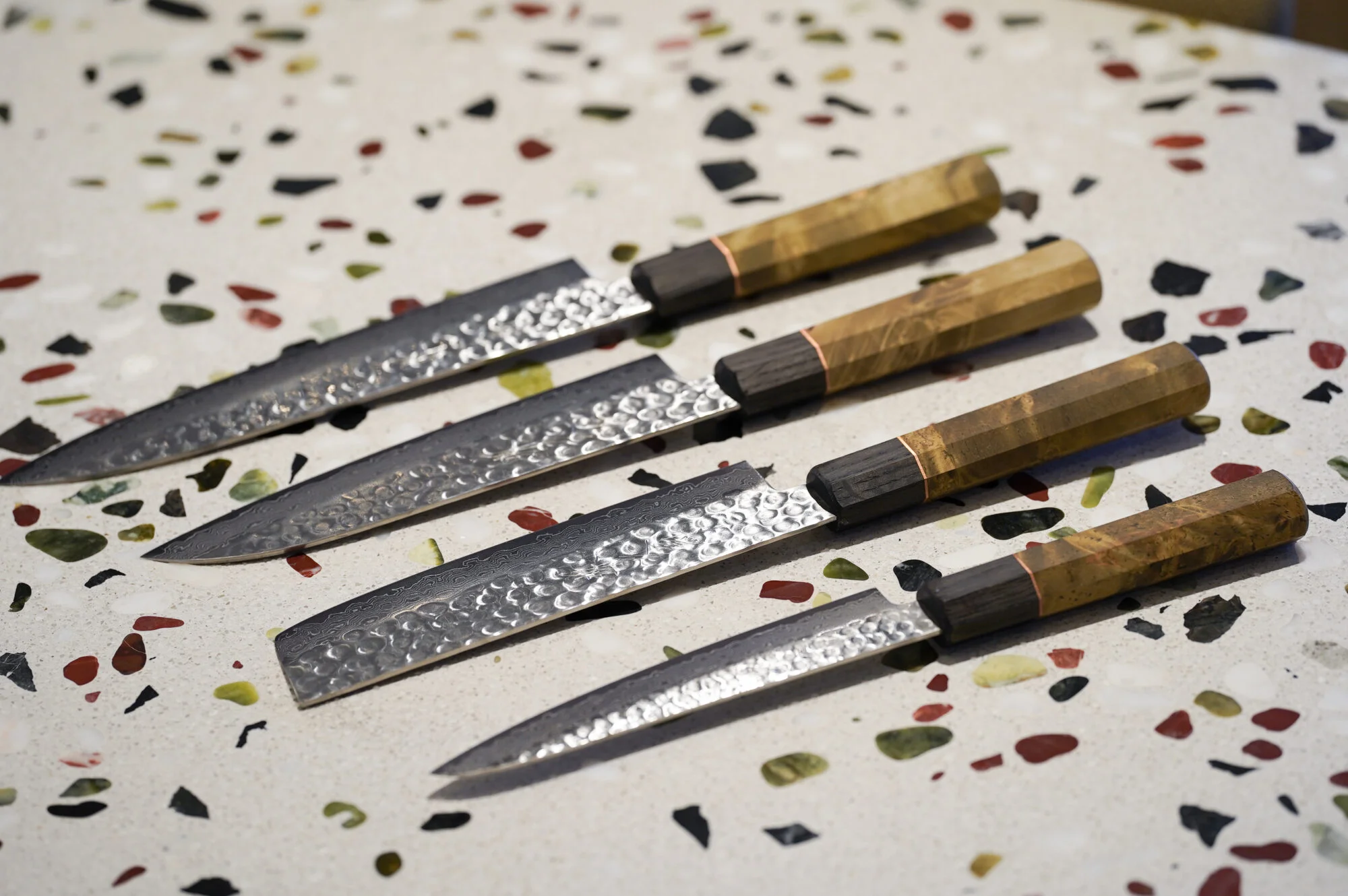
Three knives from one line, matched and boxed together. Available in KYU, KATA and RYU. Each line offers two compositions.

KATA sets
from $351The everyday set. VG10 3-layer, where most cooks start. Two compositions: Bunka · Nakiri · Petty, or Santoku · Nakiri · Petty.

RYU sets
from $379The all-rounder. 33-layer Damascus, versatile geometry. Two compositions: Santoku · Nakiri · Petty, or Gyuto · Nakiri · Petty.
KYU sets
from $365The flagship. Sakai-forged AUS10, 46-layer Damascus. Two compositions: Santoku · Nakiri · Petty, or Gyuto · Nakiri · Petty.
Around the knife
Things worth owning beside it.
A fine knife asks for a few good things: a stone to bring the edge back, a board that's kind to it, somewhere safe to keep it, and the pieces that carry the food to the table.
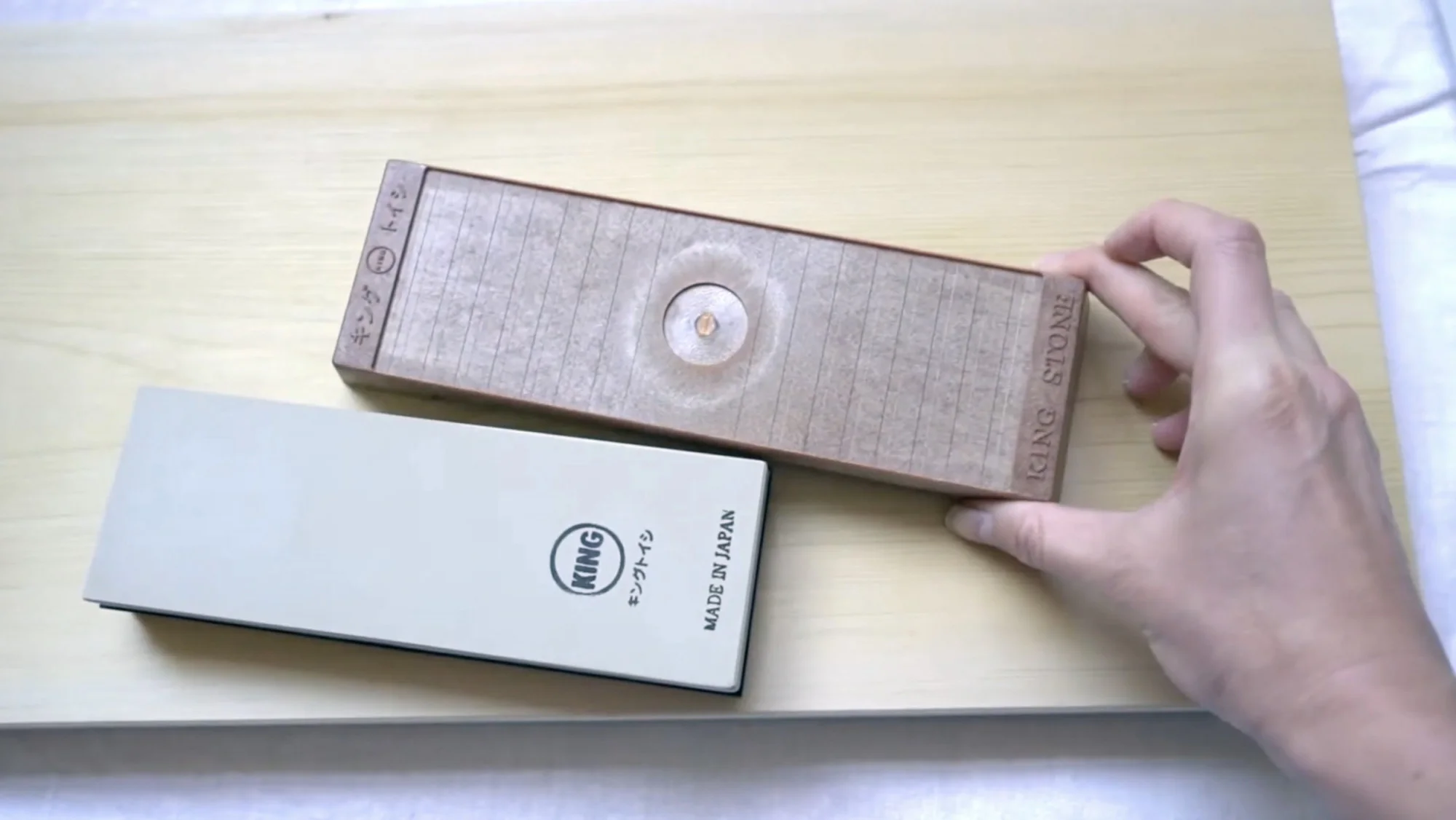
Sharpening stones
King Japanese whetstones from 1000 to 6000 grit, the proper way to bring a Japanese edge back. Learn the method in Knife School.
Explore →
Cutting boards
Aomori hiba and walnut boards, chosen for a wood that cushions the edge instead of fighting it.
Explore →
Magnetic stands & racks
Wall racks and stand blocks in oak or walnut with copper, brass or steel, plus utensil holders and trays. Somewhere to keep the edge safe and on show.
Explore →
Tableware
Kintsugi fine bone china and signature brass chopsticks, for carrying the food the knife prepared.
Explore →
Table linen
Stonewashed linen tea towels and aprons in natural or off-black, softening with every wash.
Explore →Start with the knife
The rest can wait. Find the blade that fits your hands first, and build around it.
Find your knife