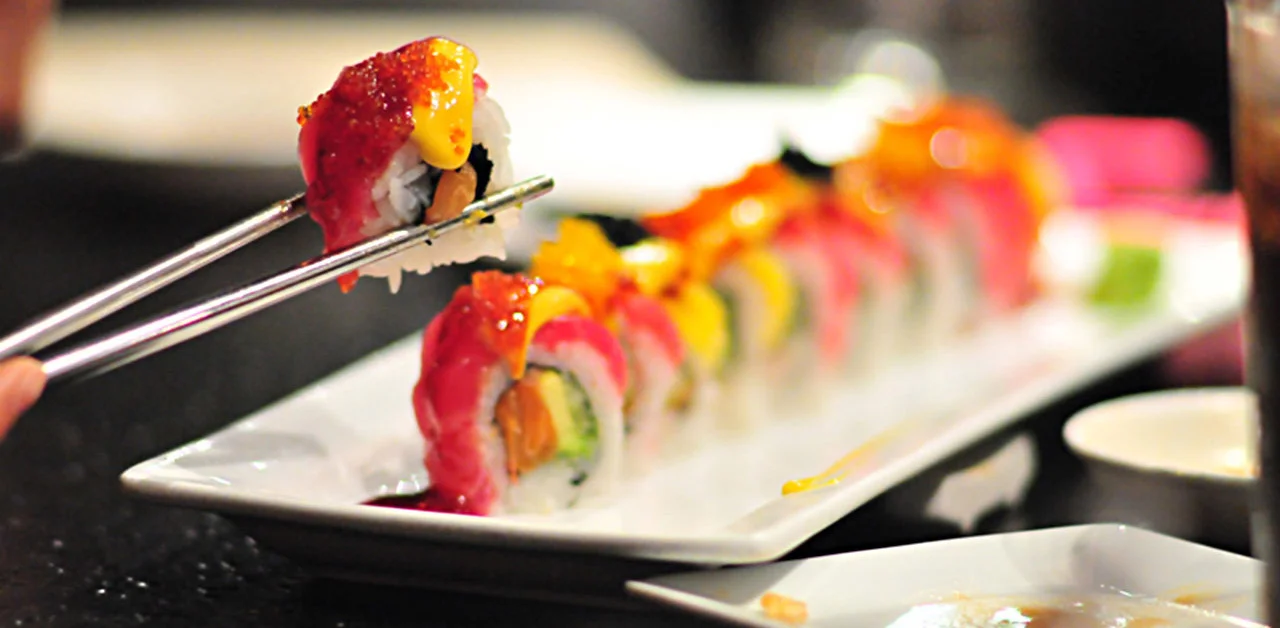
Walk into a good sushi restaurant and you will see the chef working with a long, narrow blade that looks nothing like a kitchen knife. That is a yanagiba, and it raises a fair question for anyone making sushi at home: do you need one? The short answer is no. The longer answer explains what these knives do, why they are built the way they are, and which everyday Japanese knife does the job in a home kitchen.
The two traditional sushi knives
Yanagiba
The yanagiba (the name means willow blade) is 24 to 33 cm long, slim and single-bevelled, which means only one side of the edge is ground. A sushi chef draws it through a block of fish in one long pull, from heel to tip, so the surface of each slice is cut once and never sawn. That single clean cut is what gives sashimi its glossy face and soft texture. The single bevel also helps the slice fall away from the blade rather than sticking to it.
Deba
The deba is the opposite in character: short, thick and heavy, also single-bevelled. It is used to break down whole fish, taking the head off and working along the spine. The weight does the work, and the thick spine survives contact with bone that would chip a finer blade.
Both knives are specialist tools. A yanagiba is awkward for anything other than slicing, and a deba is too heavy for fine work. Professional kitchens keep both because they process whole fish every day. Most home cooks buy fish already filleted and slice it once or twice a month.
What you actually need at home
Three things matter when you slice fish for sushi, and none of them requires a single-bevel knife.
A sharp edge. This is nine tenths of it. A dull knife tears the flesh whatever shape it is. A sharp double-bevel Japanese knife, drawn through the fish in one stroke, gives a clean face that is more than good enough for home sushi.
Enough length. You want to finish the slice in a single pull without pushing back and forth. A blade of 21 cm or more lets you do that with a typical fillet.
A flat section of edge. A long, flat edge keeps the whole slice in contact with the blade. Knives with a pronounced belly, made for rocking, are less suited to it.
Which Oishya knife for sushi
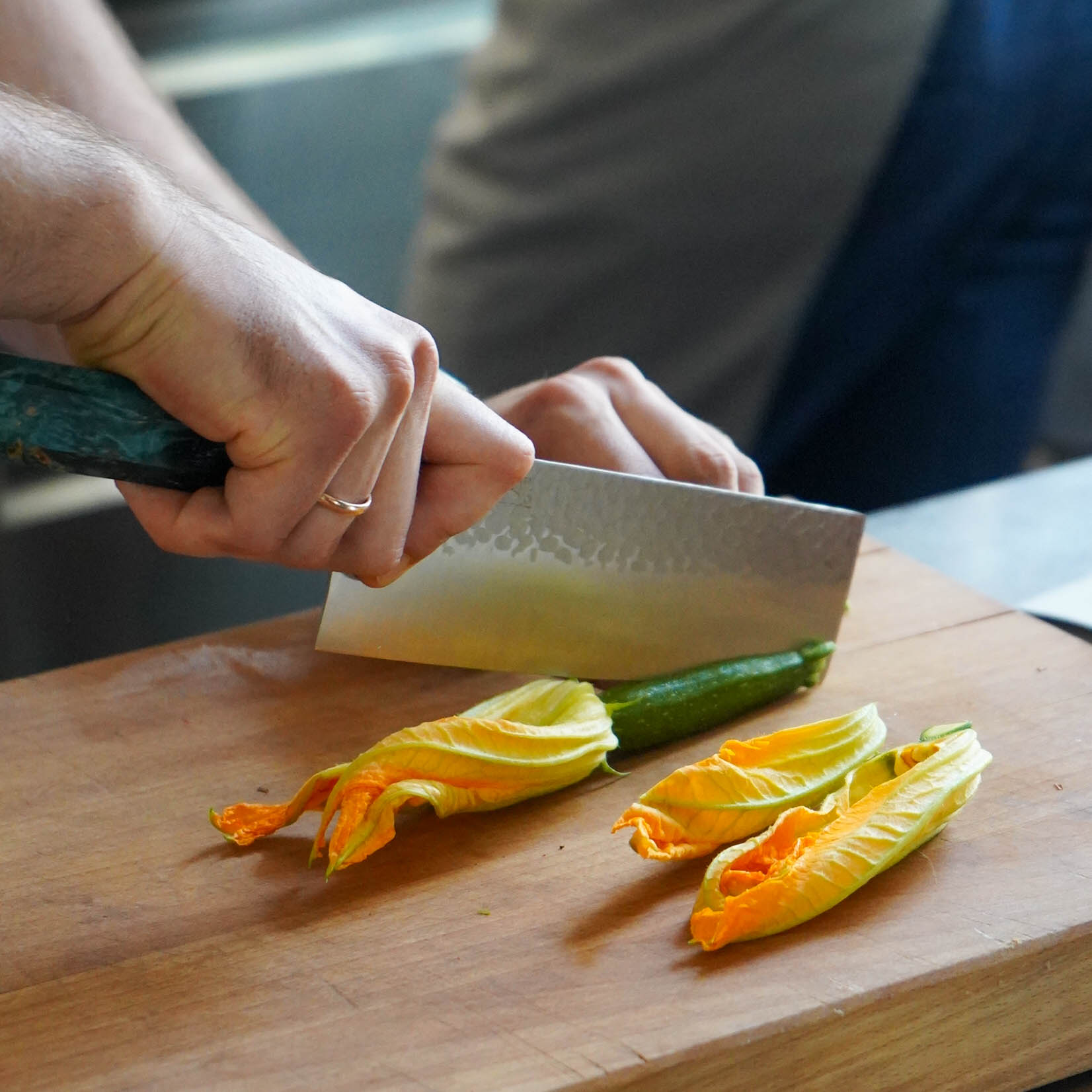
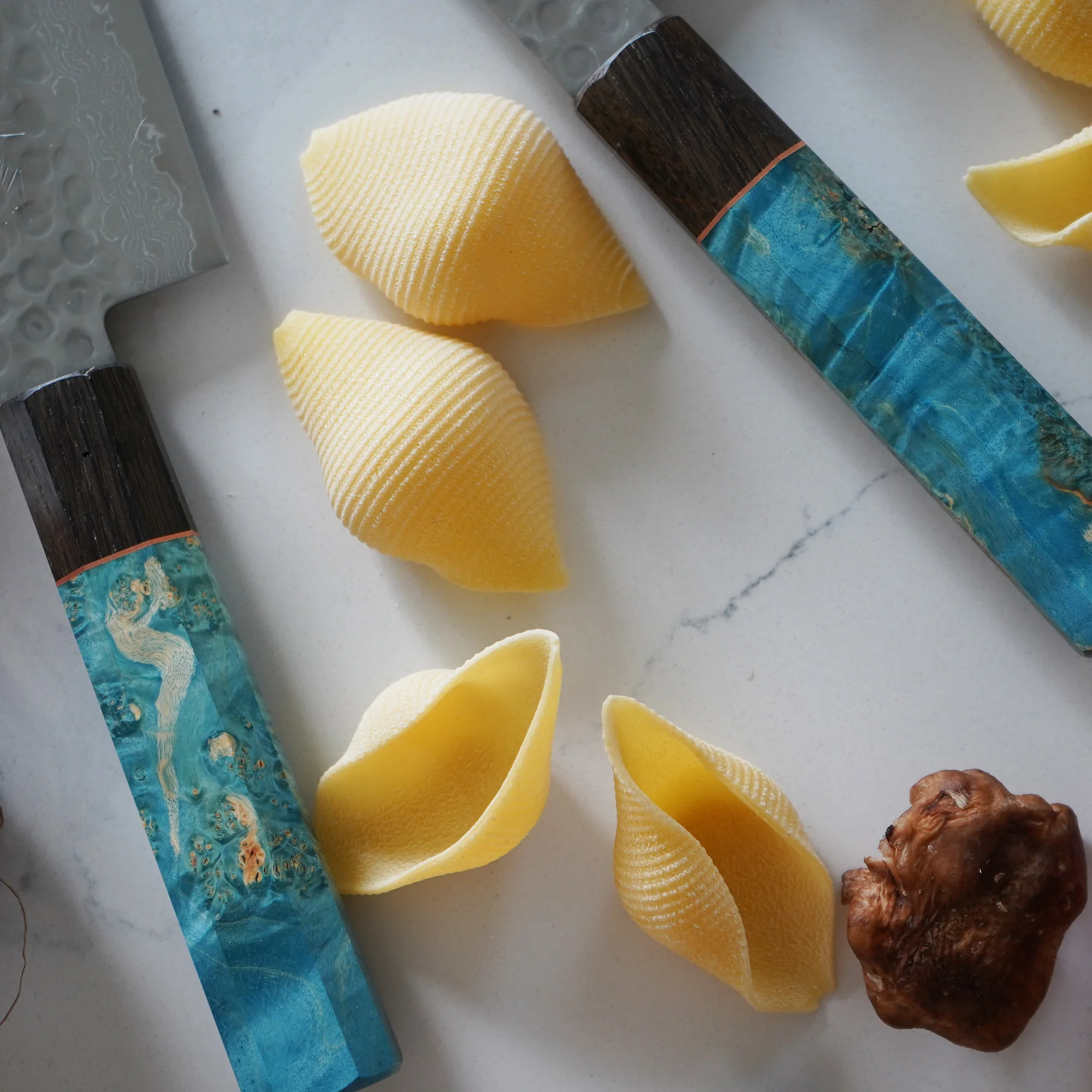
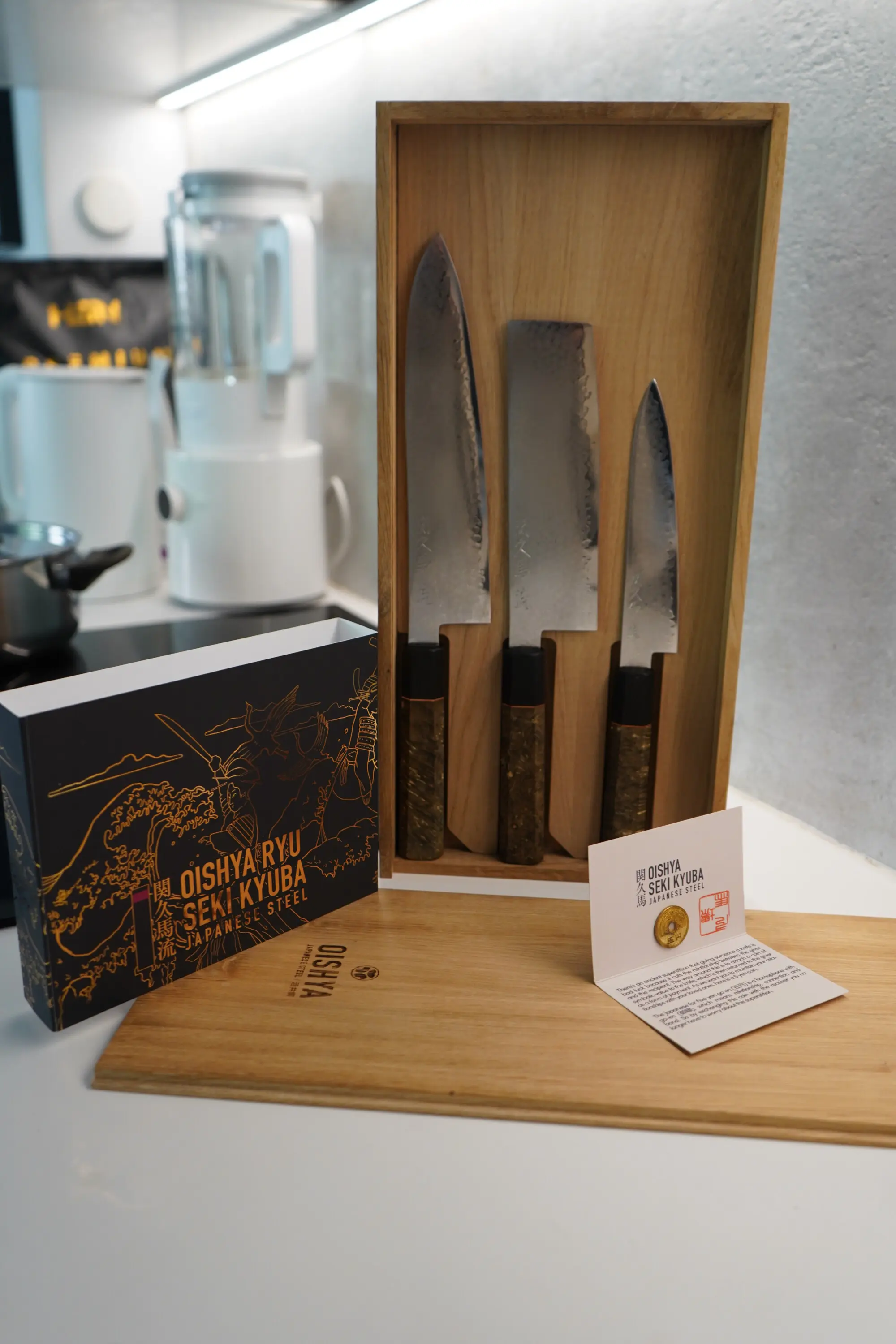
We do not make a yanagiba or a deba. All our blades are double-bevel, so they suit left- and right-handed cooks and they sharpen on an ordinary whetstone. For sushi at home we would reach for one of these.
Kiritsuke, 21 or 24 cm. The closest thing in our range to a slicer: a long, flat edge with an angled tip. It is the knife we use for sashimi, and it also handles vegetables and boneless meat, so it earns its place for the rest of the week too. We make it in the SHIN line only.
Gyuto, 21 cm. The Japanese chef’s knife. The gentle curve means you slice with a slight drawing motion rather than a dead-straight pull, but a sharp gyuto slices fish cleanly and it is the most versatile knife in any kitchen.
Petty, 15 cm. For trimming fillets, removing skin from a small piece of fish, and the fine cuts on vegetables for rolls.
If you buy whole fish and break them down yourself, use a separate, softer Western knife for heads and bones. Hard Japanese steel holds a fine edge precisely because it is hard, and bone can chip it. Our guide to knives for fish goes through this in more detail.
Technique matters more than the knife
Chill the fish well before slicing; cold flesh holds together. Wipe the blade between cuts so it glides. Place the heel of the knife on the far side of the fish and pull towards you in one motion, letting the length of the blade do the work, and never saw. Cut against the grain of the muscle for tenderness. With a sharp knife and that one movement, home sushi looks and tastes very close to the real thing.
So, do you need a yanagiba?
Only if you plan to slice fish several times a week and want to learn single-bevel sharpening. For everyone else, a sharp, long, flat-edged double-bevel knife is the better buy, because it will do the sushi and everything else. If you are not sure which, our three-minute knife quiz will point you to one.