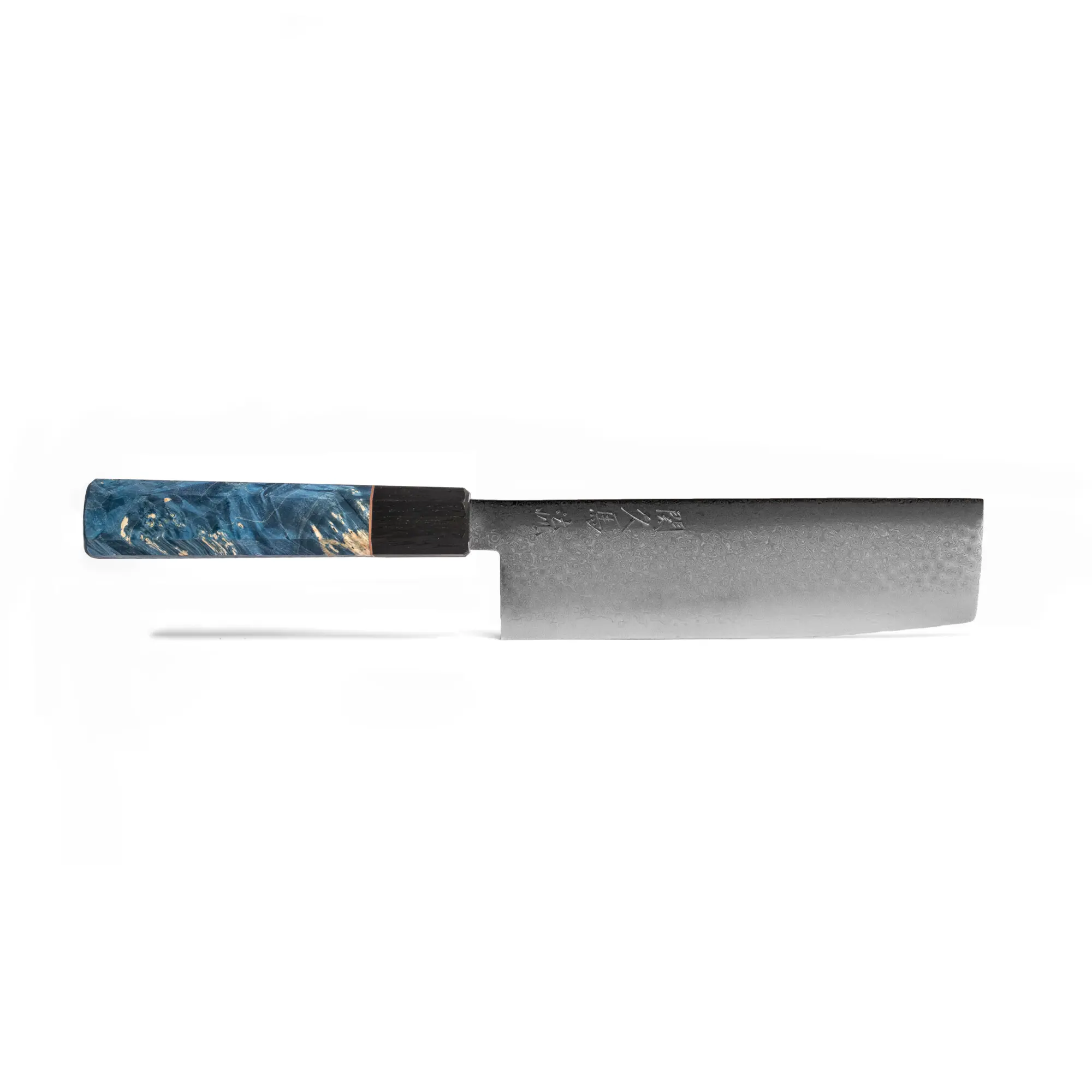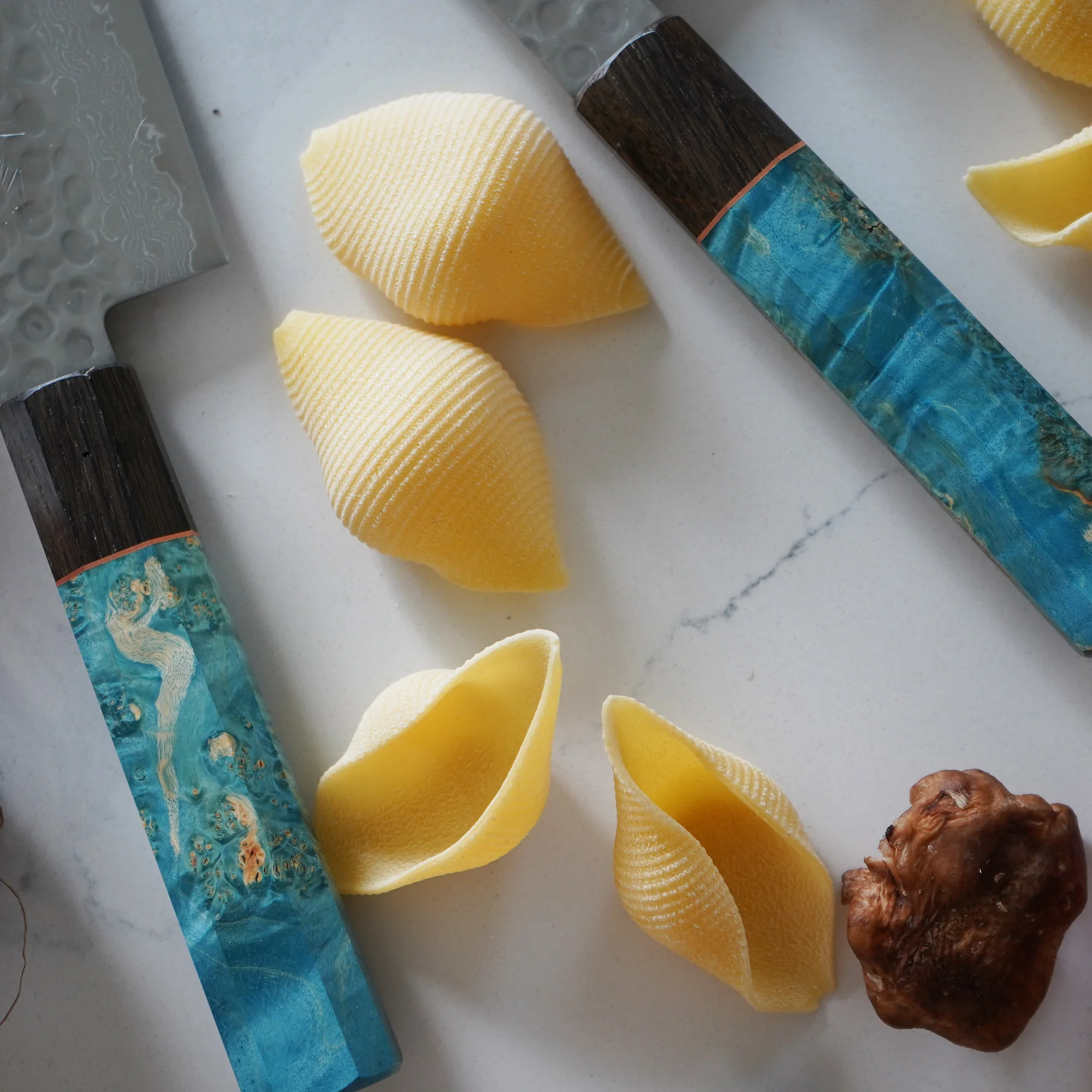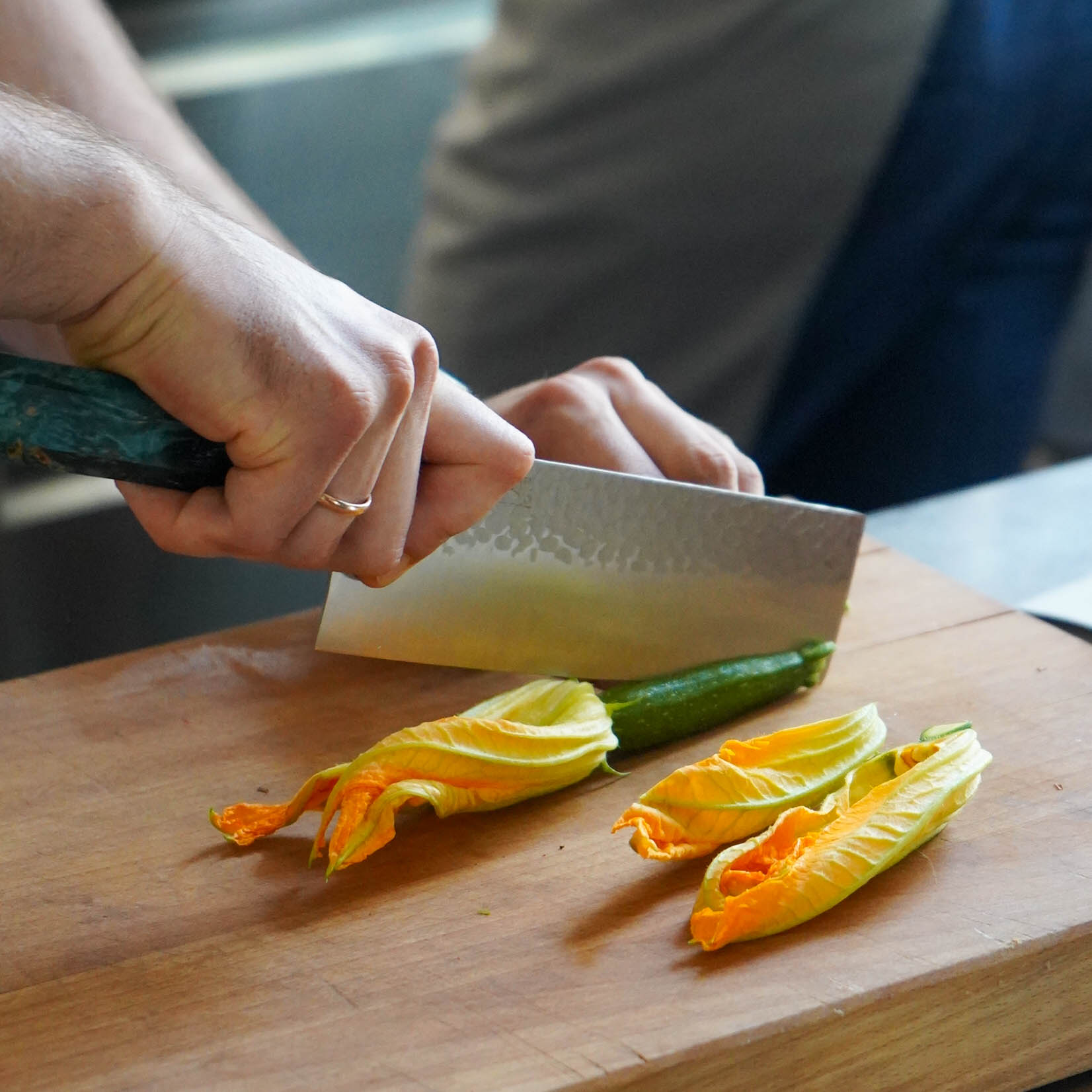
The Nakiri is the knife people tend to fall for once they try it. It looks severe, almost like a small cleaver, with a straight edge and a squared-off tip. Then you slice a cucumber with it and understand. It is a knife made for vegetables, and if you cook a lot of them, it may become the one you reach for first.
What is a Nakiri?
Nakiri bōchō roughly means “knife for cutting greens”. It is a Japanese vegetable knife with a tall, rectangular blade, a flat edge that runs dead straight from heel to tip, and a blunt, squared end. Home Nakiri are double-bevelled, sharpened equally on both sides, which makes them easy for anyone to use, left or right-handed. Ours run from 16cm to 18cm.
It is sometimes confused with the Usuba, a professional single-bevelled vegetable knife used in Japanese restaurants for very fine work such as peeling a daikon into a paper-thin sheet. The Usuba is beautiful and demanding. The Nakiri is its relaxed, home-kitchen cousin.
What is a Nakiri used for?
Anything that grows. The flat edge meets the board along its whole length at once, so when you chop down through a spring onion or a bunch of herbs, every piece is cut cleanly through. With a curved chef’s knife, the last fibres sometimes cling together in a “concertina” of not-quite-separated slices. With a Nakiri that rarely happens.
It is superb for slicing cucumbers, courgettes and carrots into even rounds, for shredding cabbage and lettuce, for chopping herbs, and for dicing onions. The tall blade lets you scoop everything off the board in one move and carry it to the pan. It is good on squash and sweet potato too, used straight down rather than twisted.
Where it is less useful is anything that needs a point. It will not score the skin of a fish, trim a steak or get into the core of a pepper. That is why most people keep it alongside a chef’s knife and a small Petty rather than instead of them.
How to use a Nakiri
The Nakiri rewards a different motion from a Western chef’s knife. Rather than rocking, use a push cut: start with the knife slightly back, then move it forward and down in one smooth stroke, so the edge slices through rather than pressing. Lift it, move back, repeat. Or chop straight up and down, letting the full flat edge meet the board. Keep your other hand in a claw grip, fingertips tucked in, knuckles guiding the side of the blade. Our guide to the claw technique shows how.
Because the blade is tall, your knuckles stay well clear of the board, which many people find reassuring.
Nakiri or Santoku?
It is a question we are often asked. Both have a flatter edge and a tall blade, and both are excellent for vegetables. The Santoku has a rounded tip and a little curve towards it, so it also handles meat, fish and finer point work, making it the better choice if you will only own one knife. The Nakiri is the specialist: flatter, straighter, and even better at fast, clean vegetable prep. If you already own a chef’s knife and cook a lot of vegetables, the Nakiri is the most useful second knife we know. Our guide to Gyuto, Santoku and Bunka covers the chef’s knives.
Do you need one?
If you are vegetarian or vegan, if you grow your own, if you make a lot of salads, stir-fries or soups, or if dinner usually starts with a pile of things to chop, yes. You will notice the difference within a week.
If you mostly cook meat and fish and only occasionally chop a carrot, a chef’s knife will serve you perfectly well and a Nakiri can wait.
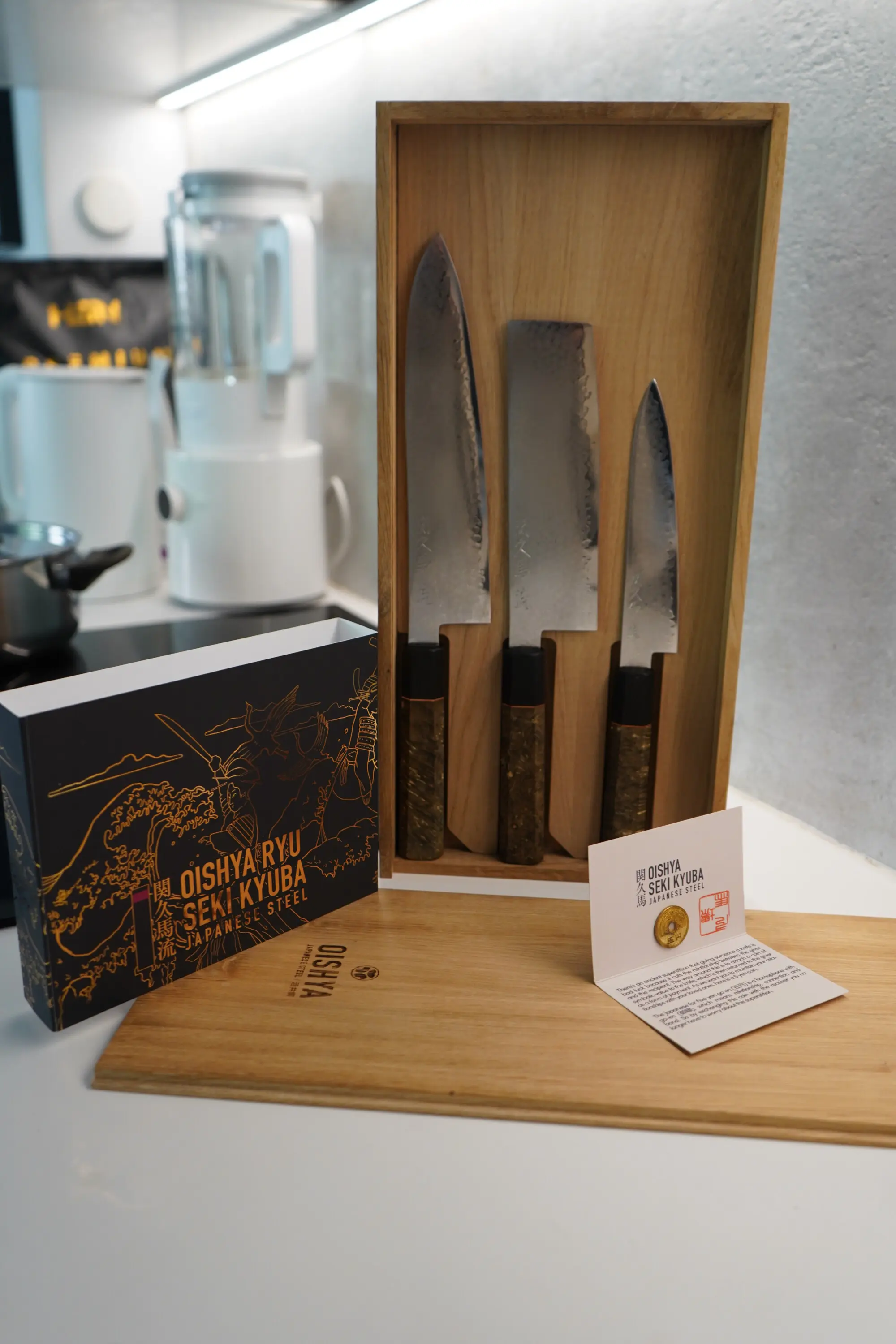
That is also why the Nakiri sits in every one of our sets. A knife set pairs a Gyuto or Santoku with a Nakiri and a Petty, the three shapes that cover almost everything a home cook does.
Our Nakiri
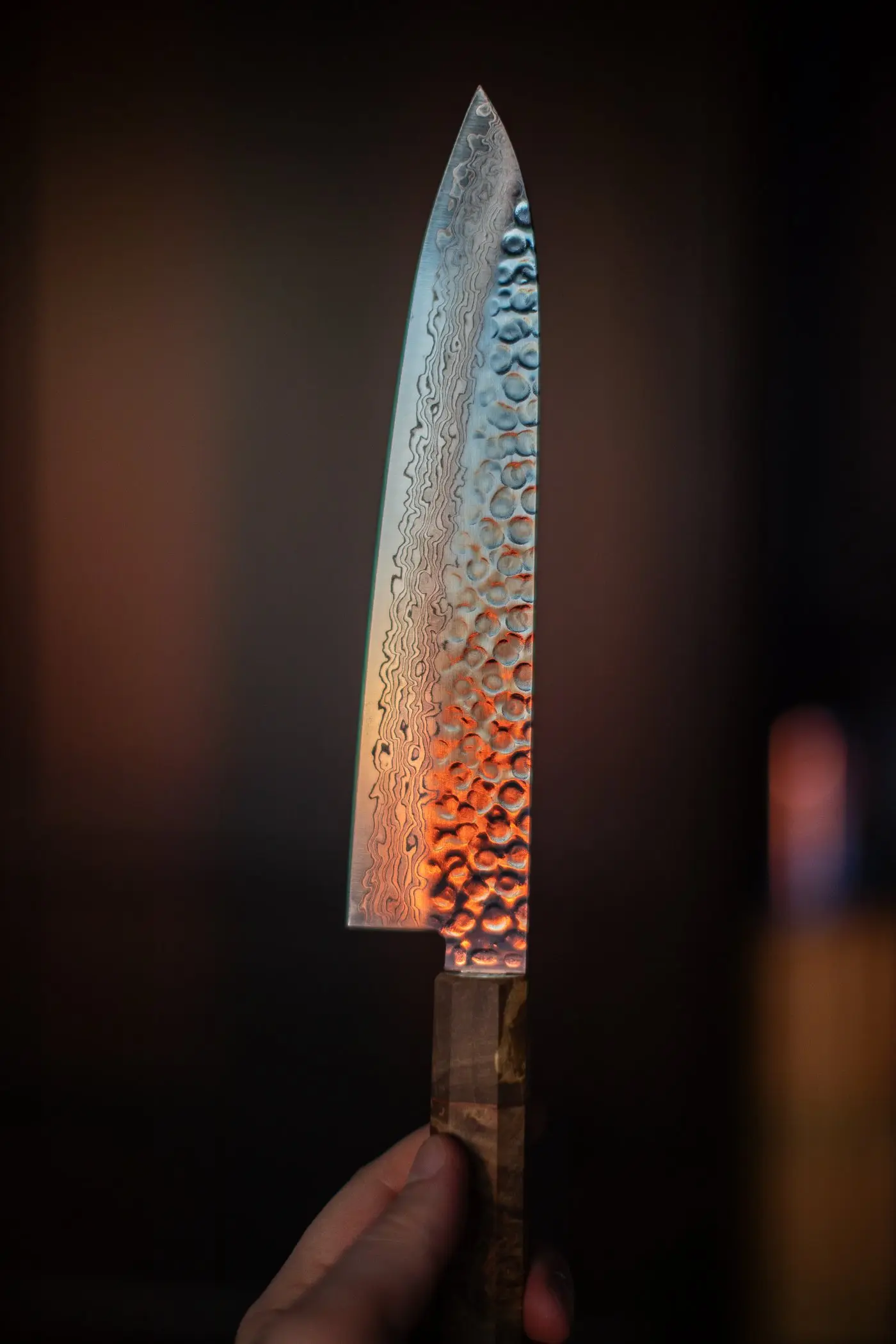
We make Nakiri in four lines. The Sakai Kyuba KYU Nakiri is 16cm, forged in Sakai in AUS10 with 46 layers of Damascus and a hammered finish, and is the most forgiving choice for a busy kitchen. The KATA Nakiri is 18cm in VG10, and it is noticeably heavy for its size, which some cooks love on root vegetables. The RYU Nakiri is 17.5cm in VG10 with 33 layers of Damascus, and the NIJI Nakiri is 18cm, with its brass and copper Damascus. All of them are on our Nakiri page.


Caring for a Nakiri
The care is the same as for any Japanese knife. Wash and dry it by hand straight after use, cut on a wooden board, and sharpen it on a whetstone a few times a year. Because the edge is straight, a Nakiri is one of the easiest knives to sharpen: there is no curve or tip to follow. Our sharpening guide walks through it.
Use the spine, never the edge, to sweep chopped vegetables across the board. The flat edge of a Nakiri is very efficient at cutting, and just as efficient at rolling itself dull if it is used as a scraper.
Frequently asked questions
What is a Nakiri knife used for?
Vegetables, herbs and fruit. Its flat, straight edge cuts cleanly through to the board, which makes it ideal for slicing, shredding and chopping.
Can you cut meat with a Nakiri?
You can slice boneless meat with it, but it is not designed for it. A Gyuto or Santoku with a pointed or rounded tip is better for meat and fish.
What is the difference between a Nakiri and a cleaver?
A Nakiri is much thinner and lighter, made for slicing vegetables precisely. A cleaver is thick and heavy, made for chopping through bone. Never use a Nakiri on bone.
Is a Nakiri good for beginners?
Yes. The straight edge and tall blade make it easy to control, and the up-and-down or push-cut motion is natural to learn.