





A short guide
Why choose Japanese knives over Western knives
Pick up a Japanese chef's knife after years of a Western one and the difference lands straight away, and it has nothing to do with looks. It comes from a different idea of what a blade is for.
Harder steel, sharper edges. Our blades run from HRC 59 to 64, against roughly 54 to 58 for most Western knives. Harder steel holds a finer edge, typically sharpened at 10 to 15 degrees a side against around 20 for a Western knife, so it parts food instead of shoving through it.
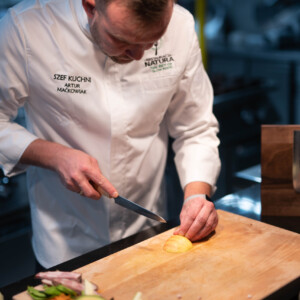
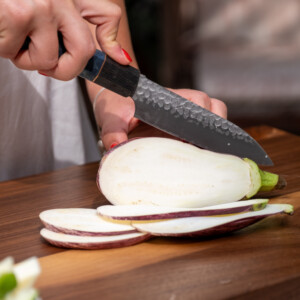
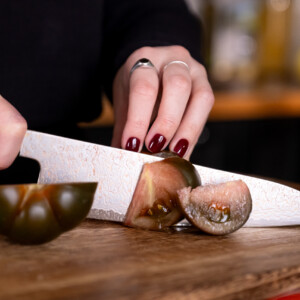
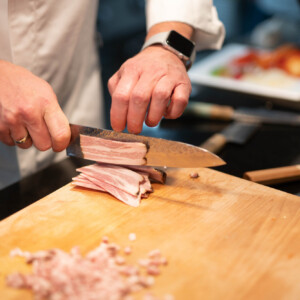
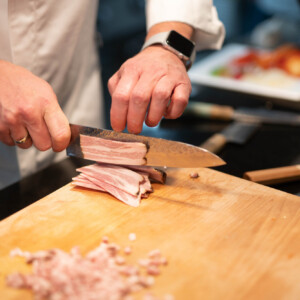
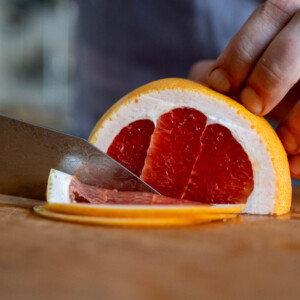
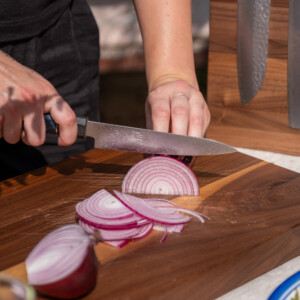
Thinner and lighter. That hardness lets the blade be ground thin without buckling, so there's less metal fighting its way through an onion. Herbs don't bruise, tomato skin gives without crushing the flesh, and your hand isn't aching forty minutes into prep.
Purpose-built precision. Western kitchens reach for one do-everything knife. Japanese ones keep a shape for vegetables, a shape for fish, a shape for fine slicing, and each does its own job well.
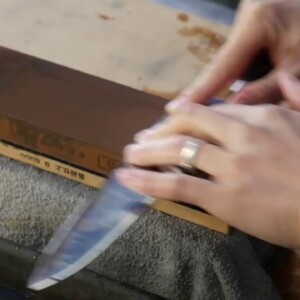
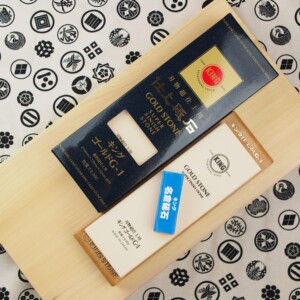
Better edge retention. Hard steel holds its edge longer, so you sharpen less and cook more. When it is finally time, the right whetstone grit brings it back in minutes.
The shapes
Types of Japanese knives
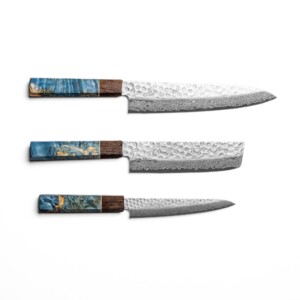
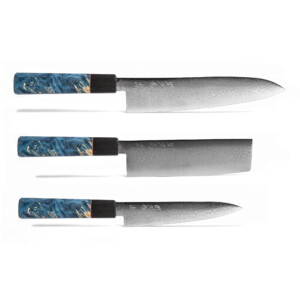
Six shapes, each made for a different way of cutting. Most kitchens start with one and add the rest over time.
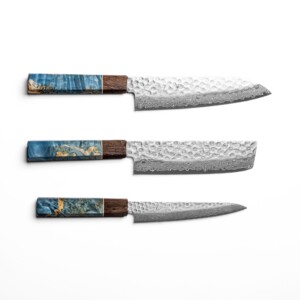
Gyuto
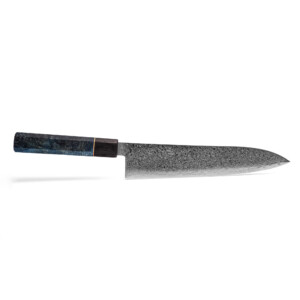
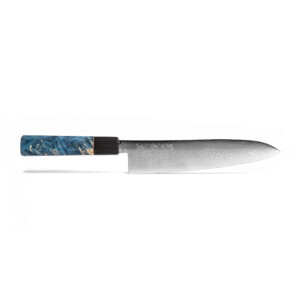
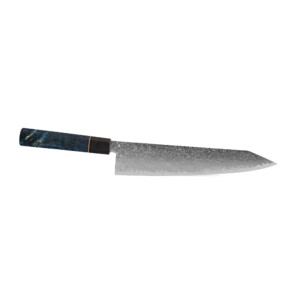
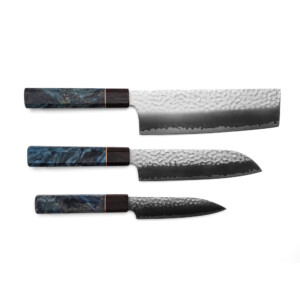
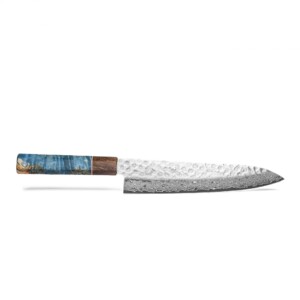
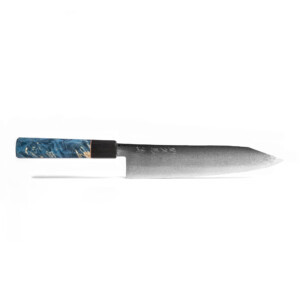
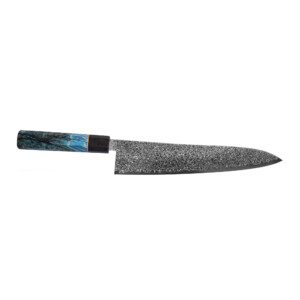
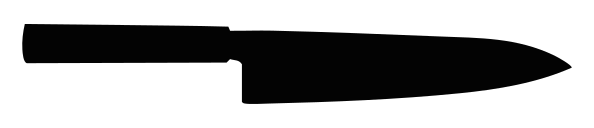
The Japanese chef's knifeA gently curved blade that moves between meat, fish and vegetables. In 21cm for a home board or 24cm if you cook big, it carries the bulk of the work.
Shop gyuto
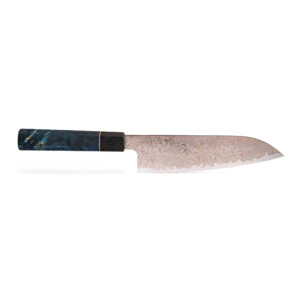
Santoku
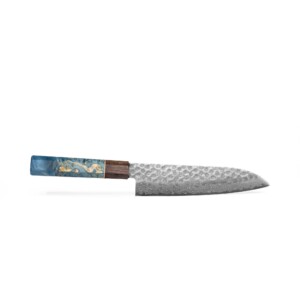
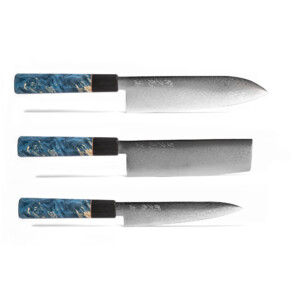
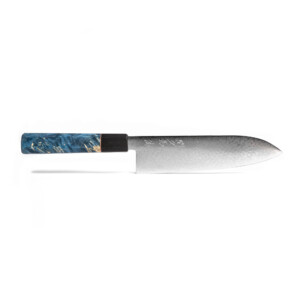
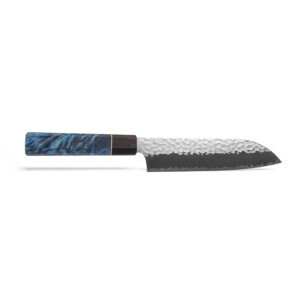
The three virtuesSantoku means three virtues: slicing, dicing and mincing. It's shorter and flatter than a gyuto, which is exactly why cooks who find long blades unwieldy reach for it. Compact, nimble and an all-rounder in a smaller kitchen.
Shop santoku
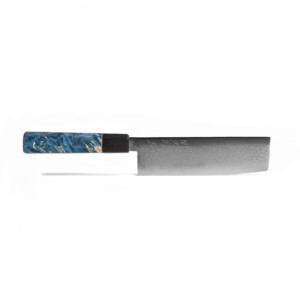
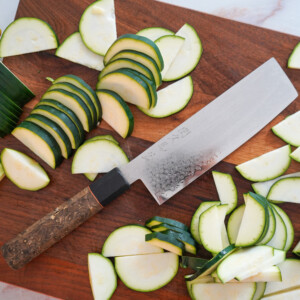
Nakiri
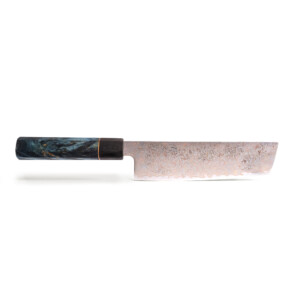
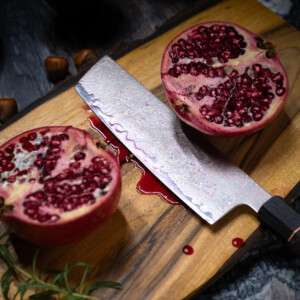
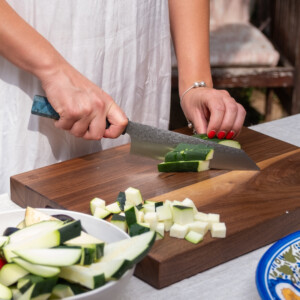
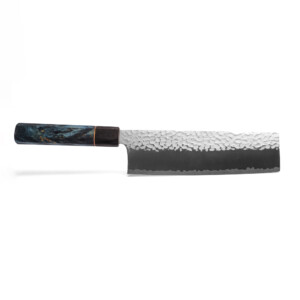
The vegetable specialistA flat, rectangular blade made for vegetables. Its straight edge meets the board along its whole length in a single downward push. No rocking, no half-cut celery hanging on. Cook a lot of plants and it quietly changes your prep.
Shop nakiri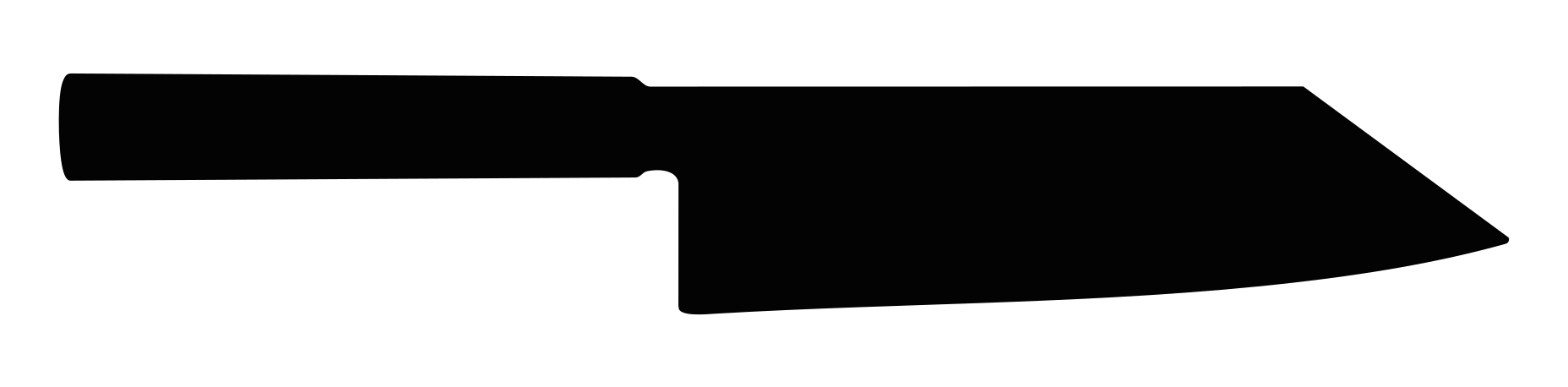
Bunka
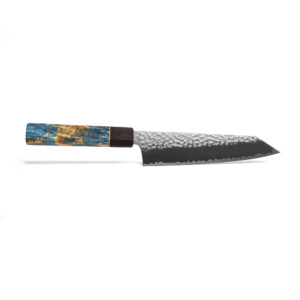
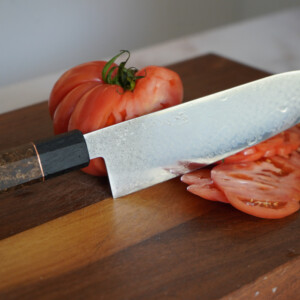
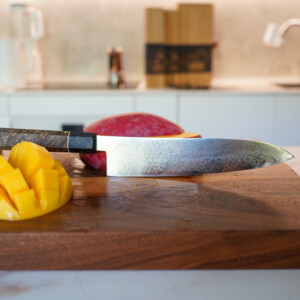
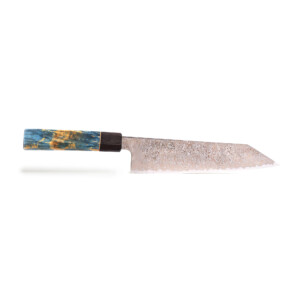
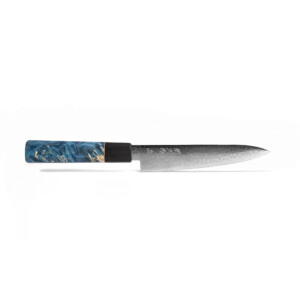
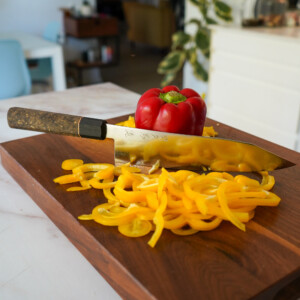
The versatile workhorseThink of the bunka as a santoku with a sharp, angled reverse-tanto tip. You get the broad, flat belly for everyday chopping plus a fine point for scoring and detail work. The KATA Bunka is where most home cooks start.
Shop bunka
Kiritsuke
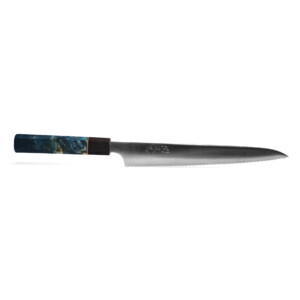
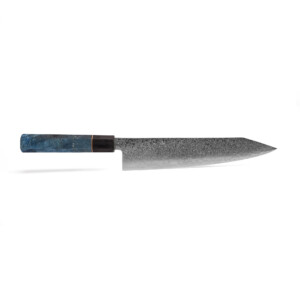
The statement bladeLong like a gyuto, flat like a nakiri, finished with a sword-like angled tip. Traditionally the head chef's knife, it still asks a little skill of you. Give it that and it slices long and preps vegetables with equal confidence.
Shop kiritsuke
Petty
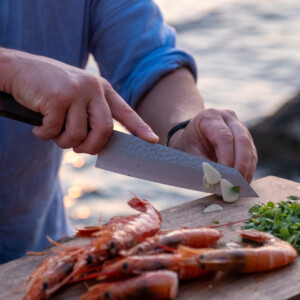
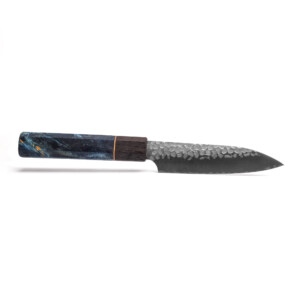
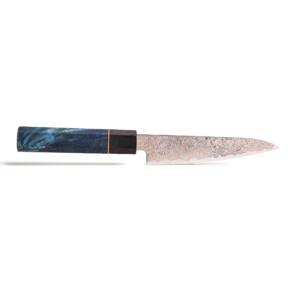
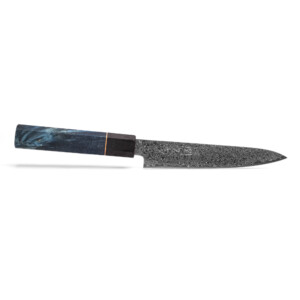
The precision toolThe small knife you'll use more than you expect: peeling, trimming, deveining, breaking down a shallot. It takes on every fiddly job a full-size blade makes awkward.
Shop pettyWhere to start
How to choose your first Japanese knife
Choosing the best Japanese knife for you is simpler than the options make it look.
Start with one blade that does most jobs. A bunka, a 21cm gyuto or a santoku will handle 80 to 90% of what you cook. Most home cooks begin with the KATA Bunka. Add the specialists later.
Match it to what's on your board. Mostly vegetables? A nakiri earns its keep fast. Lots of meat and fish? The gyuto's length and curve win. A bit of everything? The bunka or santoku.
Decide how much upkeep you want. Every line here is stainless. What differs is hardness. KYU and RYU run at HRC 62 and hold their edge longer between sharpenings. KATA sits at HRC 60 to 62 and comes back on a stone with less work. Neither is better. It comes down to your routine.
For the long version, see our complete guide to buying your first Japanese knife, or take the two-minute quiz.
Questions
Frequently asked questions
What makes Japanese knives different from Western knives?
Which Japanese knife should I buy first?
How do I care for and sharpen my Japanese knife?
Are your knives actually made in Japan?
Do you offer a money-back guarantee?
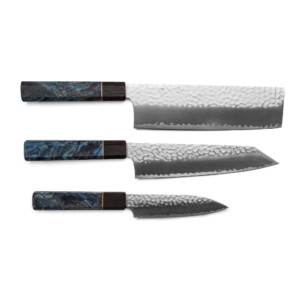
Is a Japanese knife set better value than buying individual knives?
Buying as a gift
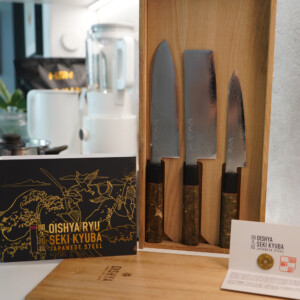
A 5 yen coin goes with every knife, and the old tradition behind it.
The gift tradition