In this article, we will explain the differences between Shirogami (also called #1 steel) and Aogami (also called #2 steel).
- The words Ao and Shiro mean blue and white.
- Gami means metal.
- The numbers 1 and 2 are grade differences. It all has to do with the carbon content and the alloy content.
Shirogami Steel
The white paper steel is super pure. It has very low alloy content and high carbon. It is super for Hamon blades.
Aogami Steel
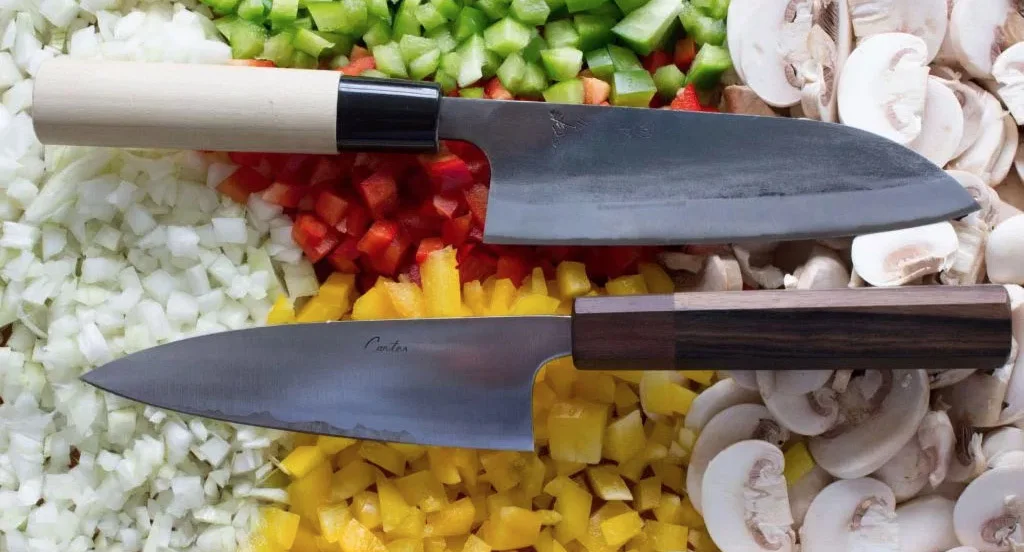
The blue paper has some alloying added and is high carbon. It makes a really sharp and tough working knives for chefs. These two types of steel are considered the cream of the crop in fine blades.
#2 steels often have kurouchi finish, like this Moritaka Aogami #2 – Fish Meat Japanese Kitchen Knife 21cm – Yanagiba


Suminagashi is a laminated billet with a white paper core and layered sides. It is a low-layer damascus with a medium thick solid core. The wavy upper sides add a good look to medium and large blades.
The laminated steel has a thin white paper core and soft iron (like wrought iron) sides. It makes great slicers with a dark spine and a bright edge. When grinding it, you have to make sure you orient the core at the final edge. This makes a really good looking and tough small to medium size knife. It is also perfect for a tanto blade or small wakizashi.
Note: The main advantage of the low alloy is using a water or brine quench without warp and cracking.
Now, as far as equivalent in function and performance, many steels will be similar, but they won’t have the name recognition that Hitachi steel will give the knife.
Do you need help with choosing your perfect knife? Drop us an email or read the Japanese knives buying guide first and then feel free to ask us questions.