Your Japanese knife is an investment in better cooking. With the right care, it will reward you with decades of effortless cutting. This quick-reference guide covers the five essentials every knife owner should know.
1. Hand wash only: every time
This is the single most important rule. Dishwashers damage knives in three ways: the heat warps handles, the detergent corrodes steel, and the jostling chips the edge against other items. Hand wash your knife with warm water and mild soap immediately after use, then dry it straight away with a clean towel.
Even stainless steel benefits from prompt drying. Water spots may seem harmless, but mineral deposits can etch the blade over time, especially on Damascus finishes where the etched pattern is delicate.
2. Use the right cutting surface
Your cutting board matters almost as much as your knife. Hard surfaces like glass, stone, ceramic, and metal will destroy your edge in minutes. Plastic is acceptable but not ideal.
The best choice is a quality wooden board. End-grain walnut, hinoki, or Aomori Hiba are all excellent. They are soft enough to protect your edge while being durable enough for daily use. Our cutting board guide covers the best woods in detail.
3. Sharpen regularly with a whetstone
Even the hardest steel dulls over time. A quick sharpening session every 2-3 months keeps your edge at peak performance. You do not need to be an expert. The basic technique is straightforward:
- Soak your whetstone in water for 10-15 minutes
- Hold the knife at approximately 15 degrees to the stone (about the thickness of two coins under the spine)
- Draw the blade across the stone in smooth, even strokes, 20-30 per side on a 1000-grit stone
- Finish with 10-15 strokes per side on a finer grit (3000-6000) for a polished edge
- Rinse the knife and dry immediately
A dual-grit stone like the King HT-65 PRO 1000/6000 is all most home cooks need. For a deeper dive into grit selection and technique, read our complete whetstone guide.
Important: never use a pull-through sharpener or electric sharpener on a Japanese knife. These remove too much material at the wrong angle and can ruin a blade in seconds.
4. Store your knives properly
A kitchen drawer is the worst place for a Japanese knife. Every time the blade slides against other utensils, the edge chips and dulls. Proper storage protects both the knife and your fingers.
The three best options:
- Magnetic wall rack: keeps knives visible, accessible, and completely protected. Our walnut magnetic racks use neodymium magnets strong enough to hold the heaviest blade securely.
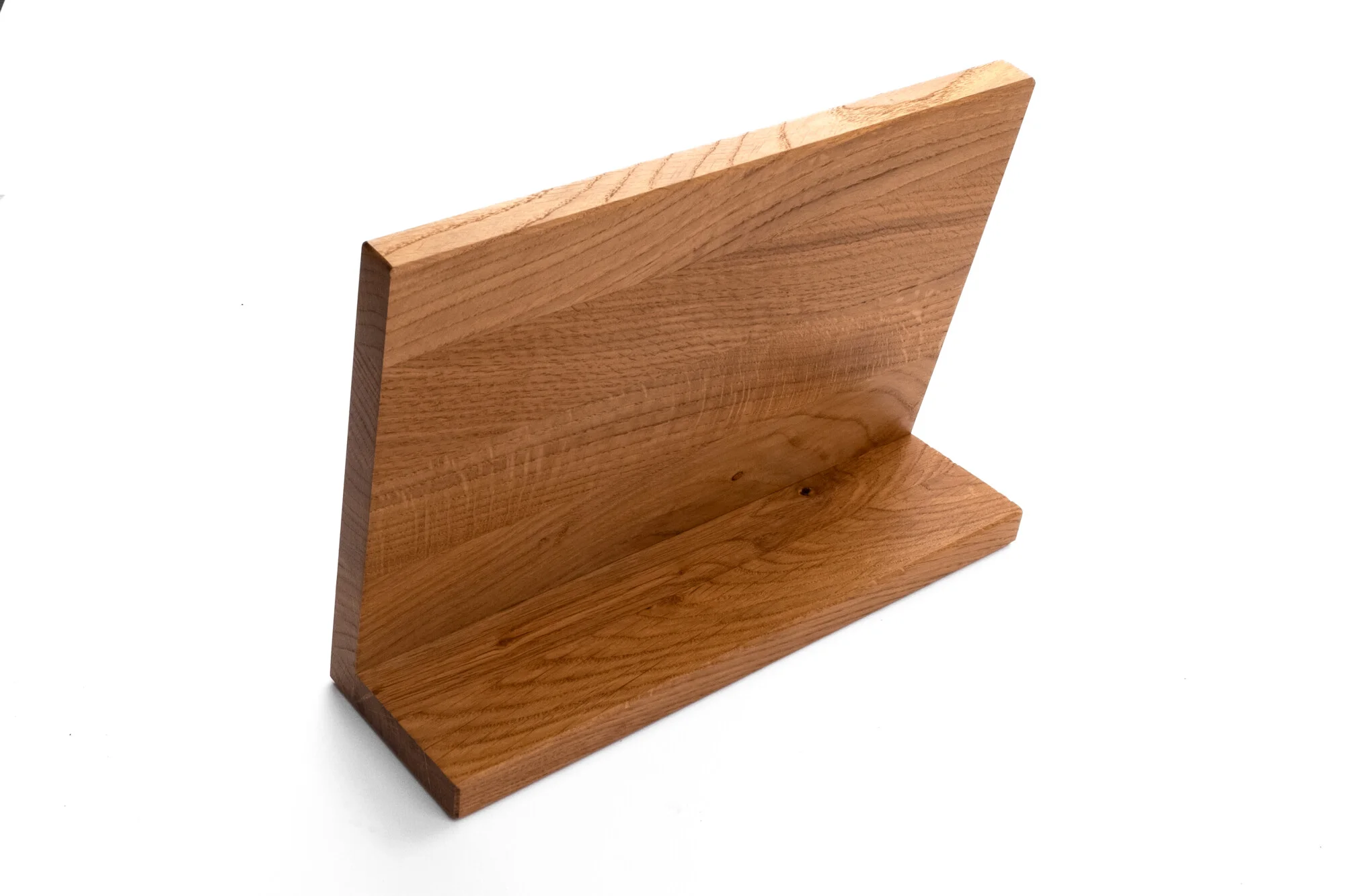
- Magnetic knife stand: the counter-top alternative. Our magnetic stand holds knives without the slot-to-blade contact that dulls edges in traditional blocks.
- Blade guard or saya. If you must store in a drawer, always use a blade guard (wooden sheath). Never let an unprotected edge touch anything.
For more on storage options, including where to mount a magnetic rack, see our knife storage comparison and 10 best places for a magnetic rack.
5. Use proper cutting technique
Japanese knives are designed to cut with precision, not brute force. A few technique adjustments make all the difference:
- Let the edge do the work. A sharp Japanese blade needs minimal pressure. If you are pressing hard, your knife needs sharpening.
- Avoid lateral force. Japanese blades are thinner and harder than Western knives, which makes them more susceptible to chipping if you twist or pry with them. Cut straight down or with a slicing motion: never use your knife to scrape food off the board (use the spine instead).
- Match the blade to the task. Do not use a petty to break down a pumpkin, and do not use a gyuto to peel a shallot. The right blade for the right job prevents damage and produces better results.
- Avoid frozen food and bones. Unless you have a dedicated cleaver, never cut through frozen items or bones with a Japanese knife. The hard steel will chip.
Quick-reference care checklist
- Hand wash and dry immediately after every use
- Use a wooden or quality plastic cutting board
- Sharpen with a whetstone every 2-3 months
- Store on a magnetic rack, stand, or in a blade guard
- Never: dishwasher, glass/stone boards, pull-through sharpeners, frozen food, lateral twisting
For the complete guide with advanced techniques, seasonal maintenance, and steel-specific care instructions, visit our Japanese Knife Care & Maintenance: The Complete Guide.
If you read this far, the next five letters are for you.
Knife School by email. Five short lessons: choosing your first knife, what the steel numbers mean, the grip, the stone, and keeping an edge. Free, and nothing is sold to you. Begin.
Handcrafted Japanese Knives by Oishya
Forged by master craftsmen in Seki and Sakai, Japan. Free worldwide shipping over £270 • 100-day money-back guarantee • Lifetime warranty