Last updated: April 2026
Choosing the right Japanese chef knife can feel overwhelming. With different blade styles, steel types, and price points, even experienced cooks struggle to find the perfect match. We have spent years curating, testing, and selling Japanese knives, and in this guide, we share what we have learned so you can find the knife that truly fits your cooking style.
What makes a Japanese chef knife different?
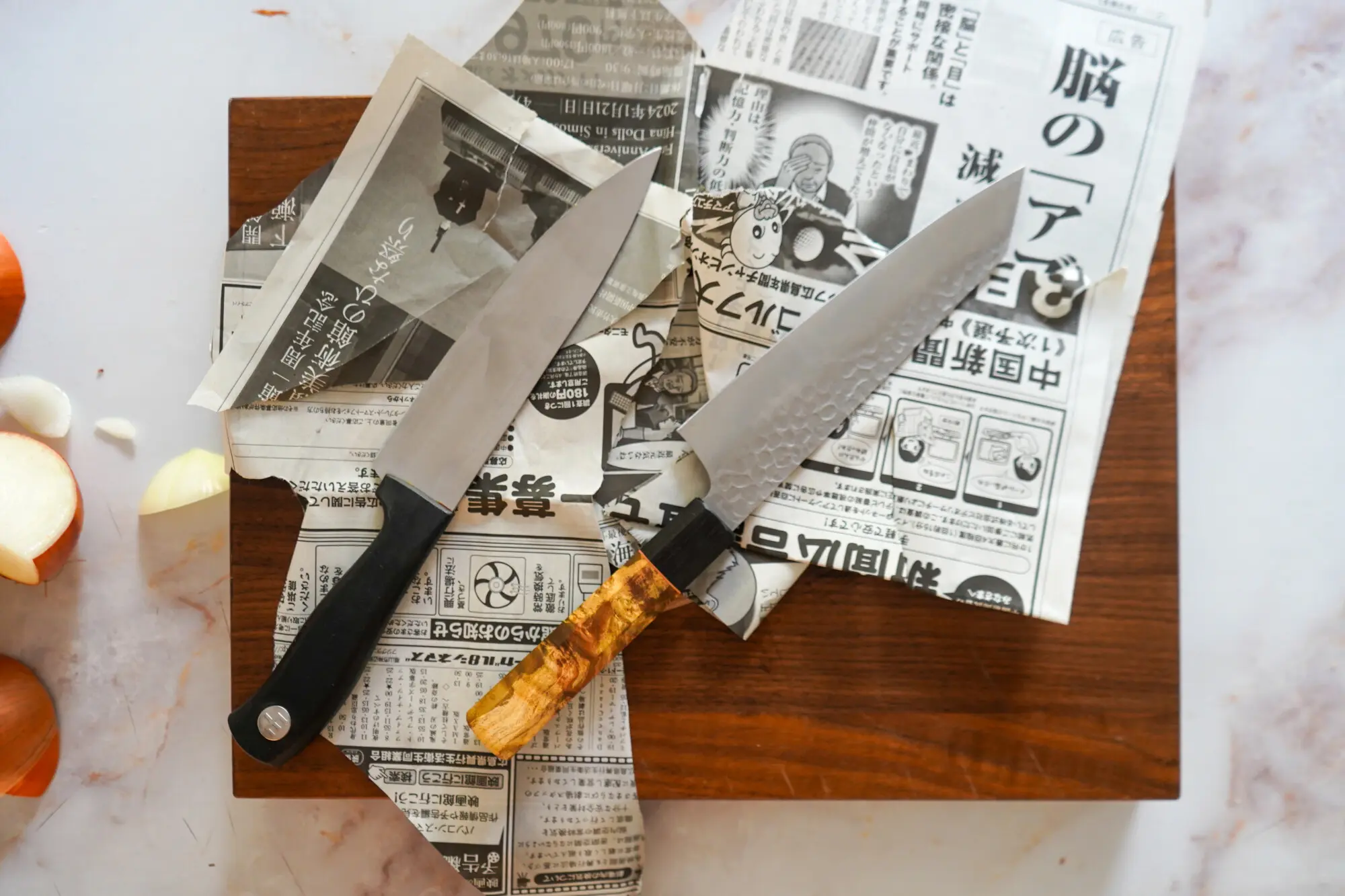
Japanese chef knives are harder, thinner, and sharper than their Western counterparts. Where a German knife might be forged from steel at 56-58 HRC (Rockwell hardness), a Japanese blade typically sits at 60-63 HRC. This means a finer edge that holds longer, but also a blade that demands more care and a different cutting technique.
The result? Cleaner cuts, less cell damage to ingredients, and more precise work. If you have ever noticed that your onions turn translucent rather than bruised when sliced with a good knife, you understand the difference a sharp, thin blade makes.
The main blade styles explained
Gyuto: the all-rounder
The gyuto is Japan’s answer to the Western chef knife. With a curved belly and pointed tip, it handles everything from rocking through herbs to precise tip work on garlic. If you could only own one knife, a 21cm gyuto would serve most home cooks perfectly.
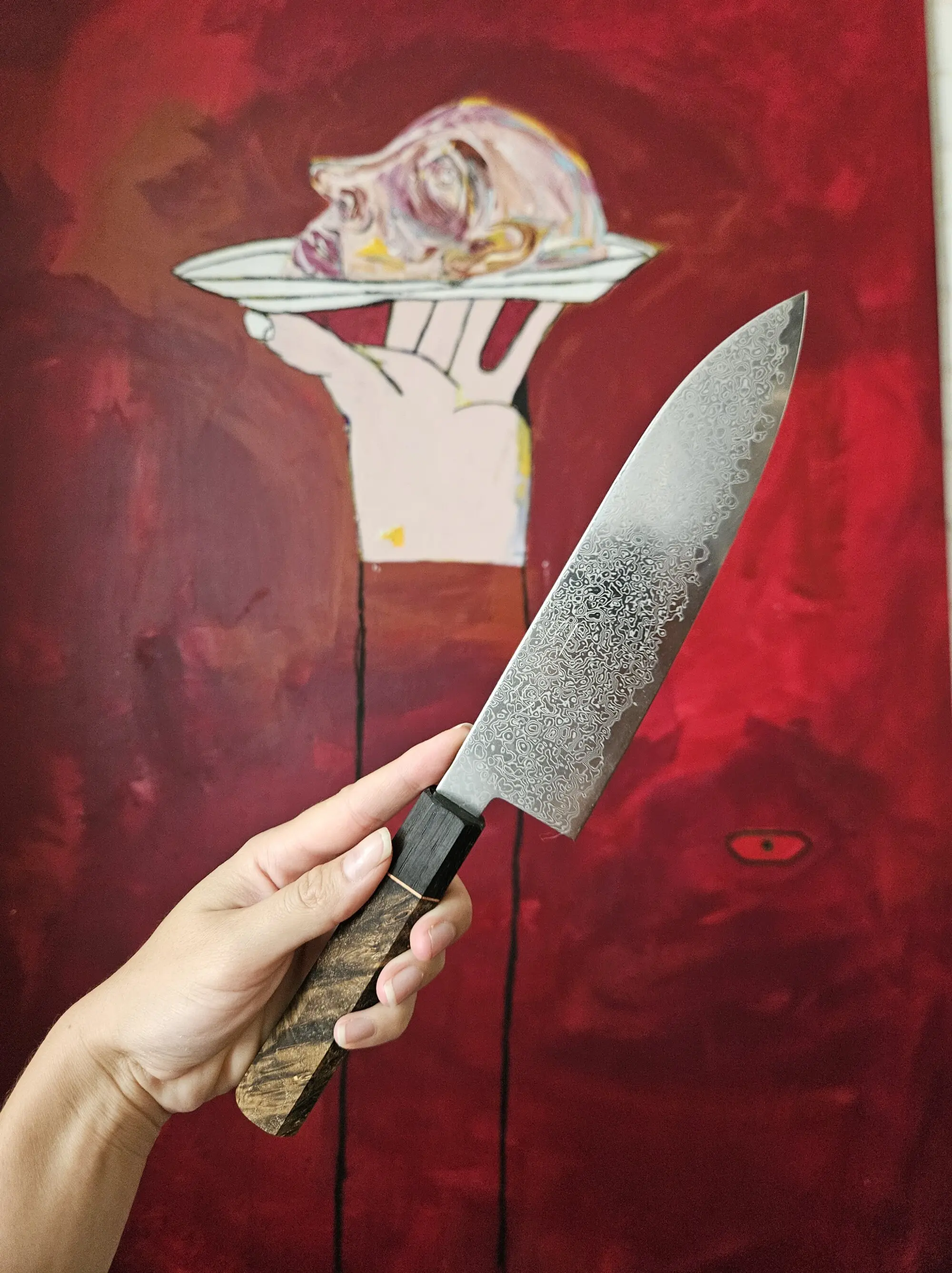
Our pick: The Seki Kyuba RYU Gyuto 21cm (€295) combines a full Damascus blade with a walnut handle. Its VG10 core holds an edge beautifully, and the 33-layer Damascus cladding is not just beautiful. It reduces food sticking to the blade.
Santoku: the home cook’s favourite
Shorter and flatter than a gyuto, the santoku excels at the three cuts its name describes: slicing, dicing, and mincing. At 16-19cm, it feels more nimble and less intimidating for cooks with smaller hands or limited counter space.
Our pick: The Sakai Kyuba KYU Santoku 18cm (€270) is our most-reviewed knife, rated 5.0 by 12 customers. The traditional Sakai craftsmanship and Damascus pattern make it a knife you will reach for daily.
Bunka: the chef’s secret
The bunka’s distinctive reverse-tanto tip gives it exceptional precision for detail work, while the flat profile makes it superb for push-cutting vegetables. It is less common than the gyuto or santoku, which means fewer people know about it, but those who try it often prefer it.
Our pick: The Seki Kyuba NIJI Bunka 20cm (€400) features a stunning rainbow Damascus pattern created by layering steel with brass and copper. It is a showpiece that also happens to be an exceptional cutting tool.
Nakiri: the vegetable specialist
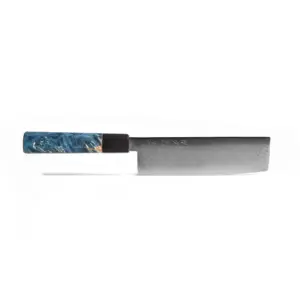
If vegetables make up a large part of your cooking, a nakiri deserves a place in your collection. Its tall, flat blade and straight edge make it ideal for clean, downward cuts through everything from delicate herbs to dense root vegetables.
Our pick: The Sakai Kyuba KYU Nakiri 16cm (€270), rated 5.0 stars by 9 customers. Its compact size makes it perfect for home kitchens.
Petty: the precision tool
Every kitchen needs a small knife for peeling, trimming, and intricate work. The Japanese petty (from the French petit) is the answer. A utility knife that feels like an extension of your hand.
Our pick: The Seki Kyuba RYU Petty 15cm (€270) pairs beautifully with any of our chef knives and shares the same Damascus aesthetic.
Which steel type should you choose?
Steel is the heart of any knife, and the differences matter more than most people realise. Here is what you need to know about the steels in our collection:
VG10, The industry standard for premium Japanese knives. Excellent edge retention, good corrosion resistance, and relatively easy to sharpen at home. Found in our Seki Kyuba KATA and RYU lines.
SG2/R2 (powdered steel): A step above VG10 in edge retention and hardness (64 HRC). The powder metallurgy process creates a finer grain structure, meaning a sharper edge that lasts longer. This is the steel in our Seki Kyuba SHIN series.
Damascus: Not a steel type itself, but a construction method. Multiple layers of steel are folded together, creating the distinctive wavy pattern. Beyond aesthetics, the layering creates micro-serrations at the edge that improve cutting performance and reduce sticking. Our NIJI series uses 37 layers including brass and copper for its rainbow effect.
How to choose: a decision framework
After helping thousands of customers find their ideal knife, we have noticed the choice usually comes down to three questions:
1. What do you cook most? If you cook a wide variety of dishes, start with a gyuto or santoku. If you are primarily a vegetable cook, a nakiri may be your best first knife. If you do a lot of fine prep work, consider a bunka.
2. What is your budget? You can get an exceptional Japanese knife starting at €250. Our KATA series starts at €250 and delivers outstanding performance. If your budget stretches further, the NIJI and SHIN series offer premium steels and construction.
3. How important is maintenance? All Japanese knives need proper care, but some steels are more forgiving. VG10 (KATA, RYU) resists corrosion well and is easy to sharpen. SG2 (SHIN) holds its edge longer but requires a finer whetstone to maintain.
Our top recommendations for 2026
Best overall: Seki Kyuba RYU Gyuto 21cm (€295), the perfect balance of performance, beauty, and value.
Best for home cooks: Sakai Kyuba KYU Santoku 18cm (€270), our highest-rated knife, trusted by hundreds of home cooks.
Best premium: Seki Kyuba NIJI Gyuto 20cm (€400), rainbow Damascus that turns heads and outperforms expectations.
Best value: Seki Kyuba KATA Santoku 16.5cm (€290), VG10 steel and clean design at an accessible price point.
Best for vegetable lovers: Seki Kyuba NIJI Nakiri 18cm (€400), the ultimate vegetable knife in a breathtaking finish.
Caring for your Japanese knife
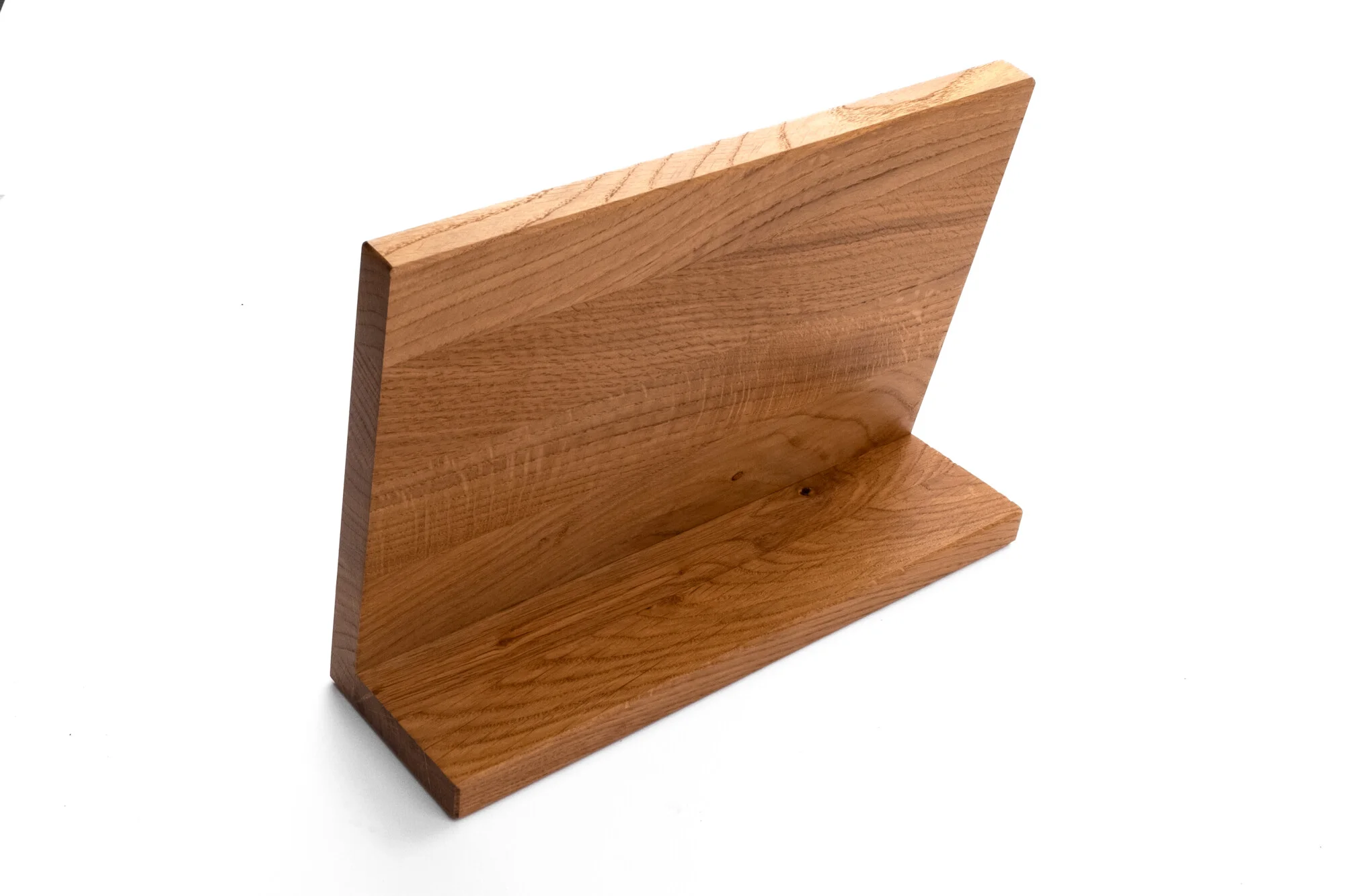
A good Japanese knife will last a lifetime with proper care. The basics: hand wash and dry immediately after use, never put it in the dishwasher, store it on a magnetic rack or in a knife stand, and sharpen with a quality whetstone every few months. For a complete guide, read our Japanese Knife Care & Maintenance guide.
Ready to find your knife?
Browse our full collection of Japanese knives: every knife comes with free shipping across Europe, a certificate of authenticity, and our satisfaction guarantee. If you need help choosing, get in touch: we love helping people find their perfect blade.
Handcrafted Japanese Knives by Oishya
Forged by master craftsmen in Seki and Sakai, Japan. Free worldwide shipping over £270 • 100-day money-back guarantee • Lifetime warranty