



Seki Kyuba NIJI Nakiri Veggie Knife 18cm
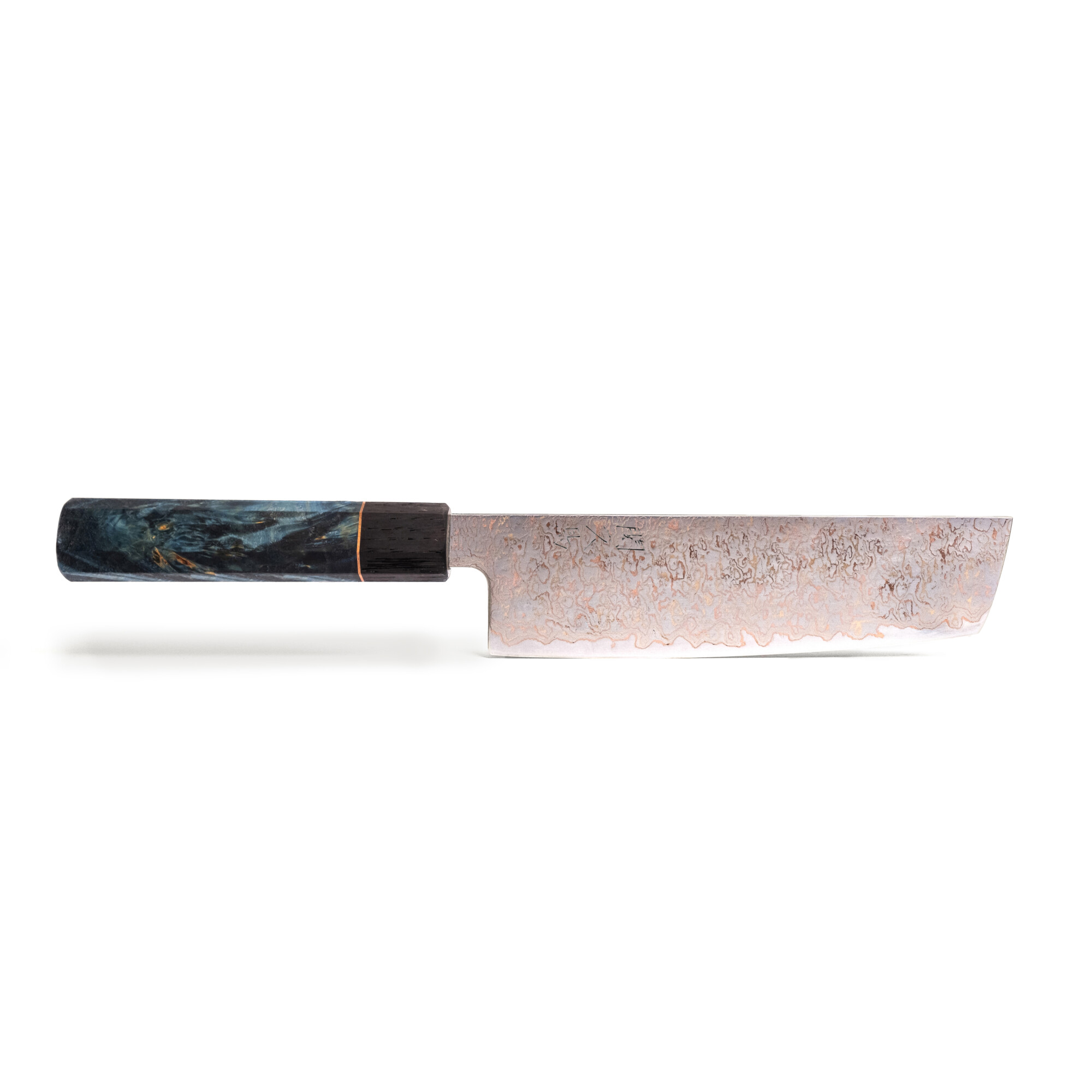
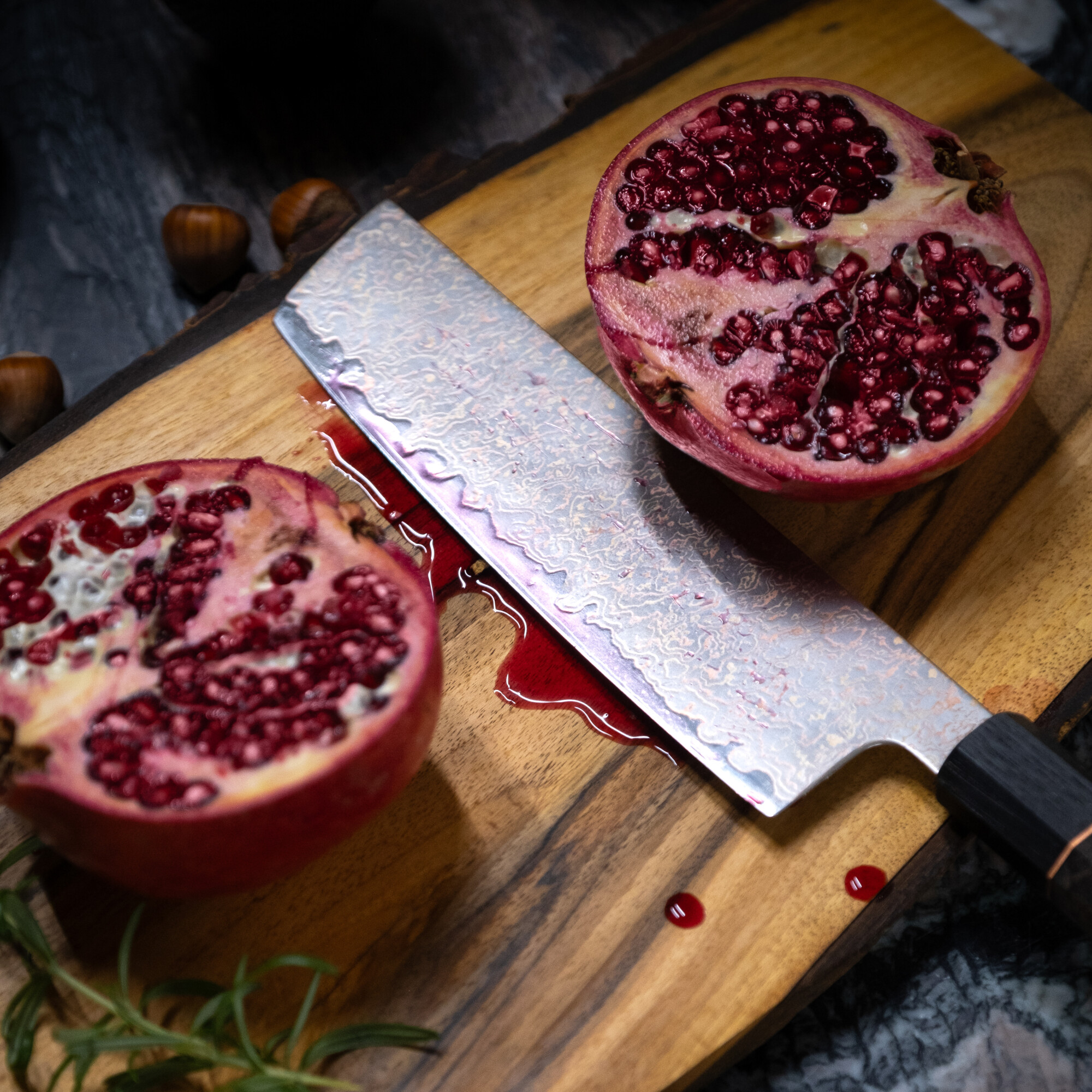
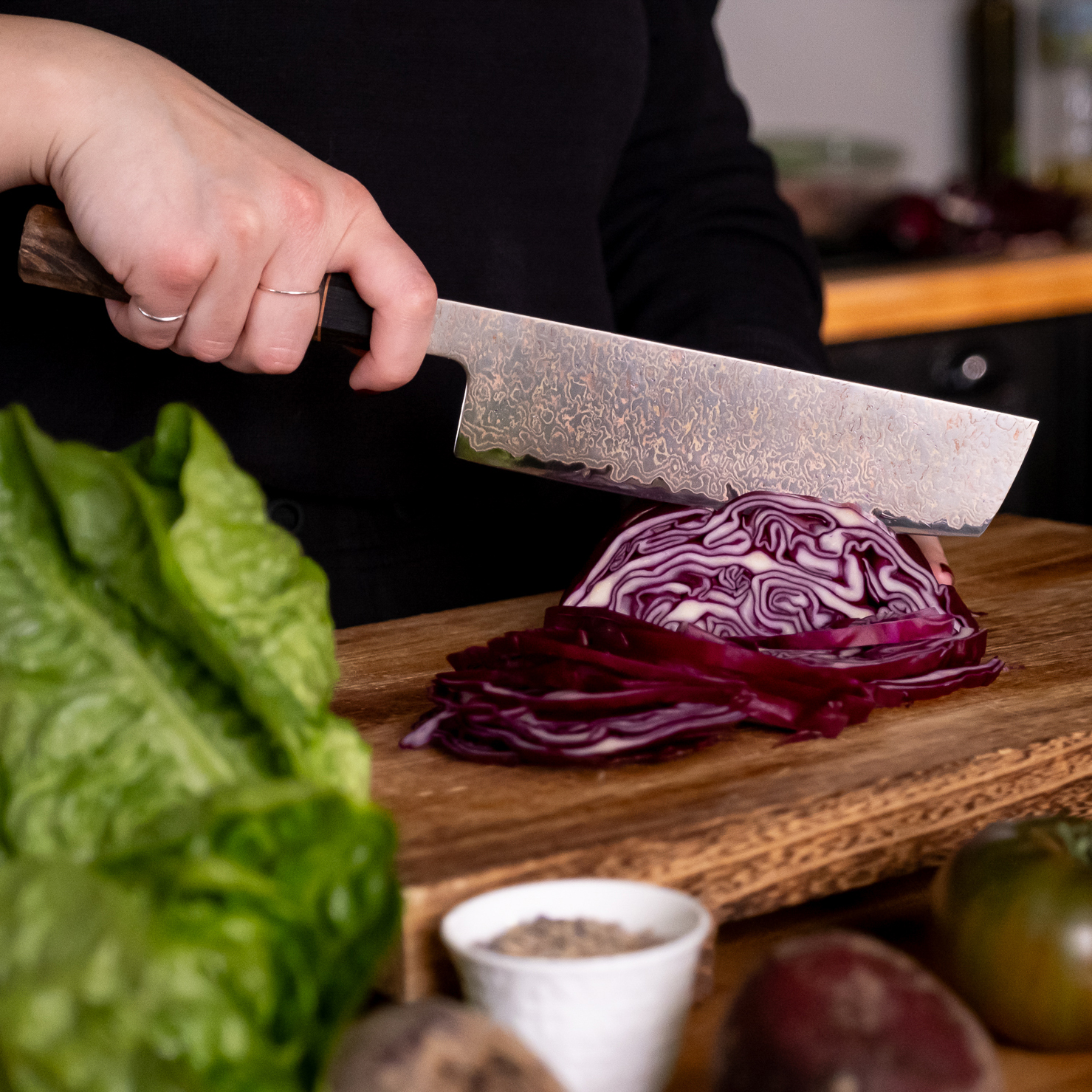
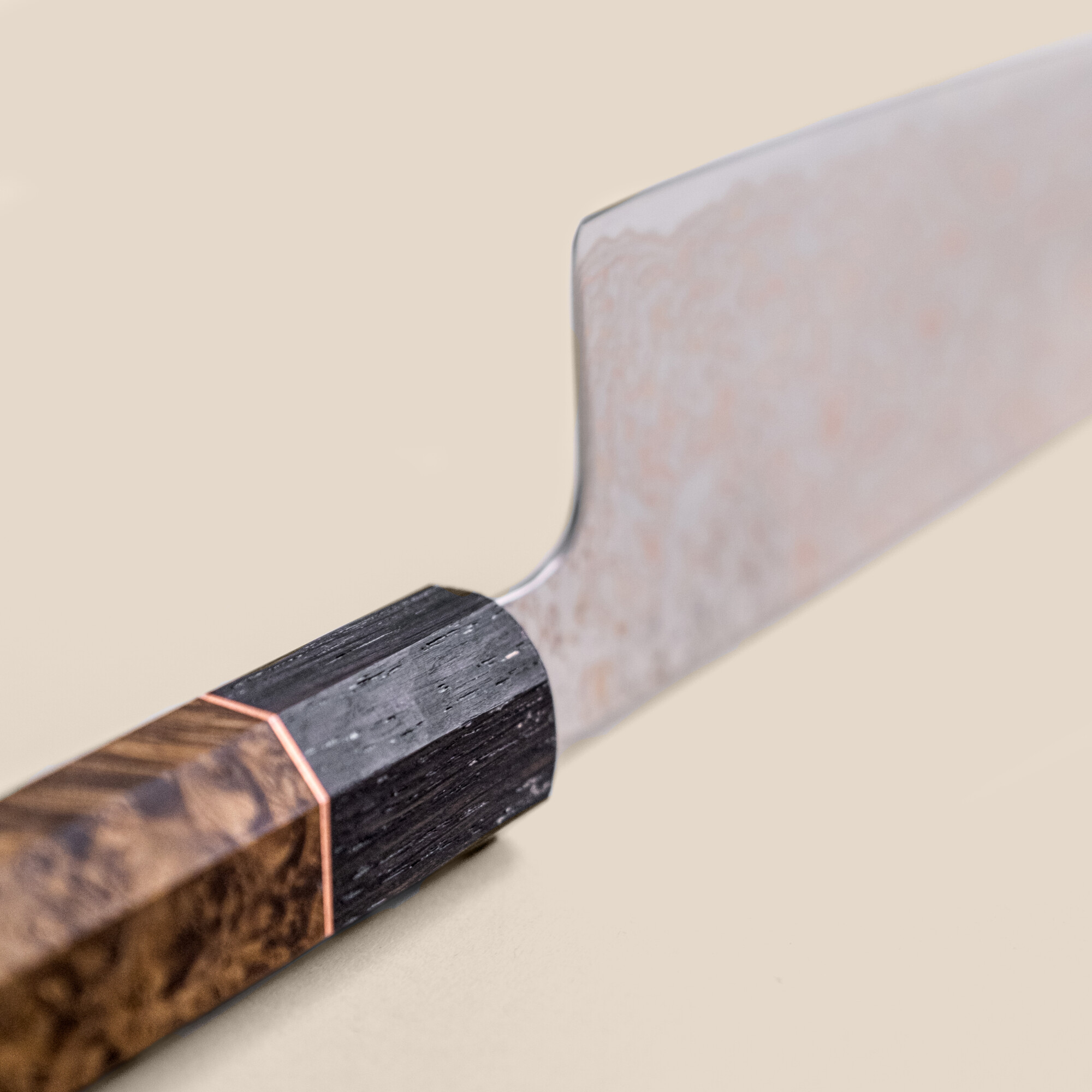
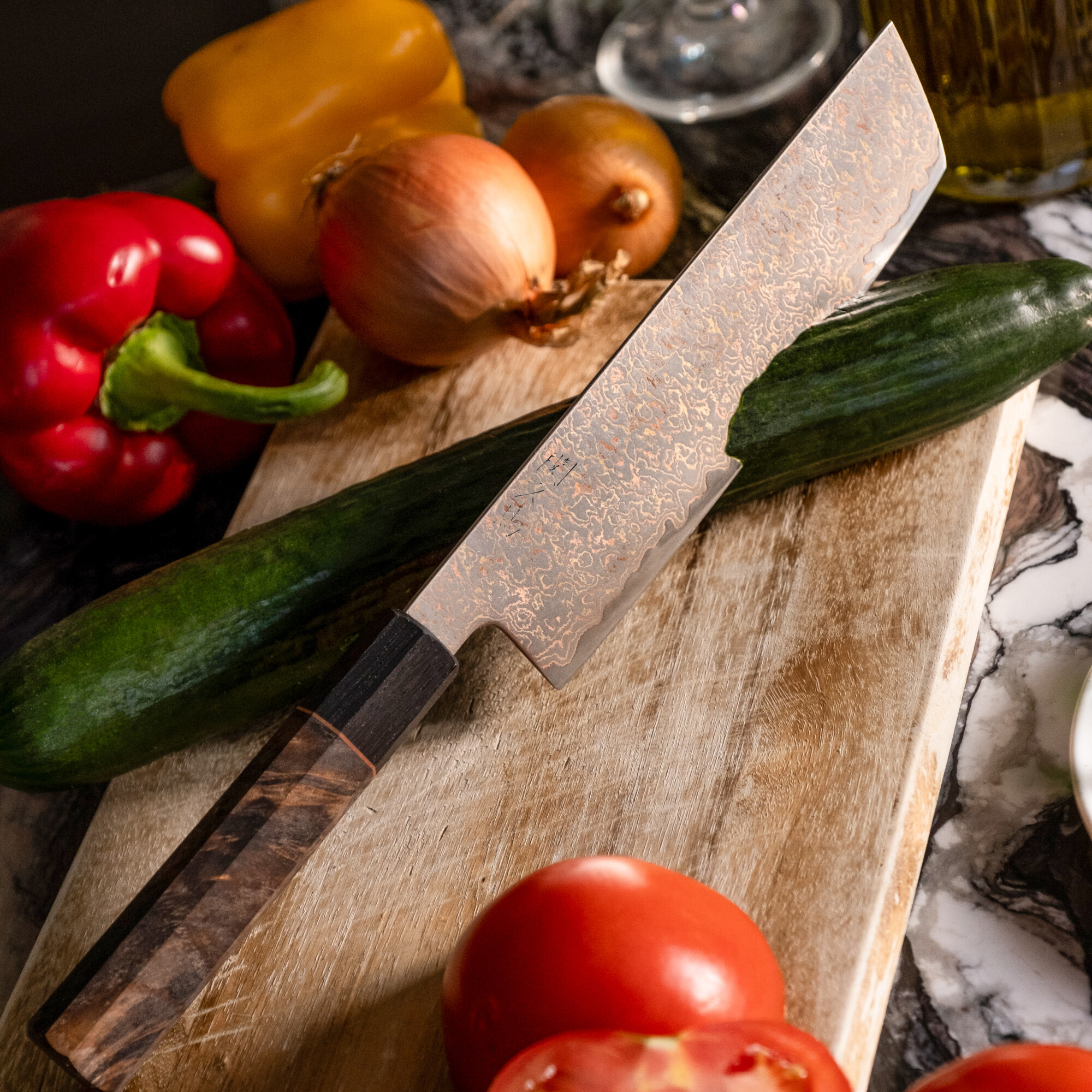
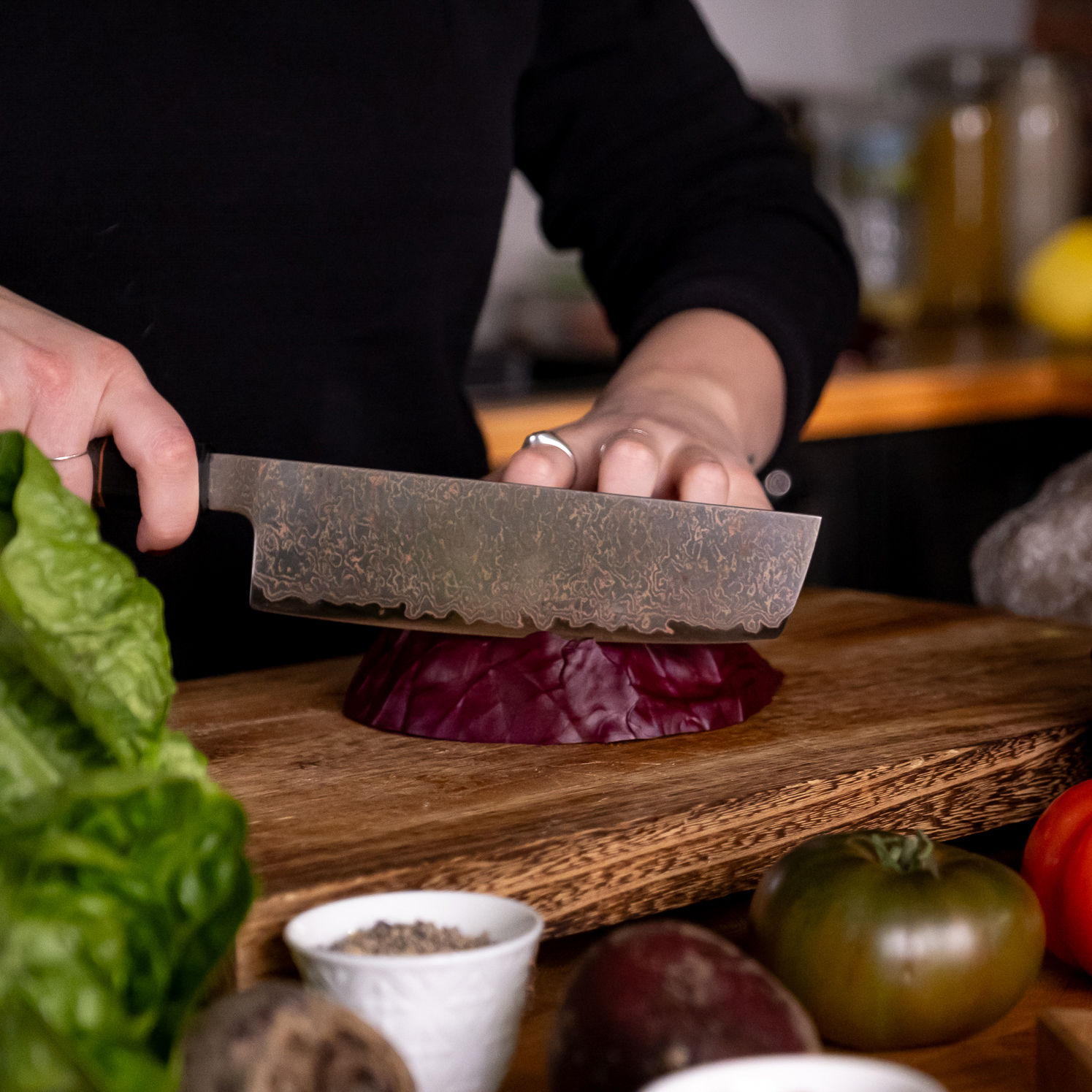
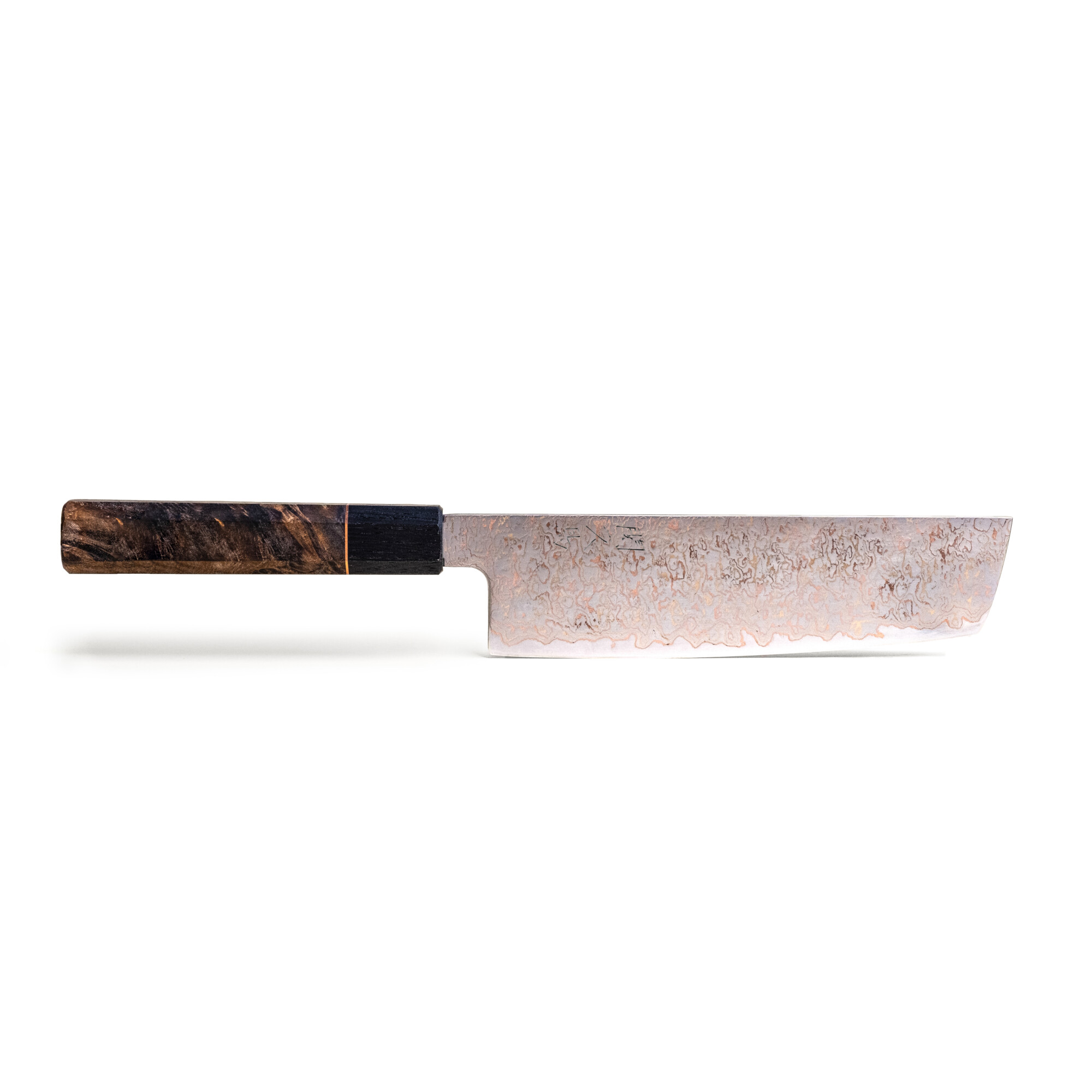
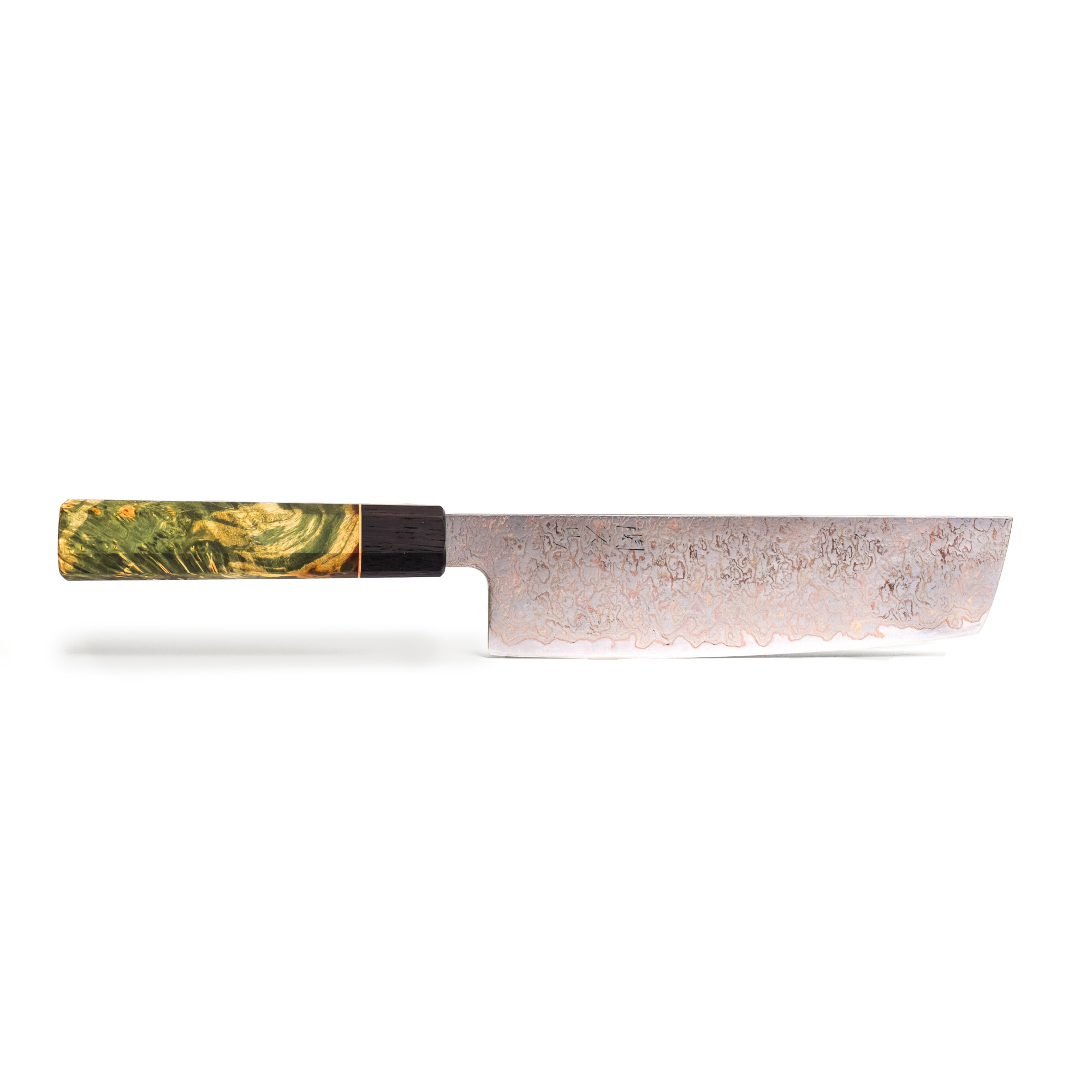
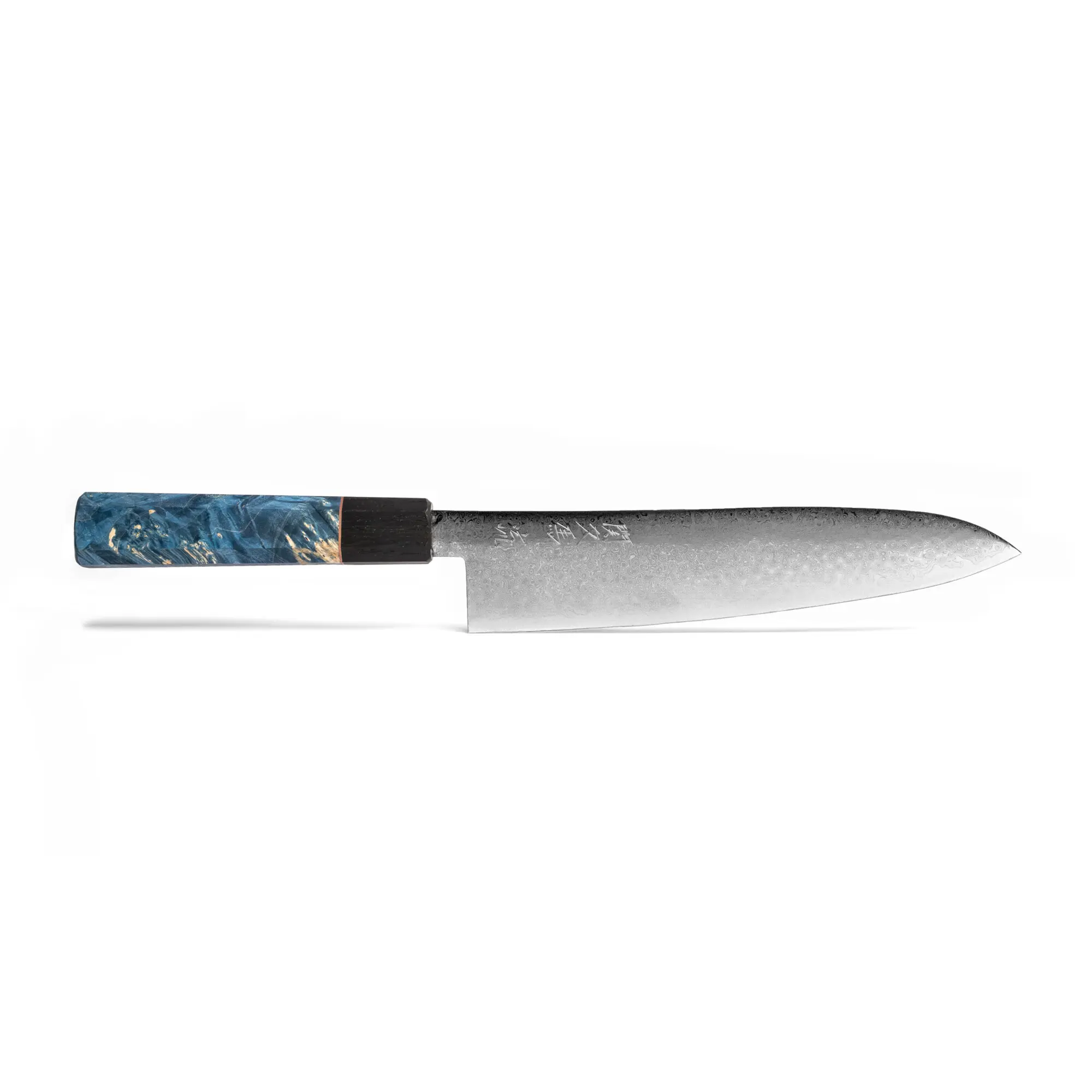
The 18cm Nakiri is NIJI’s vegetable specialist — “leaf cutter” — with a tall, straight edge for clean push-cuts and a square tip that scoops chopped veg straight off the board. Tall enough for real knuckle clearance. The 12Cr18MoV core is wrapped in 37 layers of stainless steel, brass and copper, a rainbow Damascus pattern that’s different on every blade. 62–63 HRC, hammered face to keep food from sticking.
Lifetime warranty
Every knife we have ever made, covered for life.
Free UK delivery
Included on every order over £90.
100-day returns
Use it for three months. Send it back if it isn’t right.
Hand-finished box
Hanko-stamped certificate, 5 yen coin tucked alongside.
Why this knife
The blade, and the thinking behind it.
Not only for veggies: Nakiri
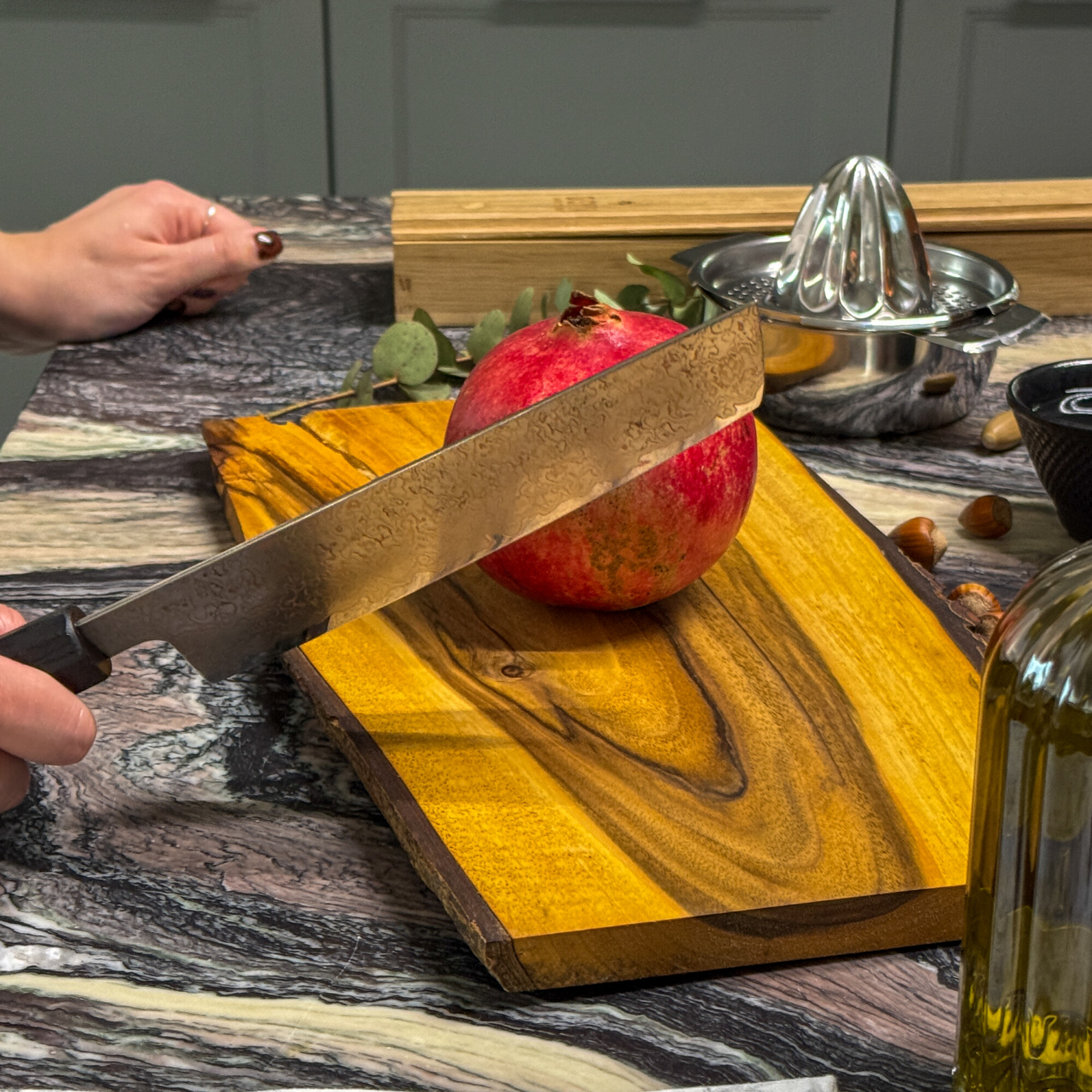
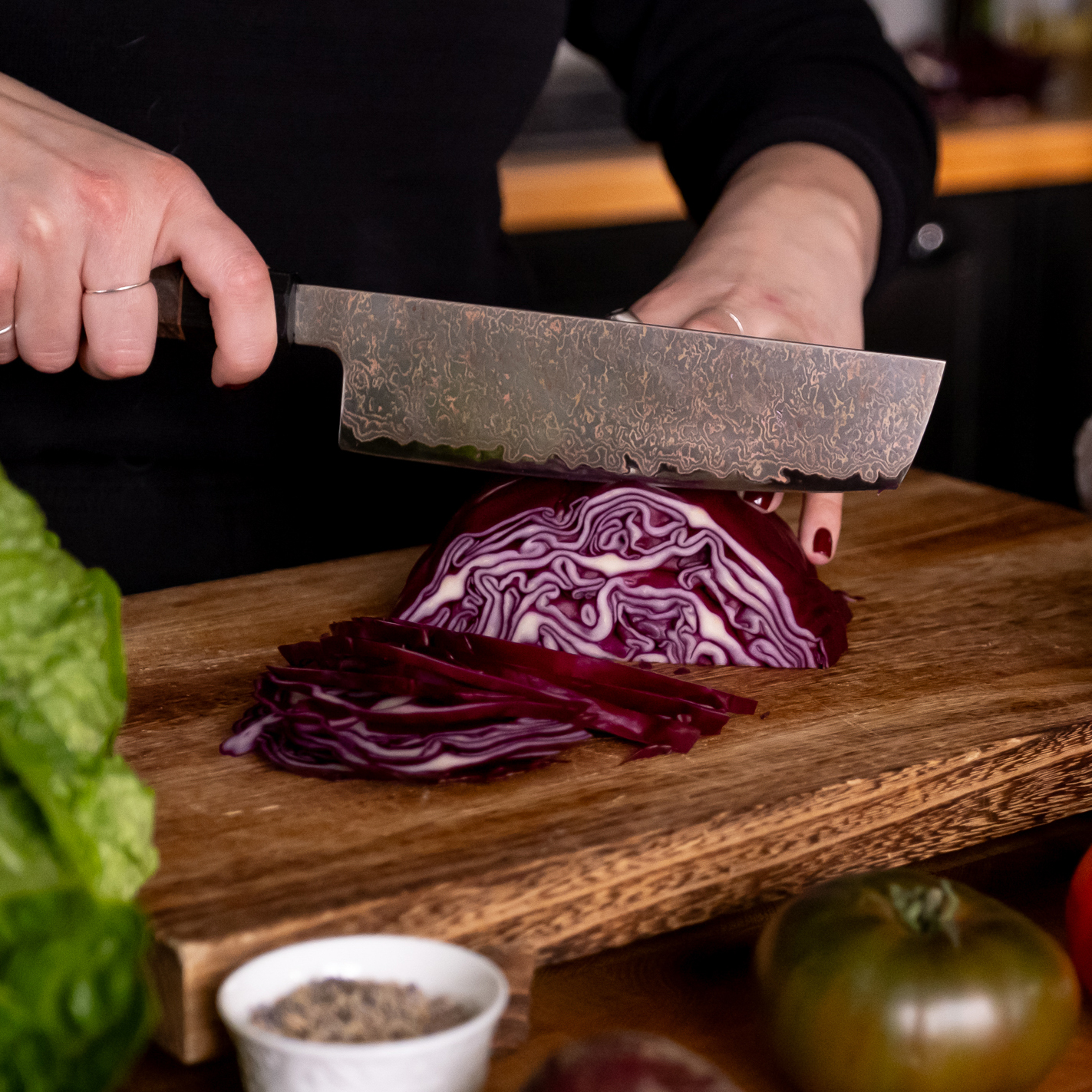
“Nakiri” roughly means “leaf cutter,” and the 18cm blade is built for it: a straight edge for efficient push-cutting through vegetables, a tall profile for knuckle clearance and comfortable repetitive chopping, and a square tip that lets you scoop chopped ingredients straight off the board.


The Blade
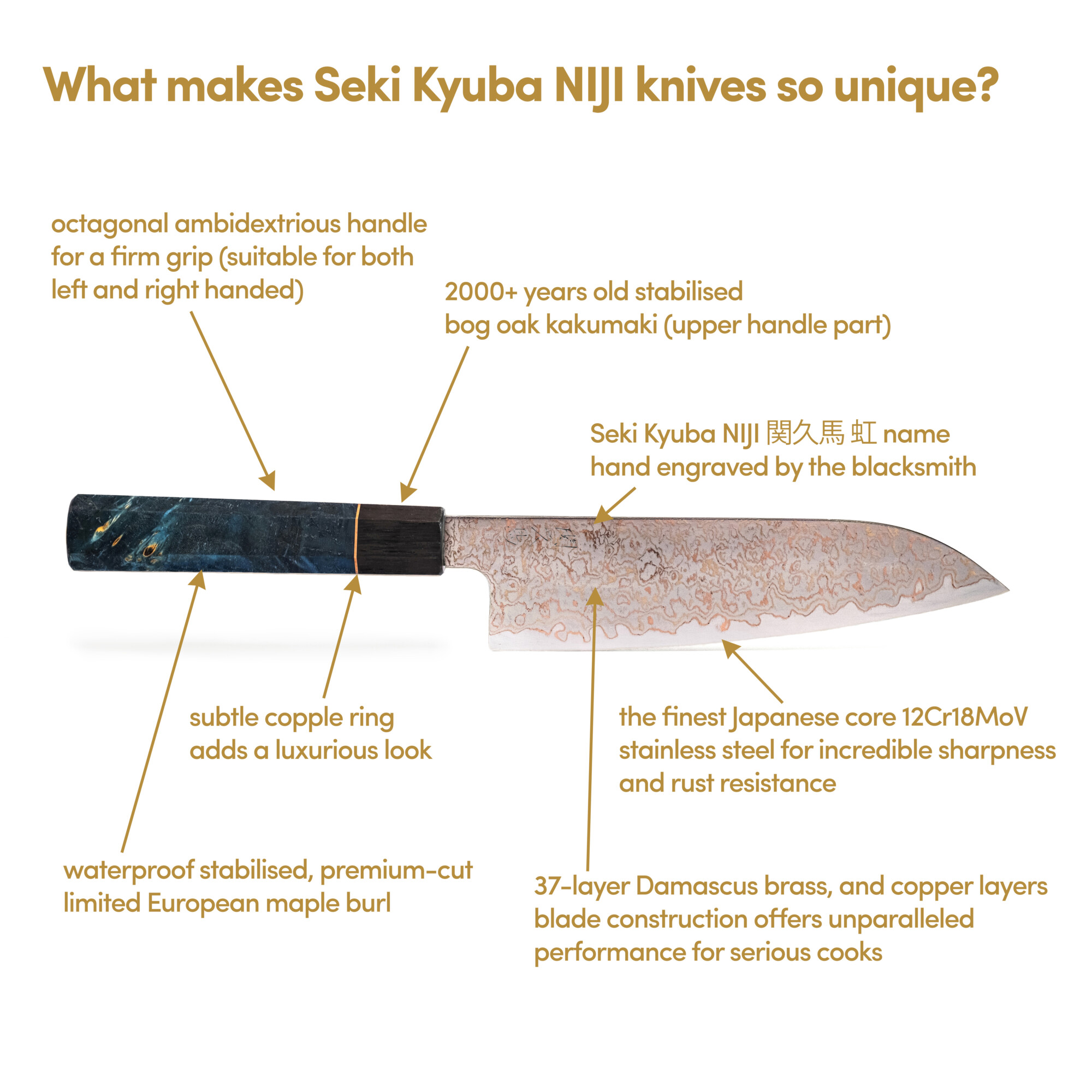
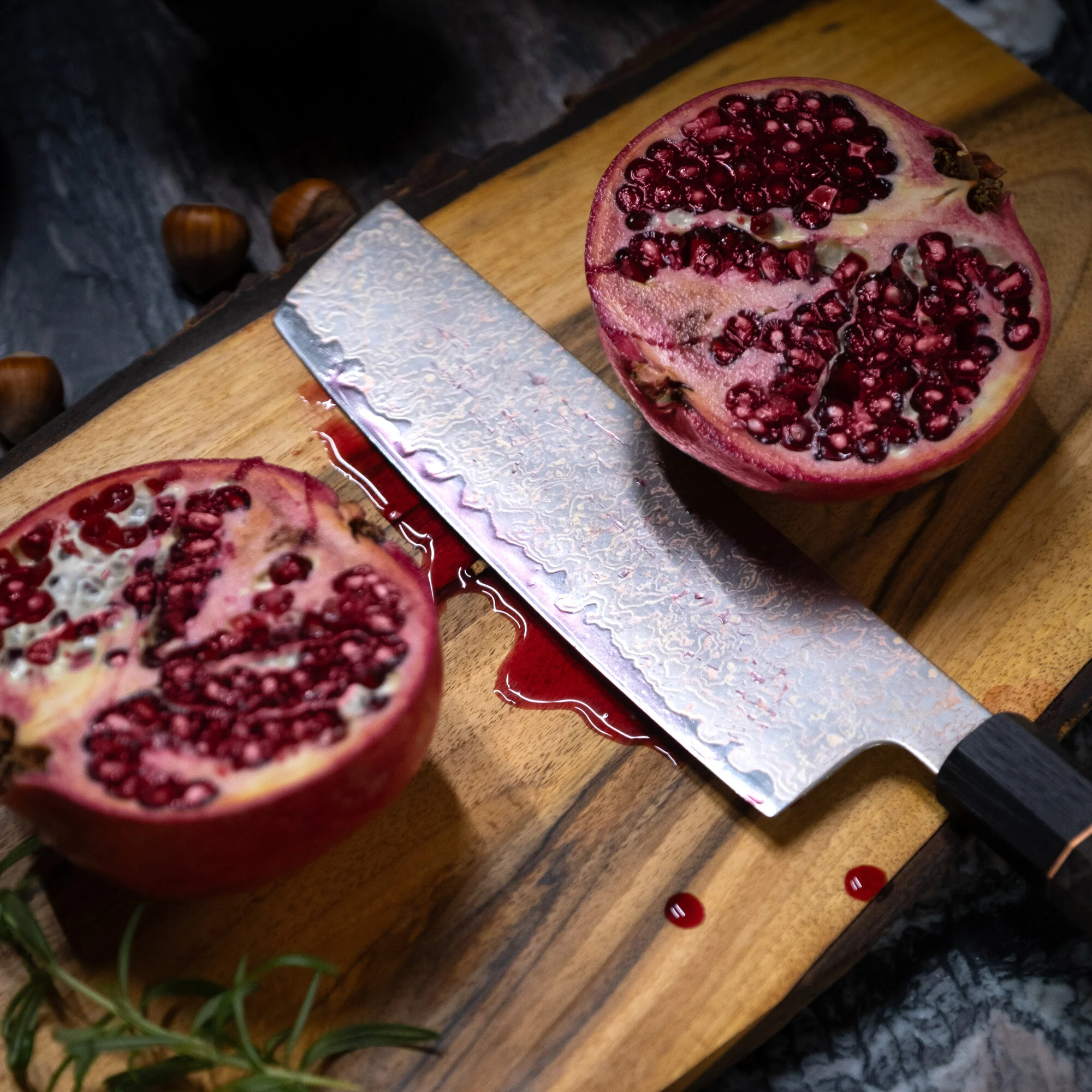
The blade is a 12Cr18MoV core in 37 layers of stainless steel, brass and copper, so each knife carries its own rainbow-toned Damascus pattern. Hand-forged in Seki, Gifu, the steel is chosen for its balance of sharpness, durability and corrosion resistance. At 62–63 HRC it holds a keen edge with good chip resistance, and the hammered finish helps stop vegetables clinging to the blade.
The blade is set in a premium-cut, waterproof stabilised maple burl handle, available in Mediterranean Blue, Olive Green or Natural Brown.
The blade
Specifications.
The hands that make it
Seki. Seven hundred years of blade-making.
Seki, in Gifu, has been forging blades since the fourteenth century — first samurai swords, then kitchen knives. The workshop we work with forges five of our six lines.
The handle is finished in Małopolska, Poland, by craftsmen who shape every handle by hand: a stabilised maple burl body and a bog oak ferrule — the kakumaki. The blade and handle meet at a single hand-fitted copper ring, set with a soft tap of a wooden mallet, in an octagonal profile.
Care, briefly
Three habits, and it outlasts you.
01.
Hand wash, dry immediately.
Never the dishwasher. Sixty seconds at the sink, then a soft towel. Water on hard Japanese steel is the only thing that rusts it.
02.
Wood boards only.
Glass, stone and marble are harder than the steel and dull the edge in a week. End-grain hardwood is the right choice — hinoki cypress if you can find it.
03.
Sharpen on a stone.
Never a honing rod — the steel is too hard, it chips the edge. A 1000/6000 whetstone every three or four months keeps it keen.
What you receive
In the box.
- The knife, sharpened, oiled, wrapped in cloth.
- A hand-finished box for the knife.
- A Certificate of Authenticity, hand-stamped with the maker’s hanko, naming the smith and certifying the blade.
- A 5 yen coin tucked alongside. “Go en” — the Japanese for five yen — is the homophone for luck, connection and bond. Returning the coin to the giver turns the gift-knife into a symbolic purchase, neutralising the old superstition that a knife as a gift cuts the bond between giver and receiver.
- A care card with the sixty-second wash routine and a link to Knife School.
- Your lifetime warranty, registered to you automatically when the order ships.
Frequently asked.
Is it dishwasher safe?
How often will I need to sharpen it?
Can I use it to cut meat?
How long does shipping take?
What if it isn't right for my kitchen?
From the people who cook with it
Reviews.
Impressive knife. The single-bevel grind takes some getting used to if you’re coming from Western knives, but once you adapt, the precision is unmatched. Great steel, beautiful finish.
A lovely set with excellent knives. The quality is apparent as soon as you pick them up. Each knife has great edge retention and the handles are comfortable. Delivery took a little longer than expected but the wait was worth it.
A lovely set with excellent knives. The quality is apparent as soon as you pick them up. Each knife has great edge retention and the handles are comfortable. Delivery took a little longer than expected but the wait was worth it.
Beautiful knife with an aggressive edge. The bunka shape was new to me but I’m a convert now. Works brilliantly for my style of cooking. The handle could be slightly longer for my preference, but overall a superb knife.
Beautiful knife with an aggressive edge. The bunka shape was new to me but I’m a convert now. Works brilliantly for my style of cooking. The handle could be slightly longer for my preference, but overall a superb knife.
Good quality sharpening stone that does what it promises. I use it to maintain my Japanese knives every few weeks. The grit is consistent and it doesn’t dish out too quickly. Solid purchase for the price.
This petty knife fills the gap perfectly between my gyuto and a paring knife. Great for fruits, small vegetables, and garnish work. The steel quality is noticeably better than anything in this price range.
This petty knife fills the gap perfectly between my gyuto and a paring knife. Great for fruits, small vegetables, and garnish work. The steel quality is noticeably better than anything in this price range.
This petty knife fills the gap perfectly between my gyuto and a paring knife. Great for fruits, small vegetables, and garnish work. The steel quality is noticeably better than anything in this price range.
This petty knife fills the gap perfectly between my gyuto and a paring knife. Great for fruits, small vegetables, and garnish work. The steel quality is noticeably better than anything in this price range.
More from the line
The rest of the line.
Related products


Not sure this is the one?
Take two minutes.
Six questions about the way you actually cook. We’ll point you to the knife that fits.