When choosing a high-carbon Japanese kitchen knife, two of the most celebrated steel types you’ll encounter are Aogami #2 (Blue Steel #2) and Aogami Super (Blue Super Steel). Both are produced by Hitachi Metals and are revered by blacksmiths and chefs alike, but they serve different purposes and come with different trade-offs.
In this guide, we break down the key differences in composition, performance, and everyday use so you can choose the right steel for your kitchen.
Understanding Japanese Steel Classification
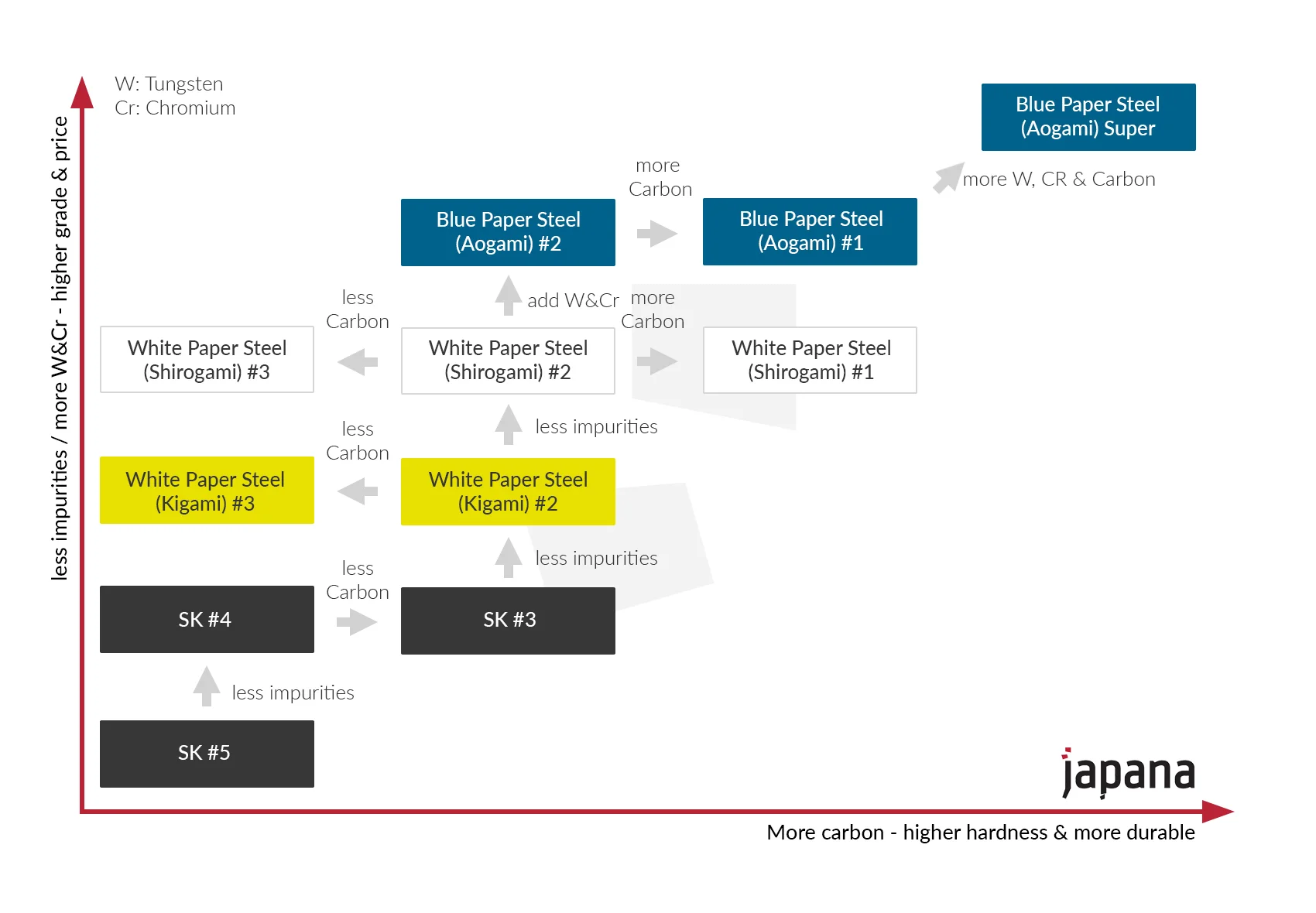
Japanese knife steels from Hitachi’s Yasuki factory are classified by the colour of the paper label wrapped around the steel bars. This gives us three families:
- Shirogami (White Steel), Pure carbon steel, no added alloys. Easiest to sharpen, takes the keenest edge, but least wear-resistant.
- Kigami (Yellow Steel): Entry-level carbon steel, softer and more forgiving.
- Aogami (Blue Steel): Carbon steel with added tungsten and chromium for improved wear resistance and edge retention. Available as Blue #1, Blue #2, and Blue Super.
For the full chemical breakdown of these and 50+ other knife steels, see our knife steel composition chart. If you’re deciding between stainless options instead, read our VG10 vs AUS10 comparison.
Aogami #2 (Blue Steel #2): Composition & Properties
Aogami #2 is the most widely used blue steel in Japanese knife making. Its composition:
- Carbon: 1.0–1.2%
- Chromium: 0.2–0.5%
- Tungsten: 1.0–1.5%
- Hardness (HRC): 62–65
The addition of tungsten and chromium over white steel gives Aogami #2 noticeably better wear resistance and edge retention, while still being relatively easy to sharpen on a whetstone. It strikes a balance between sharpness and practicality that makes it the go-to choice for professional and home cooks who want high-carbon performance without fuss.
Knives made from Aogami #2 take a very keen edge, not quite as razor-fine as Shirogami, but they hold that edge significantly longer. Many blacksmiths in Sakai and Seki consider it the ideal everyday carbon steel.
Aogami Super (Blue Super Steel): Composition & Properties
Aogami Super takes the blue steel formula and pushes it further. Hitachi adds more carbon, tungsten, and chromium, plus molybdenum and vanadium, elements not found in standard blue steel:
- Carbon: 1.4–1.5%
- Chromium: 0.3–0.5%
- Tungsten: 2.0–2.5%
- Molybdenum: 0.3–0.5%
- Vanadium: 0.3–0.5%
- Hardness (HRC): 64–67
The result is a steel that many knife enthusiasts consider the finest high-carbon steel available for kitchen knives. Aogami Super achieves exceptional hardness without brittleness, holds an edge longer than any other carbon steel, and delivers a silky, smooth cut that chefs crave.
Head-to-Head Comparison
| Property | Aogami #2 | Aogami Super |
|---|---|---|
| Edge sharpness | Excellent | Excellent |
| Edge retention | Very good | Outstanding, best-in-class |
| Ease of sharpening | Easy (similar to white steel) | Moderate (harder steel = more time) |
| Toughness | Good, less prone to chipping | Good, but can chip under force |
| Corrosion resistance | Low, needs immediate drying | Low, needs immediate drying |
| Hardness (HRC) | 62–65 | 64–67 |
| Price | Moderate | Premium (harder to forge) |
| Best for | Daily use, easy maintenance | Maximum performance, experienced users |
Which Should You Choose?
Choose Aogami #2 if:
- You want high-carbon performance with easier maintenance
- You’re newer to carbon steel knives and want a forgiving entry point
- You prefer a knife that’s quick and easy to sharpen at home
- You use your knife daily and want a reliable workhorse
Choose Aogami Super if:
- You want the absolute best edge retention available in carbon steel
- You’re comfortable with whetstone sharpening and don’t mind spending a bit more time on it
- You appreciate the craft and are willing to pay a premium for it
- You want a knife that holds up through long professional prep sessions
Caring for Carbon Steel Knives
Both Aogami #2 and Aogami Super are carbon steels, which means they will develop a patina (discolouration) over time as they oxidise. This is completely normal and does not affect performance, many chefs see it as the knife developing its own unique character.
To keep your carbon steel knife in top condition:
- Wash and dry immediately after use, never leave wet or put in the dishwasher
- Apply a thin layer of camellia oil (tsubaki oil) before storing for extended periods
- Store properly on a magnetic rack or in a knife stand
- Sharpen regularly with a medium-grit whetstone (#1000–#3000)
Many Aogami Super knives are laminated in stainless steel (known as san-mai construction), where only the cutting edge is carbon steel while the outer layers are stainless. This protects the blade from corrosion while keeping the superior cutting performance of the carbon core.
Aogami Steel in Our Collection
Our Sakai Kyuba knives showcase the craftsmanship of Sakai’s master blacksmiths. For a broader look at what’s available, explore our complete guide to Japanese knife types or start with our buying guide for your first Japanese knife.
Handcrafted Japanese Knives by Oishya
Forged by master craftsmen in Seki and Sakai, Japan. Free worldwide shipping over £270 • 100-day money-back guarantee • Lifetime warranty