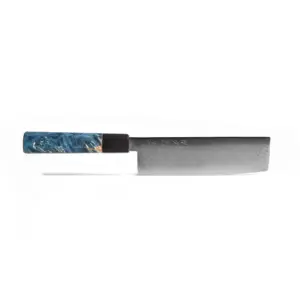
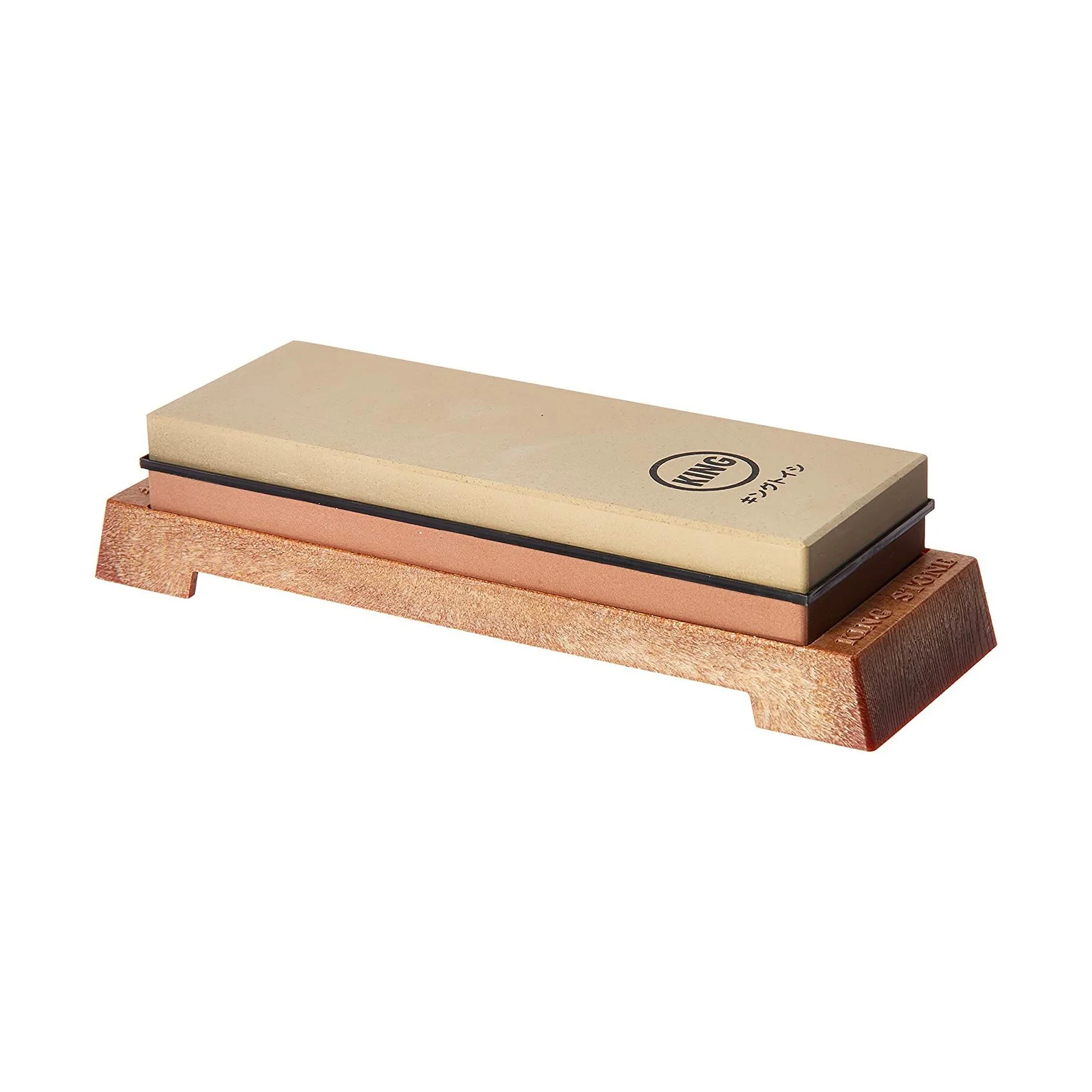
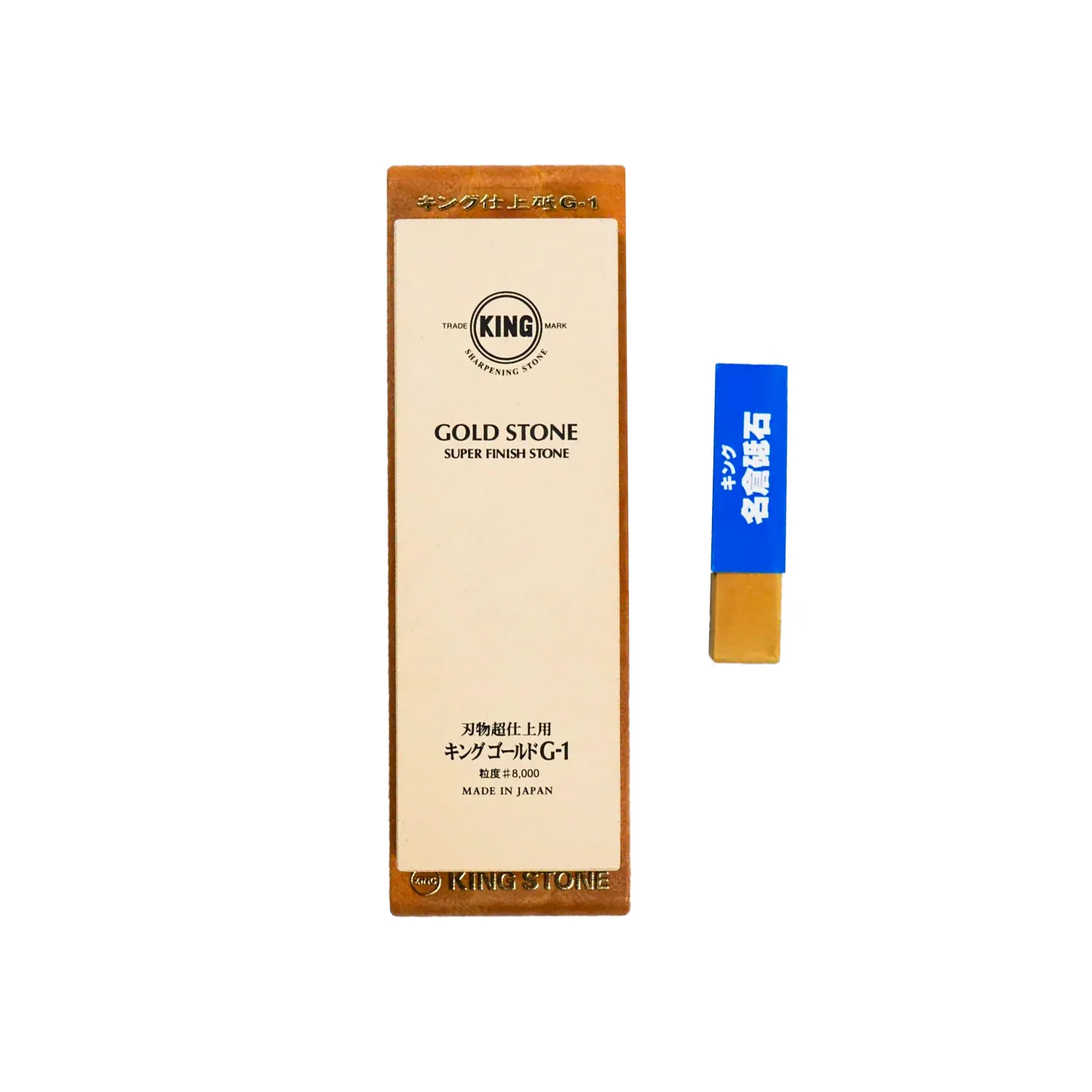
Selecting the right knife set is a crucial step in elevating your culinary experience. Whether you’re a passionate home cook or an aspiring chef, having the right tools can make all the difference in your kitchen adventures. As Elliott Bell wisely points out, “You don’t have to be a professional cook to own a professional knife set.” In this guide, we’ll focus on building an essential knife set with an emphasis on high-quality Japanese knives, while also considering the merits of Western-style knives.
Understanding Knife Craftsmanship
Before diving into the specifics of each knife, it’s important to appreciate the artistry and precision that goes into knife making, particularly Japanese knives. Japanese knives are renowned for their:
- Exceptional sharpness
- Superior edge retention
- Lightweight design
- Precise balance
- Use of high-quality materials
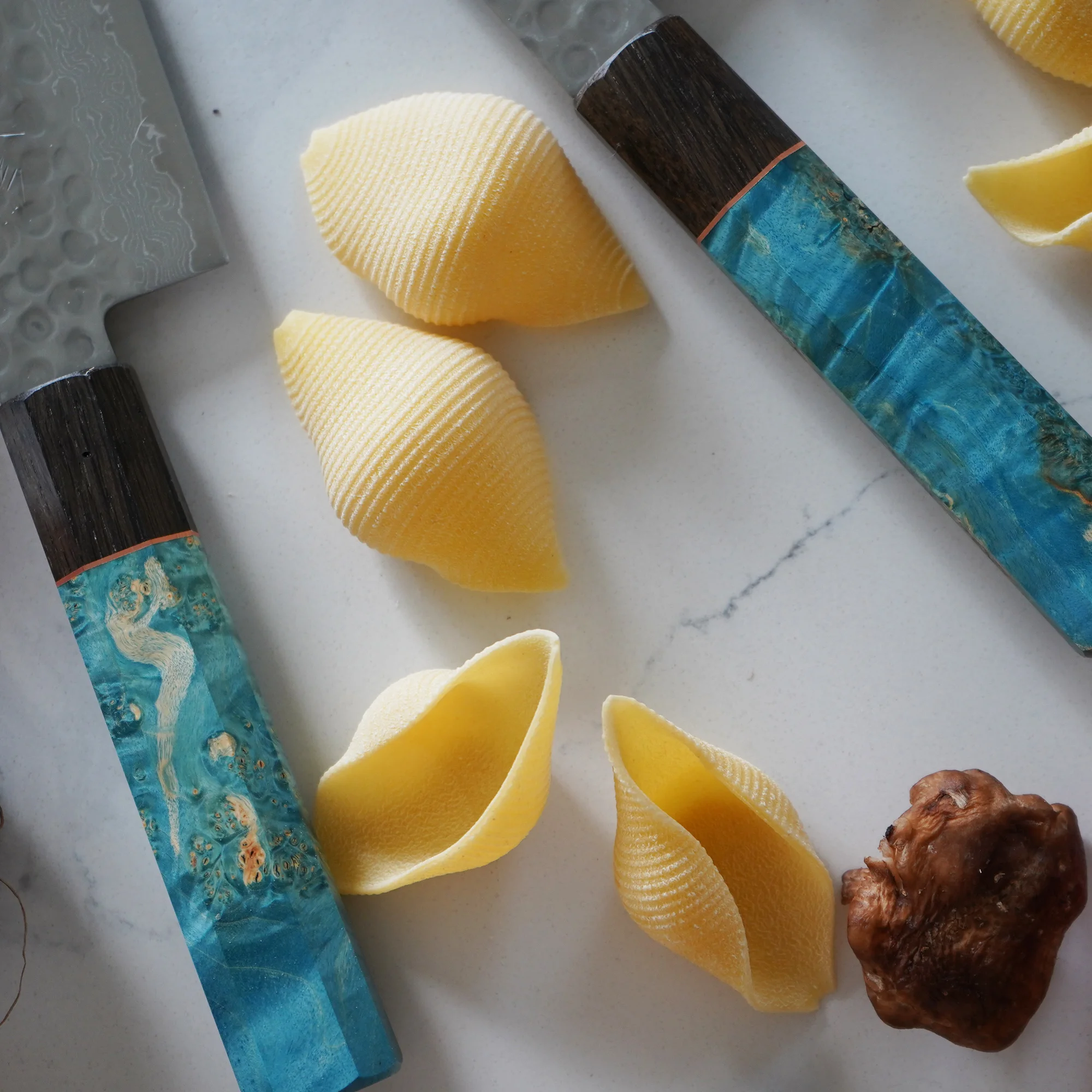
These qualities stem from centuries-old techniques combined with modern metallurgy, resulting in knives that are both functional works of art and highly effective tools.
Western vs. Japanese Knives
Kitchen knives are typically categorised as having a Western or Japanese design, although new hybrid designs are emerging that marry the best of both worlds.
Western-style Knives:
- Typically curved on the cutting edge
- Double-bevelled edge, usually at a 20-22 degree angle
- Heavier and thicker, good for chopping dense ingredients
- Popular brands include Zwilling J.A. Henckels, Wüsthof, and Victorinox
Japanese-style Knives:
- Straighter cutting edge
- Traditionally single-bevel, sharpened at a steeper 12-15 degree angle
- Slimmer and lightweight
- Brands known for Japanese style include Shun and MAC
Hybrid Designs:
Some innovative brands, like Oishya, have started to adopt features from both styles, creating knives that blend the functional curved shape of Western knives with the lighter, sharper blade of Japanese knives.
The Essential Knives for Your Set
While professional sets can include up to 16 or even 36 pieces, most food preparation tasks can be accomplished with just three essential knives. As Bell notes, “it’s best to master the select ones you do have instead” of having a large set with many specialised knives you’ll rarely use.
1. Chef’s Knife: Gyuto or Santoku
The chef’s knife is the cornerstone of any knife set. In Japanese cuisine, you have two excellent options:
Gyuto
- Similar to a Western chef’s knife but typically lighter and thinner
- Versatile for a wide range of tasks
- Usually 210mm to 270mm in length
Santoku
- All-purpose knife for vegetables, meat, and fish
- Shorter than a gyuto, typically 165mm to 180mm
- Flatter profile with a sheepsfoot tip
What to look for in a chef’s knife:
- Balance between blade and handle
- Comfortable grip for your hand size
- High-quality steel (e.g., VG-10, AUS-10, or traditional high-carbon steel)
- Hardness rating of 60-62 HRC for optimal edge retention and ease of sharpening
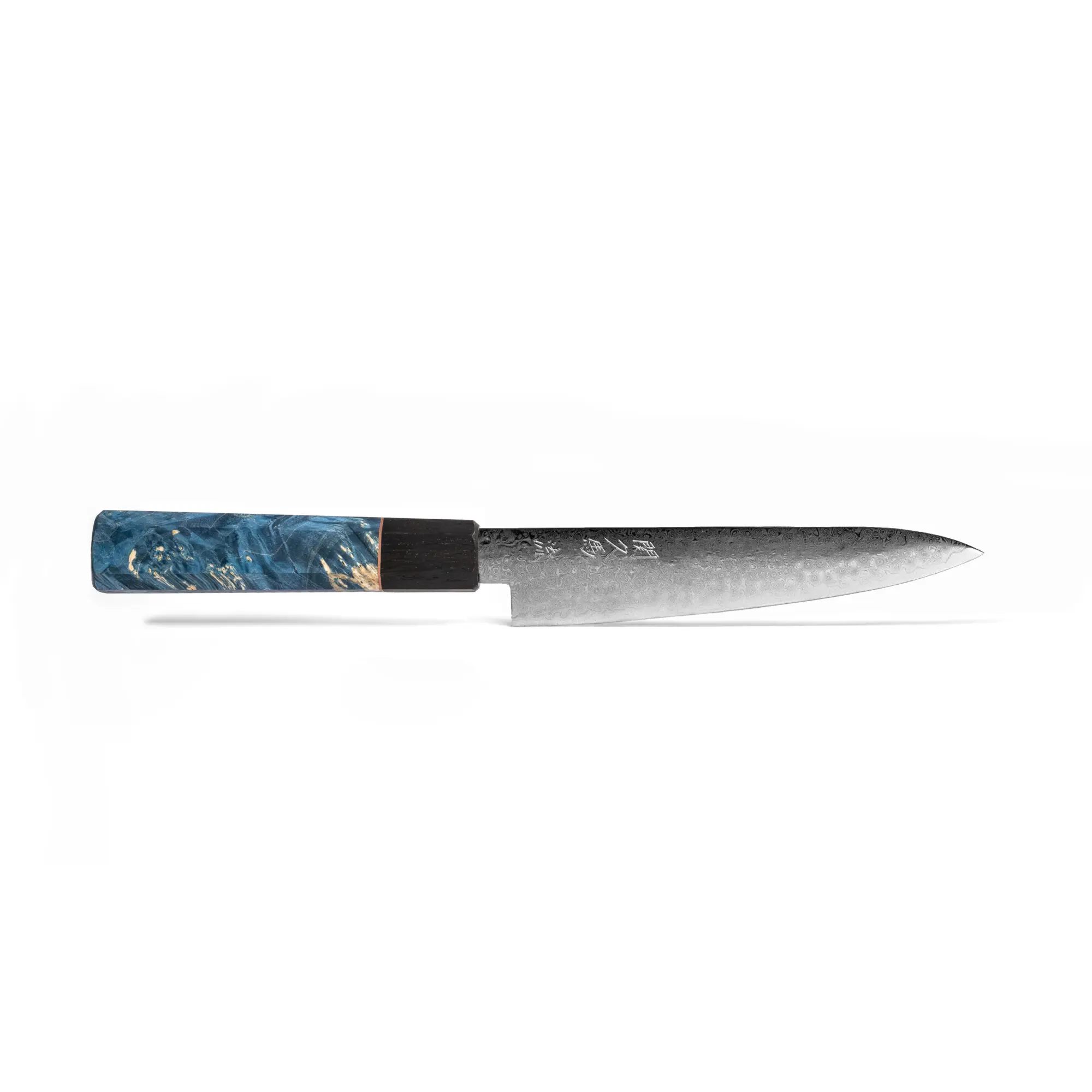
2. Paring Knife: Petty Knife
A petty knife is similar to a Western paring knife but often slightly larger and more versatile. It’s perfect for small, precise tasks.
What to look for:
- Blade length between 120mm to 150mm
- Thin, sharp edge for precise cuts
- Comfortable handle for intricate work
- Pointed tip for detailed tasks
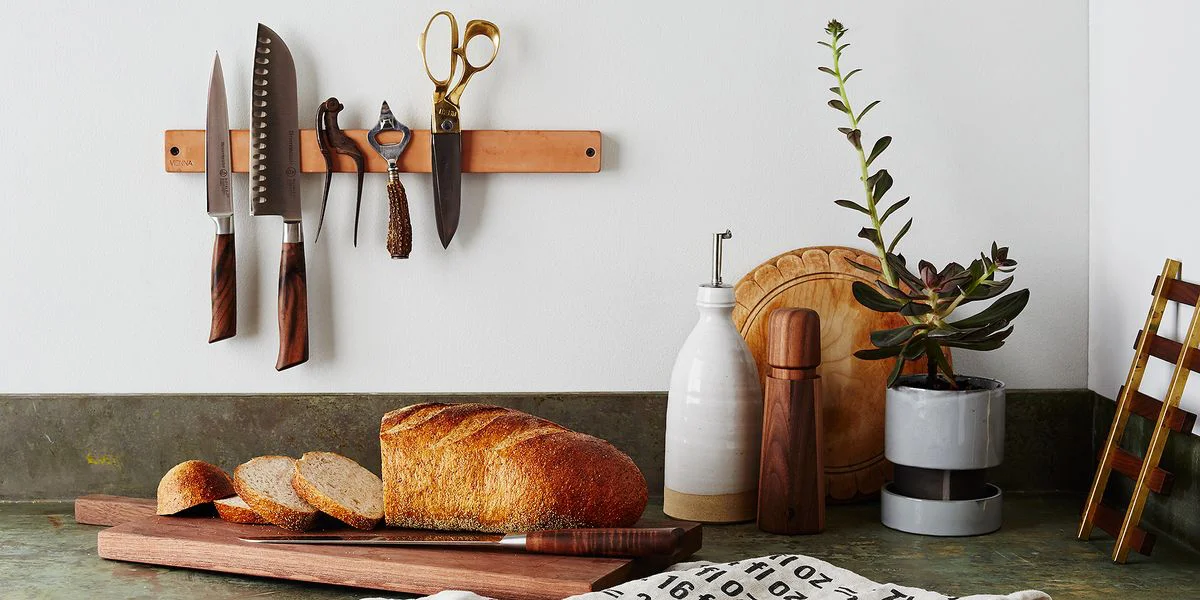
3. Bread Knife (Serrated Knife)
While not traditionally Japanese, a good bread knife is a valuable addition to any set. Its serrated edge is perfect for slicing bread and delicate ingredients with tough exteriors.
What to look for:
- Serrated edge with wide, pointed serrations
- Length of at least 230mm for handling large loaves
- Offset handle design for knuckle clearance
- Comfortable, ergonomic handle for safe slicing
Material Considerations
The material of the blade plays a significant role in the knife’s overall weight, durability, and cutting ability.
- Stainless Steel: Resistant to rust and corrosion, durable, and easy to maintain.
- High-Carbon Stainless Steel: Adds a small amount of carbon (0.5%-2%) to increase strength and edge retention. More prone to rust, requires immediate hand-washing and drying.
- Ceramic: Lightweight and holds a sharp edge for longer, but brittle and requires special sharpening tools.
For handles, materials range from natural (wood, metal) to synthetic (plastic, polypropylene). The key is to choose a non-slip material that offers a comfortable, ergonomic grip.
General Considerations for Your Knife Set
- Shape and Design: Consider whether you prefer the curved edge of Western knives or the straighter edge of Japanese knives.
- Weight and Balance: The knife should feel well-balanced in your hand for comfortable, prolonged use.
- Maintenance Requirements: Consider how much time you’re willing to invest in knife care.
- Brand Reputation and Warranty: Research reputable knife makers and check warranty terms.
- Budget: Quality knives are an investment. It’s often better to buy fewer, higher-quality pieces rather than a large set of lower-quality knives.
Conclusion
Assembling the perfect knife set is a personal journey that depends on your cooking style, preferences, and budget. By focusing on these essential pieces – a quality chef’s knife (gyuto or santoku), a petty knife for precision work, and a bread knife – you’ll be well-equipped to handle a wide variety of kitchen tasks with the precision and elegance of Japanese culinary tradition.
Remember, as Bell emphasises, “A good set of knives is crucial for any home cook, and can make the difference between an enjoyable cooking experience and a daily chore.” With proper care, a high-quality knife set will be a joy to use and can last a lifetime, elevating your cooking experience and connecting you to the rich heritage of craftsmanship.
Happy cooking, and may your knives always be sharp and your cuts precise!
Handcrafted Japanese Knives by Oishya
Forged by master craftsmen in Seki and Sakai, Japan. Free shipping worldwide • 100-day money-back guarantee • Lifetime warranty