This article is part of our Japanese kitchen culture guide.
Business gift giving
Gift-giving in a business context goes hand-in-hand with Japanese business etiquette, understanding both is key to making a good impression.
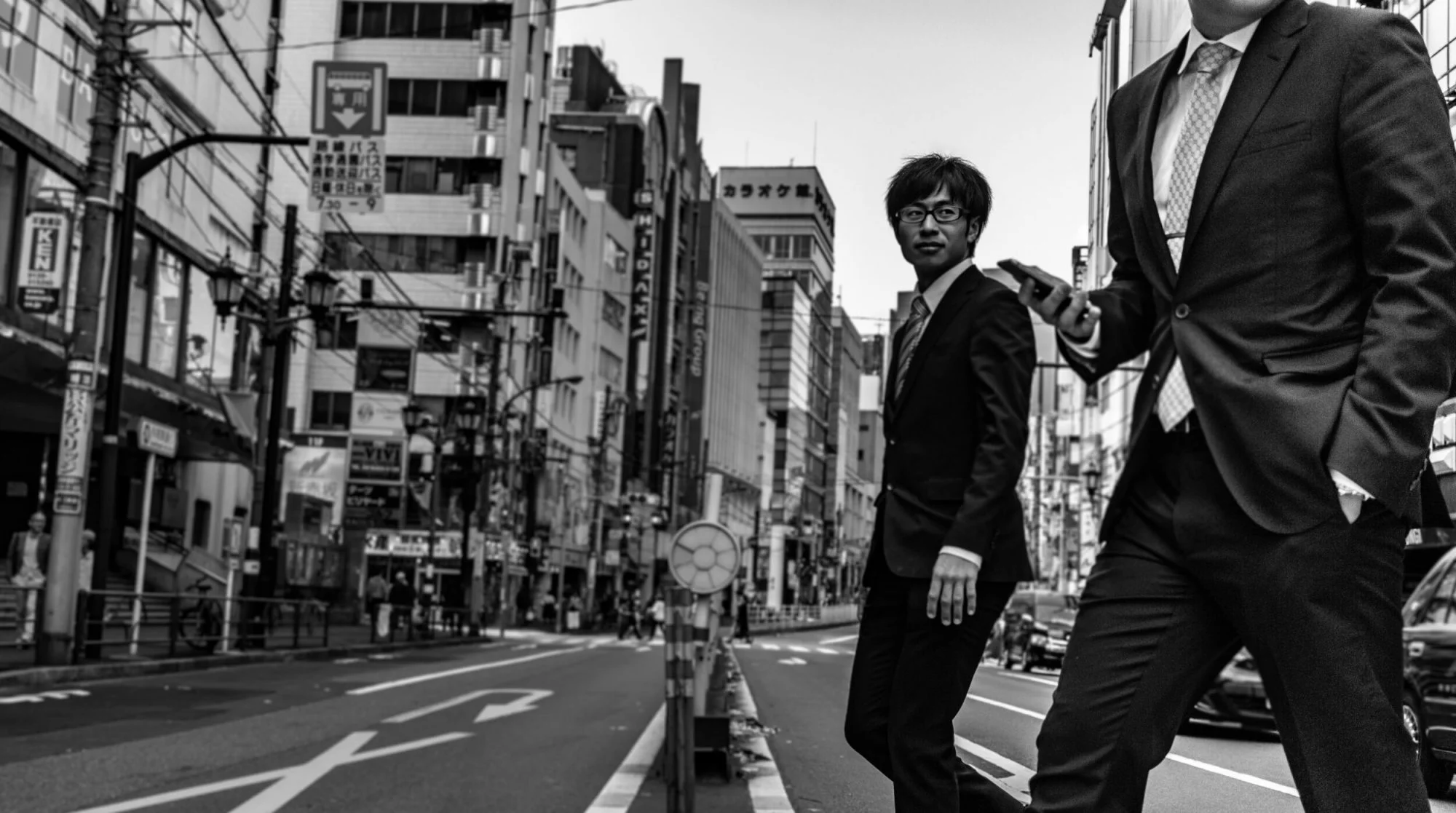
- Gift giving in Japan is a central part of Japanese business etiquette.
- There’s an unspoken expectation a gift will be offered at the first meeting, and gifts will continue to be part of your business dealings. Come prepared to that first meeting with a beautifully wrapped, quality and ideally – a theme based gift that’s not extravagant.
- Don’t get surprised. Bring a range of gifts for your trip so if you are presented with a gift you will be able to reciprocate.
- If you’re bringing a gift from your home country, make sure it’s not ‘made in Japan’. And don’t be tacky – don’t select items with your company logo. It may be seen as a promotional item and be viewed as cheap. If there is one thing true to all is that people from any culture love to eat. Local food specialties from your region are appreciated. Try to opt for a crafted, handmade gift which can’t be find elsewhere.
- The emphasis in Japanese business culture is on the ritual of gift-giving, rather than the gift itself. For this reason, you may receive a gift that seems too modest, or conversely, extravagant.
- However, expensive gifts are common. Don’t worry – an expensive gift will not be perceived as a bribe.
- It is customary to comment that the gift you are presenting, even if it is extravagant, is “tsumaranai mon” [“an uninteresting or dull thing”]. This statement is meant to highlight that “Your relationship with gifted is more important than this trivial item.”
- A gift for an individual should be given in private.
- If you are presenting a gift to a group of people, make sure they are all present.
- The correct Japanese etiquette is to present and receive gifts with both hands, just like when you’d give your business card.
- To keep the image of modesty, before accepting a gift it is polite to refuse at least once or twice before accepting.
Personal gift giving
- For weddings, the traditional gift would be to give money to the couple. Upon returning from their honeymoon, the newly-weds bring back souvenirs to give to their wedding guests. Money should be given in an envelope. The number of bills should be an odd number as superstition suggests that the couple may split if the money can be evenly divided in two. For Western friends getting married, a handcrafted Japanese knife set has become an increasingly popular alternative, a lifelong, heirloom-quality gift that aligns with the Japanese gift-giving emphasis on craftsmanship and lasting value.
- If the people you are close with are having a baby, the parents give gifts commemorating the child’s birth to their family and friends.
- This custom is related to buddhist traditions – The second Monday in January is Coming of Age Day, a national holiday dedicated to the nation’s young people who have reached the age of 20. Buddhist Prayer Beads or juzu are often given as a keepsake for this occasion.
- For Valentine’s Day, the Japanese woman gives chocolates (“honmei choco”) to the man she is serious about. For her colleagues and other male friends, she gives obligatory chocolate (“giri choco”).
- Don’t worry ladies, your time to get your chocolates or sweets back comes on March 14, called “The White Day”. The Japanese man gives more expensive chocolates or sweets back to the woman that gave him a gift on Valentine’s Day.
- If you want to give a gift related to children’s celebrations, go for electronics. It’s an usual choice in Japan.
- For the sick, flowers are the customary gift in Japan, and are the most popular gift to take along to the hospital. Keep in mind when choosing a gift that some flowers and plants are not appropriate to give, such as: potted plants, flowers with vivid colours or with a strong fragrance and large bouquets. Then we have the superstition traps: Flowers like Chrysanthemums or the quantity of 4, 9 or 13 are considered bad luck. Potted plants are seen as inappropriate gifts for the sick people because it is believed that the illness will become more severe by taking “deeper root”.
Major gift giving holidays
The two most popular occasions for gift giving in Japan happen twice a year:- Ochugen falls during the middle of the year and
- Oseibo falls at the end of the year.
Gift wrapping
In Japanese culture, the presentation of the gift is as important (if not more) as the gift itself. There are many customs and rules specifically related to the wrapping of the gift that play an important part of the gift giving custom. They even go so far as to imply your feelings towards the person receiving the gift. Japanese often use fabrics to wrap their objects. The technique called Furoshiki is not only very original but also eco friendly – such fabric can be reused to wrap future gifts or it can also be used for other purposes (such as your mini scarf!). Japanese techniques of gift wrapping usually don’t involve any tape! See below movie to learn how to do it.Passing the gift / Re-gifting
Postings online suggest that regifting is an acceptable practice in Japanese culture. One theory says this is due to people there being less likely to return a gift that doesn’t suit them. Though while acceptable, when done, it appears that it’s best to keep it a secret. (Well, in this case Europe doesn’t is not far off 🙂Gifts to avoid
- It all comes down to superstition. Lilies, lotus blossoms, and camellias are associated with funerals. White flowers of any kind are gifts to be avoided. There is also a superstition that potted plants encourage sickness.
- Giving 4 or 9 of anything is considered unlucky. This superstition seems to be less important nowadays for the younger generation.
- Red Christmas cards should be avoided, since funeral notices are customarily printed in this colour.
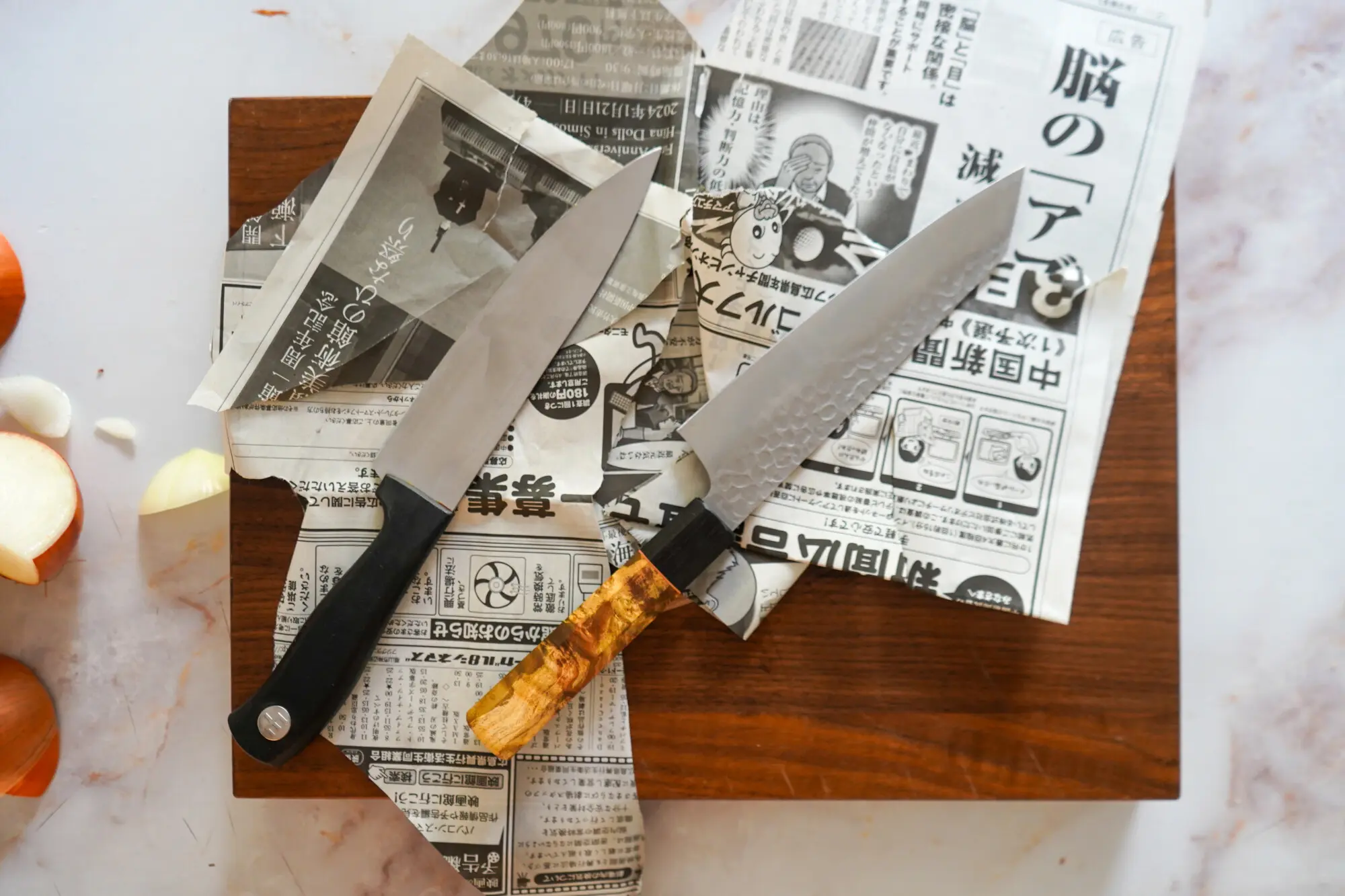
Looking for a meaningful Japanese gift? A handcrafted Japanese kitchen knife or a kintsugi porcelain piece makes a thoughtful and memorable present.
Japanese social etiquette when giving gift in person
- Always take off your shoes when you enter someone’s home.
- It is polite to say “o-jama shimasu” (sorry for disturbing) when entering someone’s house.
- You should not eat while standing up. You should always be seated. Exceptions are made for eating at a counter or eating ice cream.
- Avoid blowing your nose in front of others. Go to the bathroom to do it if needed. It’s considered rude to blow into a handkerchief and to put it back into your pocket. Paper tissues should be used.
- Do not point using fingers, feet or chopsticks. Pointing gestures should be made with waving fingers and the palm of your hand facing downward.
- In general, you should keep your real opinion (honne) to yourself and be polite by offering public opinions (tatemae) that are meant to maintain harmony.
- Business cards should be given and accepted with both hands in formal situations.
- Avoid interrupting people while talking or when they are getting ready to speak.
The final remarks
Japanese gift-giving reflects the broader philosophy of nagomi, harmony in relationships. Every gift is an expression of respect and thoughtfulness.
As everywhere in the world, gifts are always appreciated. Consider bringing a small souvenir that represents your hometown to give to your host (especially food). Don’t be surprised if your hosts give you something from their country, too. If the gift is wrapped, don’t open it until you leave. If the gift is not wrapped, make sure to express lots of appreciation (whether you like it or not). Ask some questions about the gift to show your interest. What would be your ideal gift from Japan?The two major gift-giving seasons are Ochugen (mid-year summer gifts) and Oseibo (year-end gifts), along with various personal and business occasions throughout the year.
Avoid gifts in sets of four (the number is associated with death), white flowers, and sharp objects that symbolize severing a relationship.
Yes, presentation is extremely important in Japanese gift giving. The wrapping and formal presentation of a gift are considered just as significant as the gift itself.
When presenting a gift in Japan, use both hands as a sign of respect. There are specific social customs including how you hold and offer the gift.
Handcrafted Japanese Knives by Oishya
Forged by master craftsmen in Seki and Sakai, Japan. Free worldwide shipping over £270 • 100-day money-back guarantee • Lifetime warranty