Japanese Knives

Japanese knives, esteemed by top chefs for their specialisation and quality, often come with a significant price tag. However, we’re here to change that. As a dedicated Japanese knife shop, we cut out the middleman and bring you premium Japanese kitchen knives at an affordable price — ensuring you acquire a lifelong kitchen companion. Whether you want to buy Japanese knives for the first time or add to a growing collection, you’ll find everything you need right here, shipped directly from Europe.

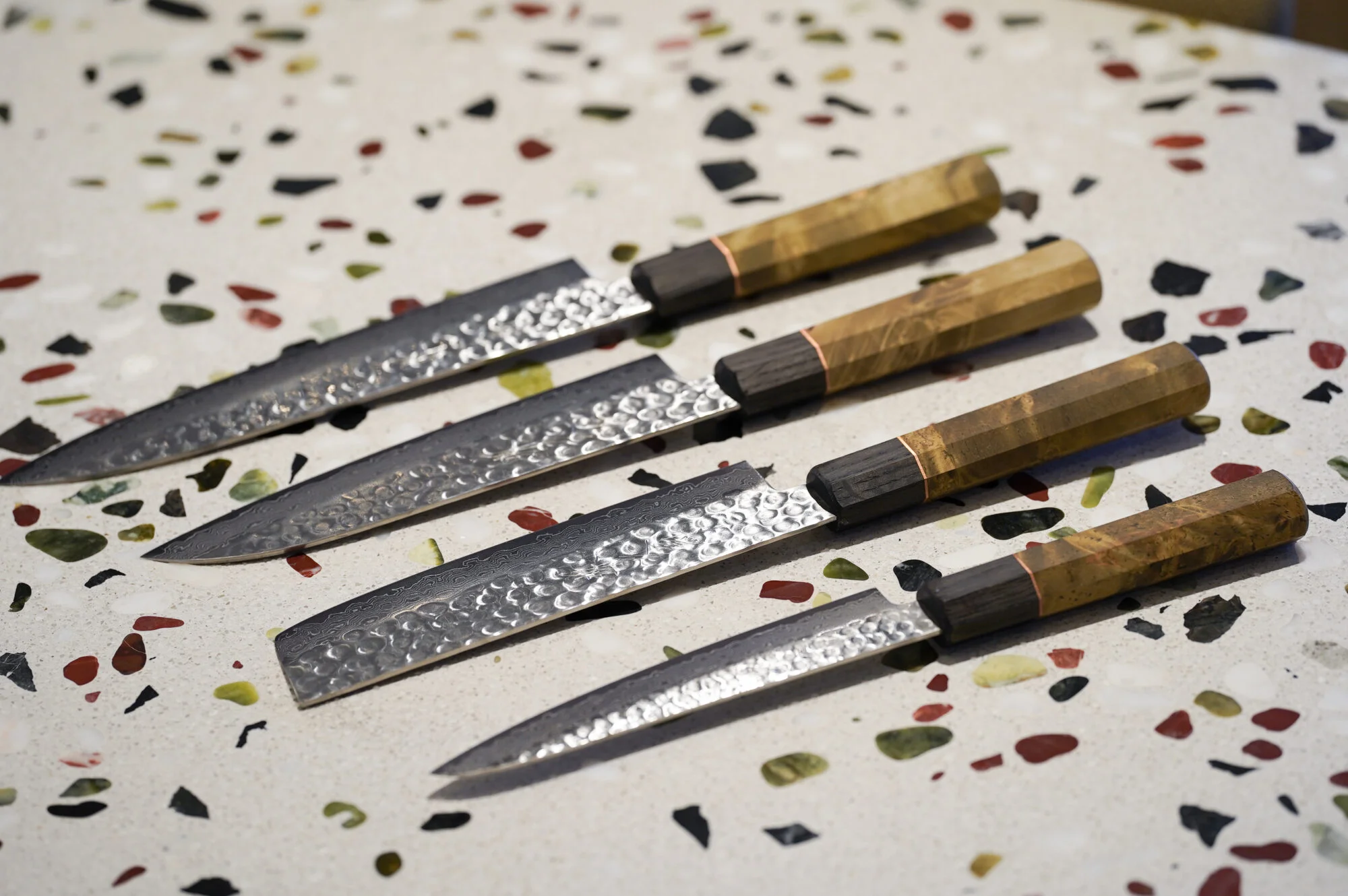
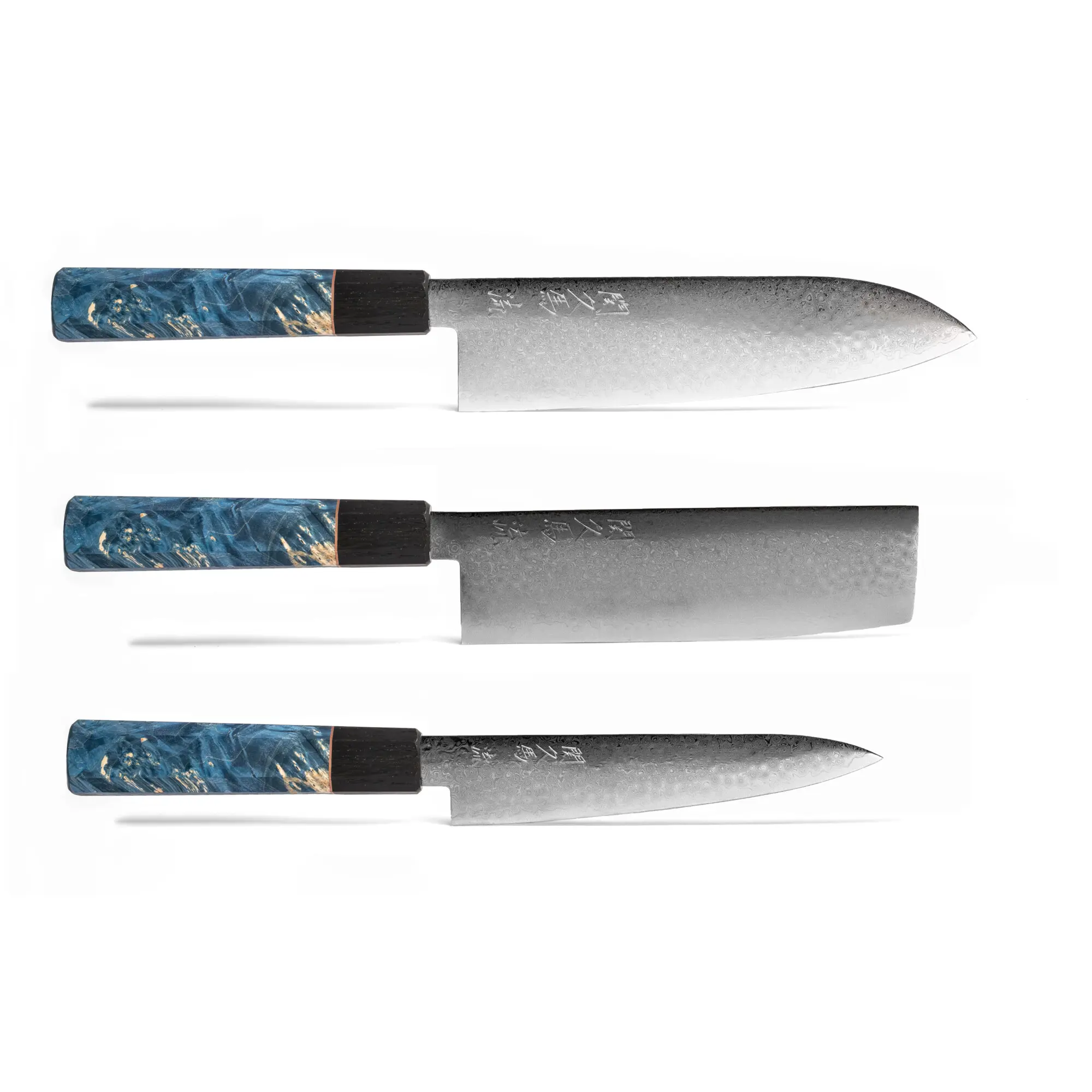
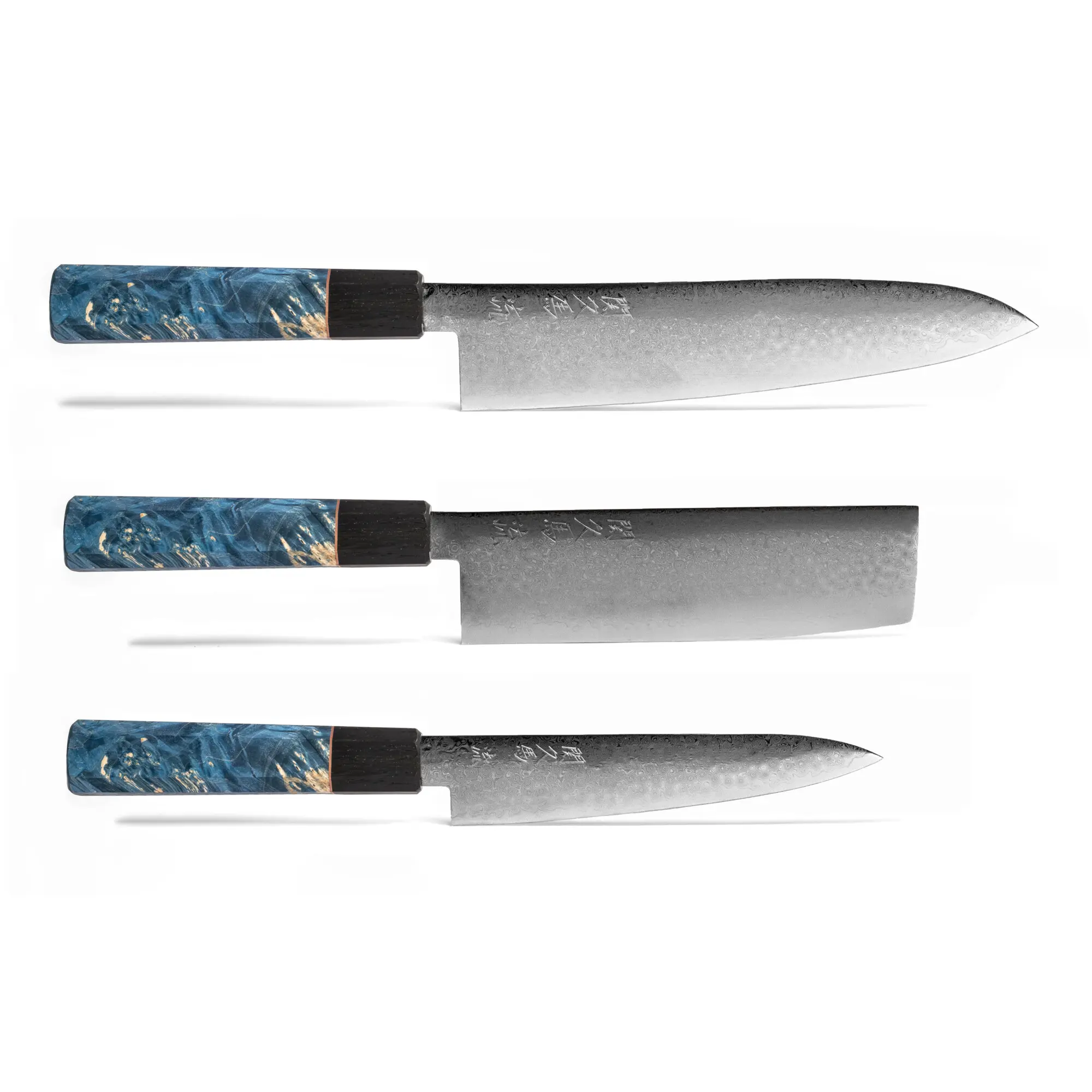
seki kyuba kata santoku nakiri petty knife set natural brown

Why Choose Japanese Knives Over Western Knives

If you’ve only ever used a standard Western kitchen knife, picking up a Japanese chef knife for the first time is a genuine revelation. The differences go far beyond aesthetics — they are rooted in centuries of bladesmithing tradition and a fundamentally different approach to what a knife should be.

Harder steel, sharper edges. Japanese knives are typically forged from steel with a Rockwell hardness of 58–63 HRC, compared to 54–58 HRC for most Western knives. This harder steel allows the blade to be ground to a much finer, more acute edge — often between 12 and 15 degrees per side, versus 20 degrees or more on a Western blade. The result is noticeably cleaner cuts with far less effort.

Thinner and lighter. Because the steel is harder, it can be forged thinner without sacrificing rigidity. A thinner blade means less resistance as it passes through food. Delicate herbs stay vibrant instead of bruising. Onion slices come out paper-thin. Tomato skins yield without crushing the flesh beneath. And because there’s less material, Japanese knives tend to be lighter, reducing hand fatigue during longer prep sessions.

Purpose-built precision. Where Western knife culture gravitates toward one all-purpose blade, Japanese tradition embraces specialisation. There are dedicated shapes for vegetables, for fish, for fine slicing, for heavy-duty chopping. This philosophy means each knife excels at its intended task in a way a single multipurpose blade simply cannot match.

Better edge retention. That harder steel doesn’t just take a sharper edge — it holds it longer. You’ll spend less time maintaining your knife and more time enjoying the pure pleasure of a blade that cuts exactly the way it should. When it does come time to sharpen, a quality whetstone at the right grit will bring it back to factory sharpness in minutes.

Types of Japanese Knives

Each style of Japanese knife has been refined over generations for a specific purpose. Here’s a guide to the most popular types and what they do best.

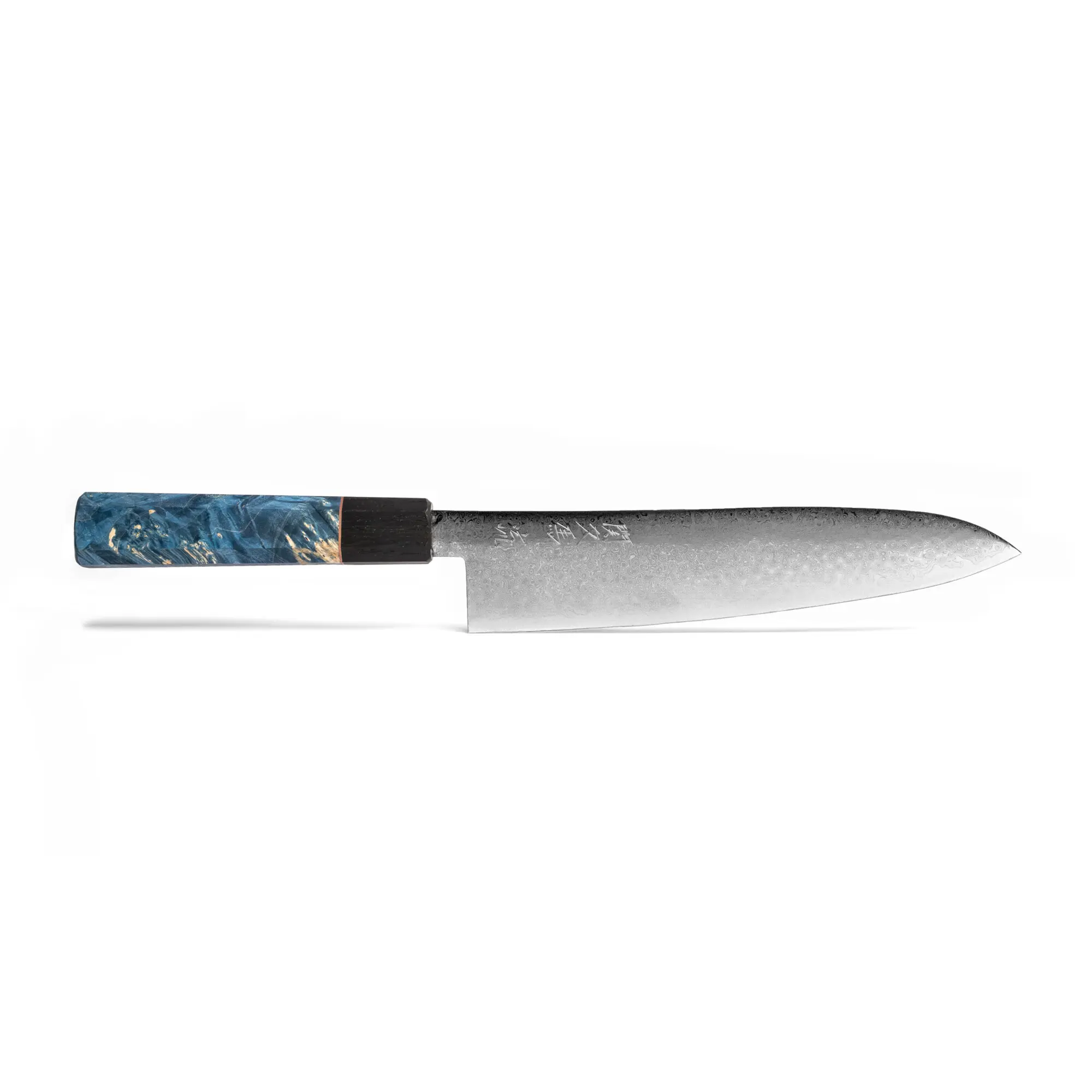
Gyuto — The Japanese Chef Knife

The Gyuto is the most versatile blade in the Japanese kitchen. Think of it as the Japanese answer to the Western chef’s knife — a curved, all-purpose blade that handles meat, fish, and vegetables with equal confidence. If you’re buying your first Japanese chef knife, this is the one most people start with. Available in 21cm and 24cm lengths, it suits everything from home cooking to professional prep work.

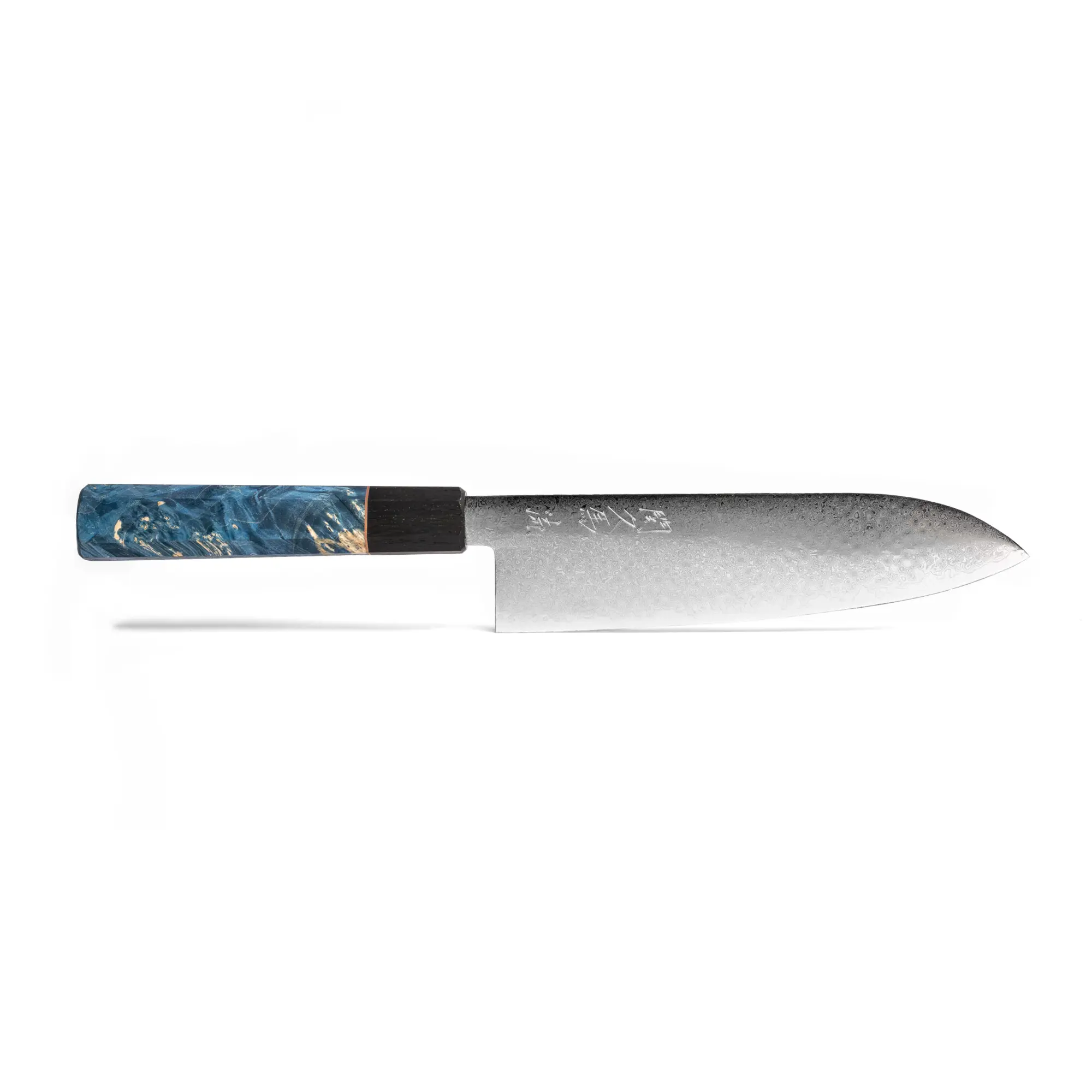
Santoku — The Three Virtues

The Santoku translates to “three virtues,” referring to its mastery of slicing, dicing, and mincing. With a flatter profile and shorter length than the Gyuto, it’s a favourite among home cooks who prefer a compact, agile blade. If you find longer knives unwieldy, the Santoku is an excellent all-rounder.

Nakiri — The Vegetable Specialist

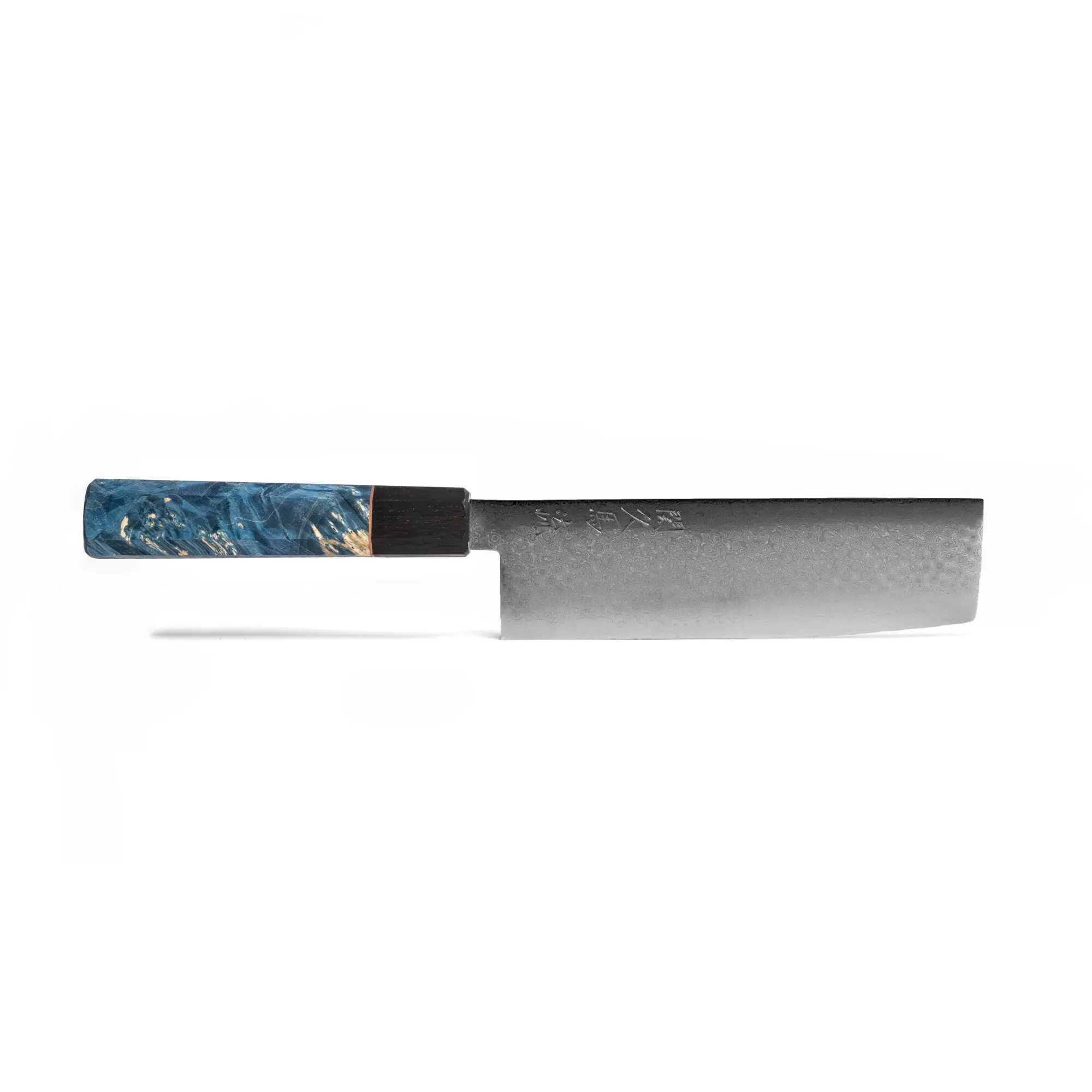
The Nakiri features a flat, rectangular blade designed purely for vegetables. Its straight edge makes full contact with the cutting board in a single downward motion — no rocking required. If you cook a lot of plant-based meals or simply want the cleanest vegetable cuts possible, the Nakiri is indispensable.

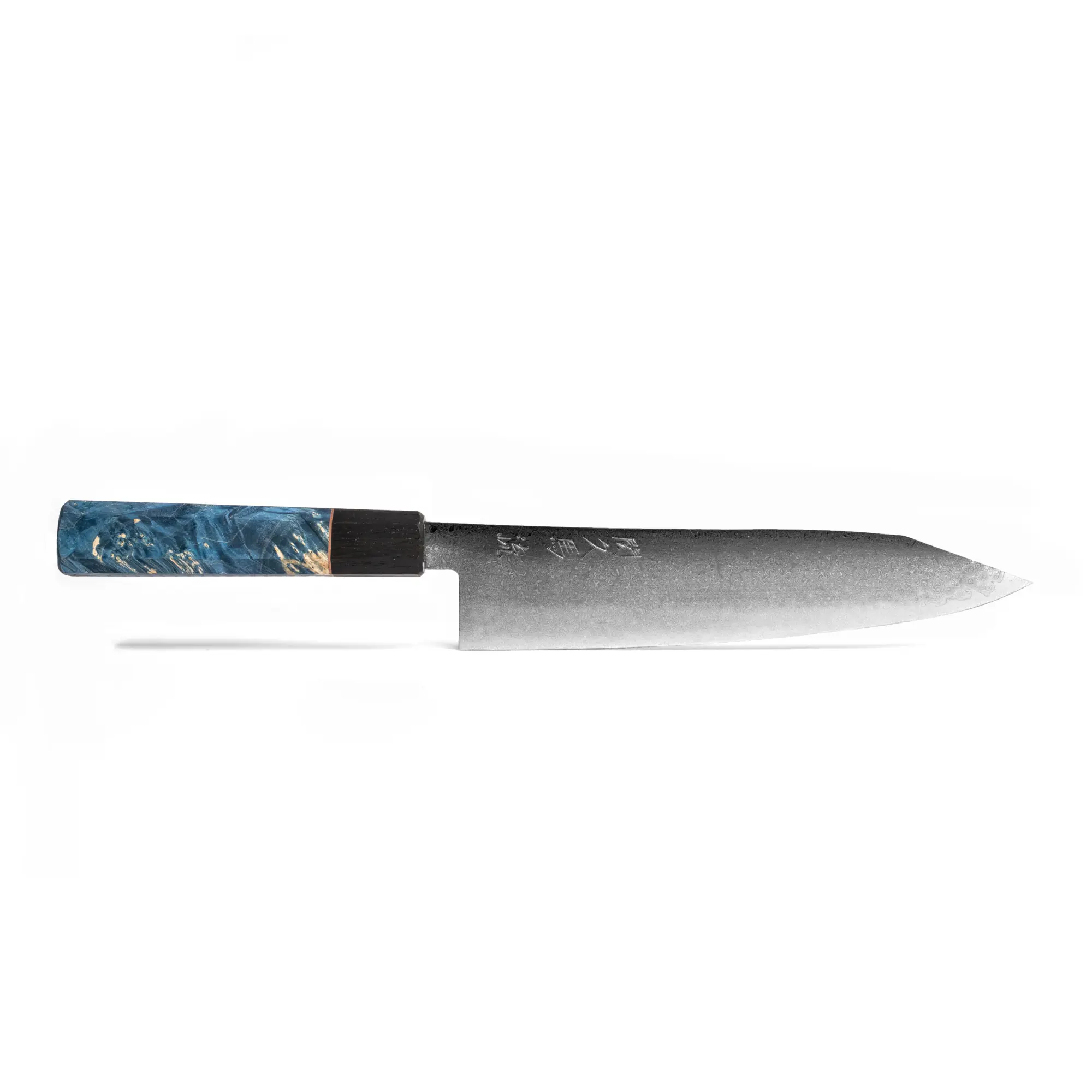
Bunka — The Versatile Workhorse

Similar to the Santoku but with a more angular, pointed tip, the Bunka offers extra precision for detailed work while retaining broad-blade versatility. Its distinctive reverse-tanto tip makes it particularly good at intricate cuts and scoring, giving you a bit more range than a standard Santoku.

Kiritsuke — The Statement Blade

The Kiritsuke blends the length of a Gyuto with the flat profile of a Nakiri, creating a striking, sword-like silhouette. Traditionally reserved for head chefs in Japanese kitchens, it’s a blade that rewards skill with exceptional versatility. If you’re comfortable with Japanese knives and want something that handles both long slicing strokes and precise vegetable work, the Kiritsuke is a compelling choice.

Petty — The Precision Tool

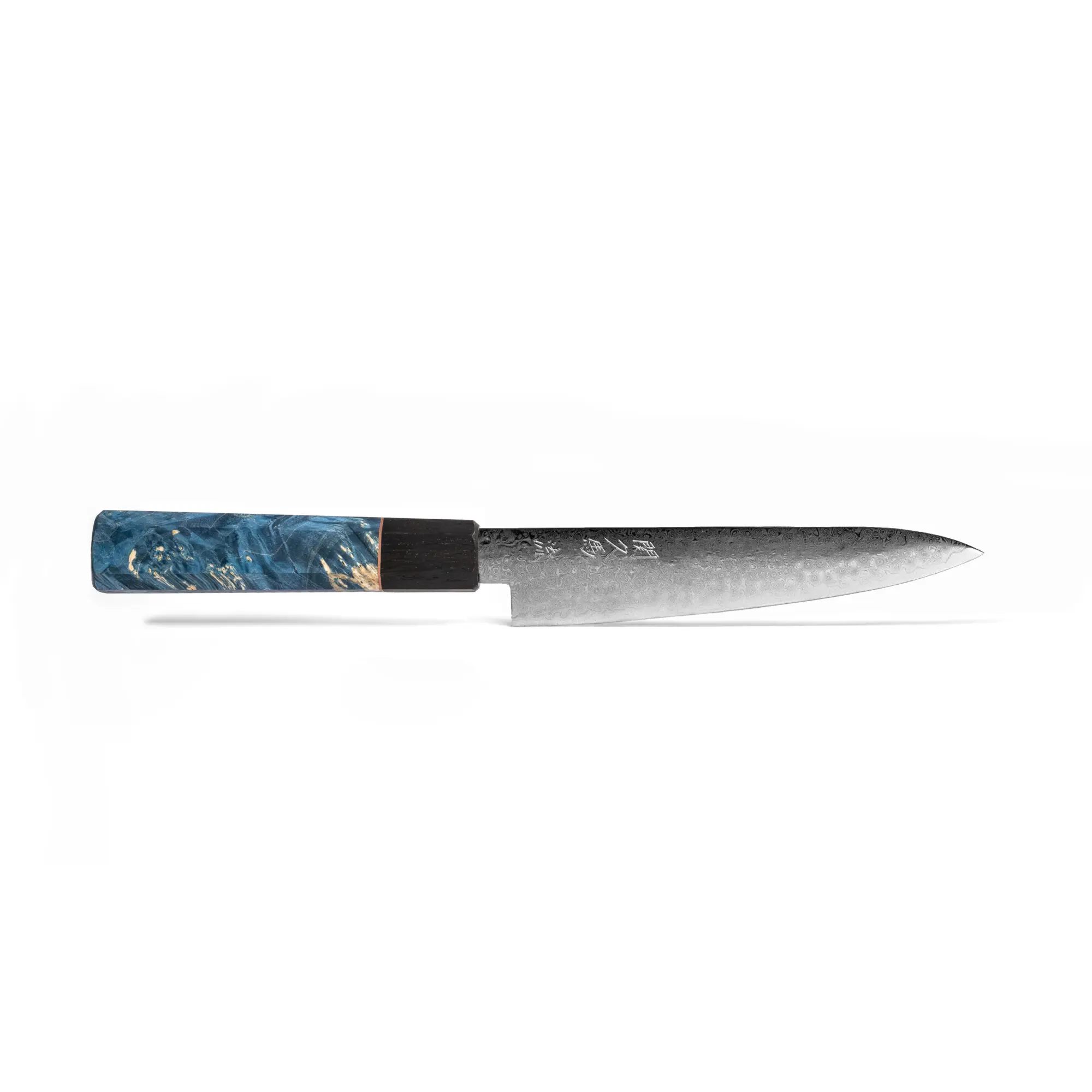
The Petty knife is the Japanese equivalent of a paring or utility knife. Compact and nimble, it handles all the tasks that are awkward with a full-sized blade: peeling, trimming, deveining, and fine detail work. Every kitchen needs a good small knife, and a Japanese Petty outperforms its Western counterparts by a wide margin.

Our Japanese Knife Collections

We offer five distinct knife lines, each crafted in Japan’s renowned bladesmithing regions. For a detailed side-by-side breakdown, see our complete knife lines comparison.

Sakai Kyuba KYU — Forged in Sakai, the historic heart of Japanese knife-making, the KYU line uses Aogami Super (Blue Super) steel for exceptional edge retention and sharpness. These are handcrafted knives with a traditional aesthetic and performance that professionals appreciate. If you value heritage and don’t mind a blade that develops a natural patina over time, KYU is the choice. Curious about the steel? Read more about the difference between Aogami 2 and Aogami Super Blue.

Seki Kyuba KATA — Made in Seki, Japan’s other great blade city, the KATA line offers VG-10 stainless steel in a sleek, modern design. VG-10 balances excellent sharpness with easy maintenance and stain resistance, making KATA ideal for cooks who want high performance without the extra care that carbon steel demands.

Seki Kyuba SHIN — The SHIN line combines traditional Japanese blade geometry with a refined, minimalist handle design. These knives are built for cooks who appreciate clean lines and balanced feel, with the reliable performance of Japanese stainless steel.

Seki Kyuba NIJI — NIJI brings colour and personality to serious kitchen tools. With the same quality construction as our other Seki lines, NIJI adds vibrant handle options that let you express your style while cutting. A great option if you want your knives to be as visually distinctive as they are functional.

Seki Kyuba RYU — The RYU line features a dramatic Damascus-pattern blade that’s as beautiful as it is effective. Multiple layers of steel are folded together, creating a unique wave pattern on each blade while delivering outstanding cutting performance. For cooks who appreciate craftsmanship you can see and feel.

Not sure which line suits you? Browse our curated Japanese knife sets for ready-made combinations that cover all your kitchen needs.

How to Choose Your First Japanese Knife

Walking into the world of Japanese kitchen knives can feel overwhelming, but choosing the best Japanese knife for your needs is simpler than you might think. Here’s how to narrow it down.

Start with one versatile blade. If you’re buying your first Japanese knife, a Gyuto (21cm) or a Santoku is the smartest starting point. Either one will handle 80–90% of your daily kitchen tasks. You can always add specialised blades later.

Consider what you cook most. Heavy on vegetables? A Nakiri will transform your prep. Do a lot of meat and fish? A Gyuto gives you the length and curve you need. Cook a bit of everything? The Santoku’s compact versatility is hard to beat.

Think about maintenance. Carbon steel (like the Aogami Super in our KYU line) takes an incredibly sharp edge and holds it well, but it requires drying after use and will develop a patina. Stainless steel (like VG-10 in our KATA line) is more forgiving — it resists staining and needs less day-to-day attention. Neither is better; it’s about your preference and routine.

Don’t overthink the budget. Because we work directly with our forge partners and cut out the middleman, our knives are priced well below comparable Japanese knives from traditional retail channels. You’re getting genuine, forge-quality Japanese steel without the typical markup.

For a deeper dive into the decision-making process, our complete guide to buying your first Japanese knife covers everything from steel types to handle shapes.

Frequently Asked Questions

What makes Japanese knives different from Western knives?

Japanese knives are made from harder steel (typically 58–63 HRC), which allows them to be ground thinner and sharpened to a more acute angle. This means sharper edges, cleaner cuts, and less effort during food preparation. They’re also generally lighter than their Western counterparts, reducing hand fatigue. While Western knives tend to be thicker and more robust for heavy tasks, Japanese knives prioritise precision and cutting performance.

Which Japanese knife should I buy first?

For most home cooks, a Gyuto (Japanese chef knife) in 21cm is the best starting point. It’s the most versatile Japanese knife and handles vegetables, meat, and fish equally well. If you prefer a shorter, lighter blade, a Santoku is an excellent alternative. Both serve as capable all-rounders that will cover the majority of your daily kitchen tasks. Read our buying guide for a detailed walkthrough.

How do I care for and sharpen my Japanese knife?

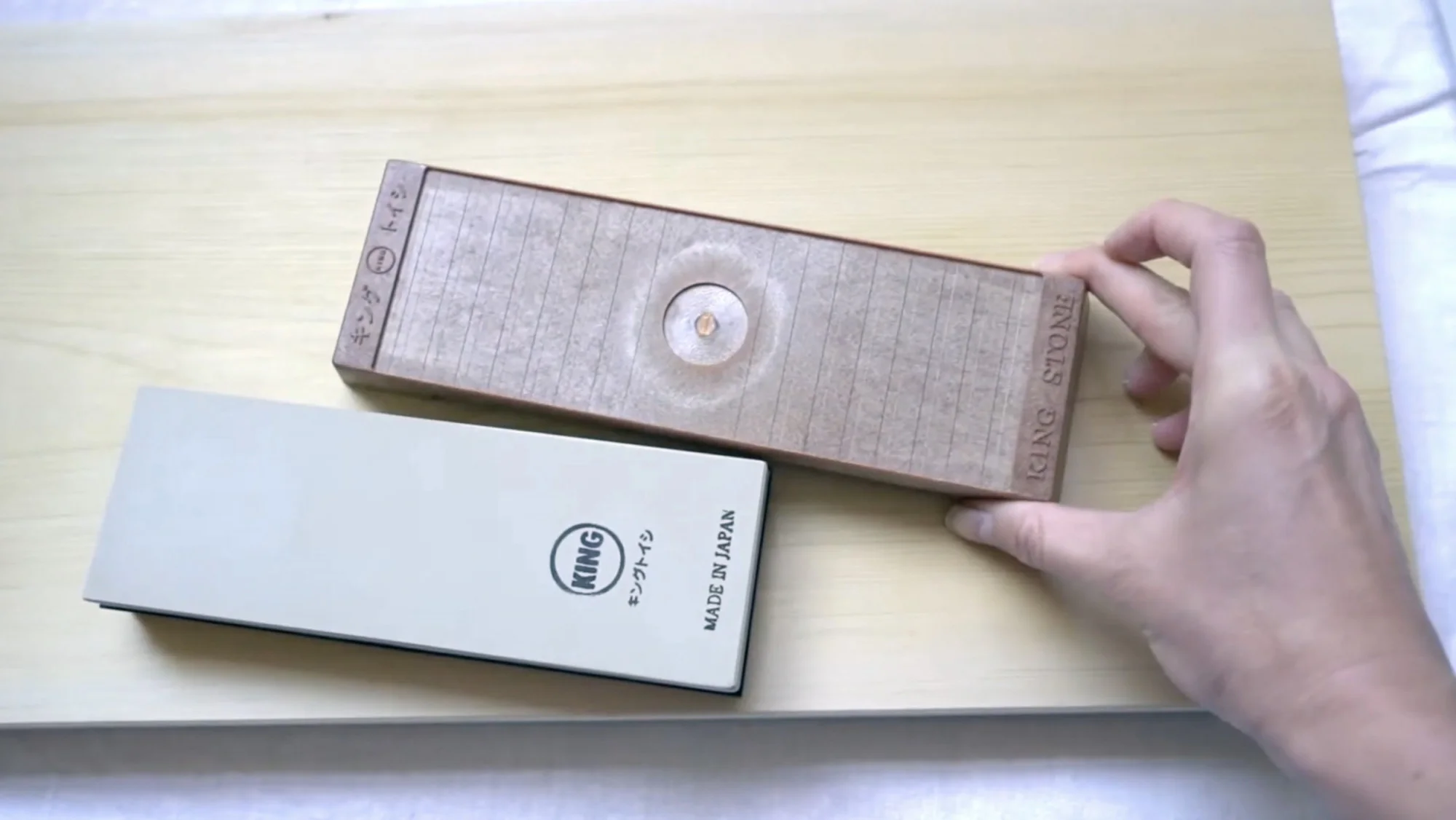
Always hand-wash your Japanese knife with warm water and mild soap, then dry it immediately — never put it in the dishwasher. For sharpening, we recommend using a whetstone rather than a honing steel, as the harder Japanese steel responds better to stone sharpening. A 1000-grit stone handles most regular maintenance, while a 3000–6000 grit stone gives you a refined, polished edge. Check our guide on which whetstone grit to choose for more detail.

Are your knives actually made in Japan?

Yes. Our knives are forged in two of Japan’s most celebrated blade-making regions: Sakai (Osaka Prefecture), which has over 600 years of bladesmithing history, and Seki (Gifu Prefecture), known as the cutlery capital of Japan. We work directly with our forge partners, which is how we keep prices accessible while maintaining authentic Japanese quality.

Do you offer a money-back guarantee?

Absolutely. We offer a 100-day money-back guarantee on all our knives. If you’re not completely satisfied, you can return your purchase for a full refund — no questions asked. We want you to feel confident when you buy Japanese knives from us. Full details are available on our returns and exchanges page.

Is a Japanese knife set better value than buying individual knives?

A Japanese knife set can be excellent value if the included knives match your cooking style. Our curated knife sets pair complementary blade types — typically a chef’s knife, a vegetable knife, and a utility knife — at a lower combined price than buying each separately. However, if you’re just starting out, there’s nothing wrong with buying a single high-quality Gyuto or Santoku and expanding your collection over time as you discover which specialised blades suit your cooking.