
Sharpening Stones
All of our Japanese Whetstones (also called sharpening stones or waterstones) have been carefully selected by the team to ensure maximum satisfaction and perfect results for your Japanese knives.
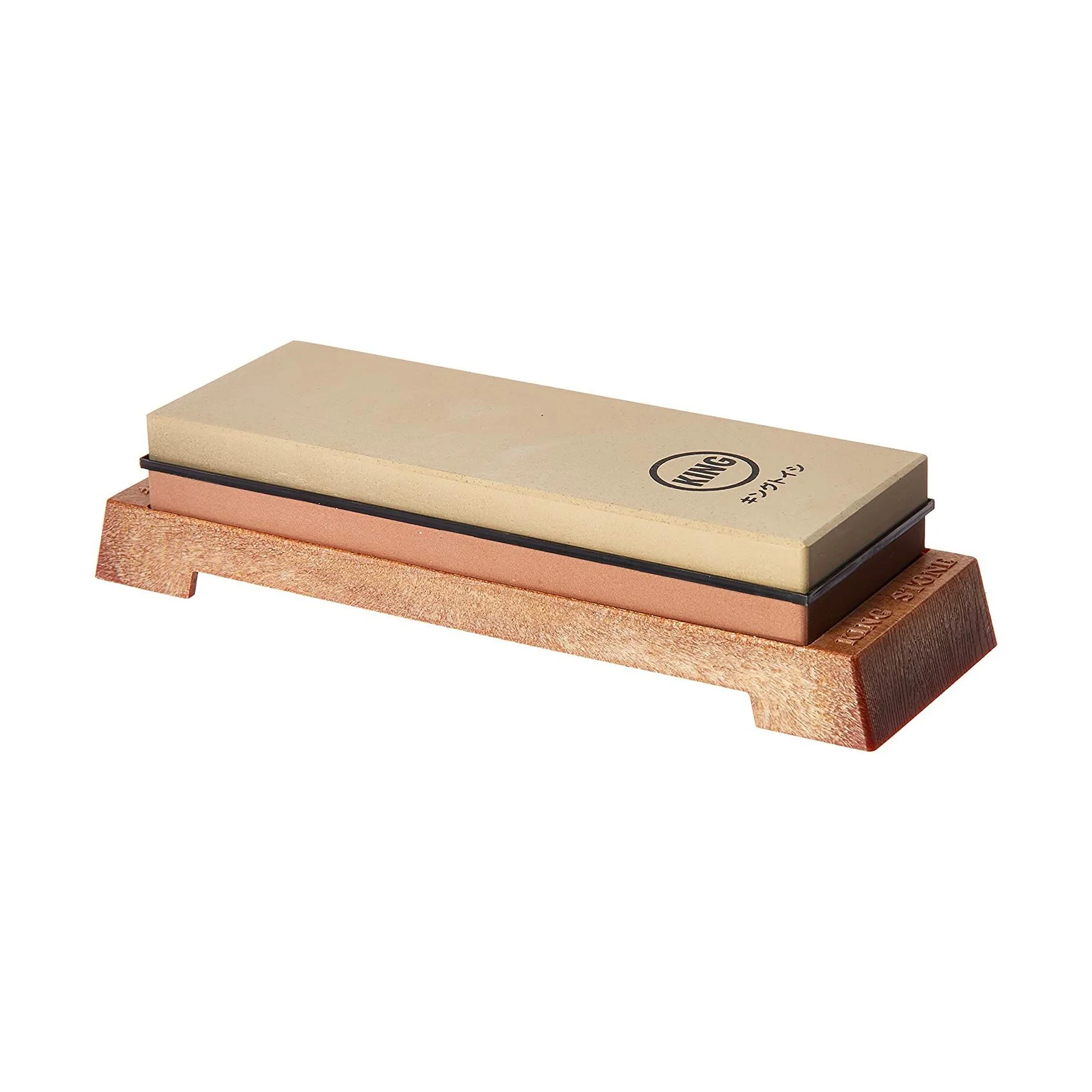


Why Japanese Whetstones Are the Best Way to Sharpen Your Knives
A Japanese whetstone removes steel gradually and precisely, allowing you to control the exact angle, pressure, and amount of material taken off the edge. Unlike pull-through sharpeners or electric grinders, which remove more steel than necessary and can overheat the blade, a waterstone works at room temperature and lets you restore the original factory edge, or even improve upon it. This is particularly important for Japanese knives, which are made from harder, more brittle steels that can chip or crack under the aggressive action of powered sharpeners.
Whetstones also give you the ability to adjust the edge profile to suit your cutting style. A slightly more acute angle produces a razor-sharp edge ideal for delicate slicing, while a marginally steeper angle adds durability for heavier chopping. This flexibility is something no mechanical sharpener can match. With a little practice, most home cooks can achieve professional-level results in under ten minutes. Our guide to choosing the right whetstone grit walks you through the process in detail.
Understanding Grit Levels
Whetstone grit refers to the coarseness of the abrasive surface, and different grits serve different purposes:
1000 grit (medium) is the workhorse grit for regular sharpening. It removes enough steel to reprofile a dull edge while leaving a finish that is perfectly functional for kitchen use. Every knife owner should have a 1000-grit stone as their foundation.
6000 grit (fine) is a finishing stone that polishes the edge after sharpening on a medium stone. It refines the scratch pattern left by the 1000 grit, creating a smoother, sharper, and longer-lasting edge. Using a finishing stone is what separates a good edge from an exceptional one.
8000 grit (extra fine) takes the polish further, producing a mirror-like finish on the bevel. This is favoured by enthusiasts and professional chefs who want the absolute keenest edge possible. Our King Gold G-1 #8000 is a premium finishing stone for those who pursue the highest level of sharpness.
Our most popular sharpening stones, the King KW-65 1000/6000 and the King HT-65 PRO 1000/6000, are combination stones that offer both the medium and fine grit on a single block. This makes them the most practical and cost-effective option for home cooks, as one stone covers the complete sharpening process from edge restoration to finishing.
How to Use a Japanese Sharpening Stone
Soak your whetstone in water for 10-15 minutes before use (splash-and-go stones need only a brief wetting). Place it on a stable, non-slip surface. Hold the knife at a consistent angle of approximately 12-15 degrees for Japanese knives and draw the blade across the stone in smooth, even strokes, alternating sides to maintain symmetry. Start on the coarser grit, work until you can feel a slight burr along the opposite side of the edge, then flip to the finer grit to refine and polish. Rinse the knife and test on a piece of paper or a ripe tomato.
All our whetstones ship from Europe with our 100-day money-back guarantee. Pair one with any knife from our Japanese knife collection to keep your edges performing at their best.
How often should I sharpen my Japanese knives?
For a home cook, sharpening on a whetstone every two to three months is typically sufficient. Between sharpenings, a few light passes on a leather strop or ceramic honing rod will maintain the edge. Professional cooks who use their knives daily may sharpen monthly. The key indicator is performance: when your knife starts to slip on tomato skin or crush rather than slice through onion layers, it is time for the whetstone.
What grit whetstone should I start with?
A 1000/6000 combination stone is the best starting point for most people. The 1000-grit side handles all routine sharpening, and the 6000-grit side polishes the edge to a refined finish. This covers the needs of the vast majority of home cooks. You can add an 8000-grit finishing stone later if you want to pursue an even finer edge.
Can I use a Japanese whetstone on Western knives?
Absolutely. Japanese whetstones work on any steel, including Western knives from brands like Wusthof and Victorinox. The only difference is the sharpening angle: Western knives are typically sharpened at around 20 degrees per side, while Japanese knives use a more acute 12-15 degrees. The whetstone itself performs beautifully on both.
What is the difference between the King KW-65 and King HT-65 PRO?
Both are 1000/6000 combination stones from King, one of Japan’s most respected whetstone manufacturers. The HT-65 PRO is the professional-grade version, offering a denser abrasive structure that provides a finer scratch pattern, slightly faster cutting speed, and longer stone life. The KW-65 is an excellent entry-level option that delivers great results at a lower price point. Both will keep your Japanese knives sharp and well-maintained.