
Paring + Utility Knives
Petty knives are small utility or paring knives that are ideal for small, delicate work that a chef’s knife can’t handle, such as delicate produce and herbs, small fruits and vegetables. Usually between 12cm and 15cm in length.
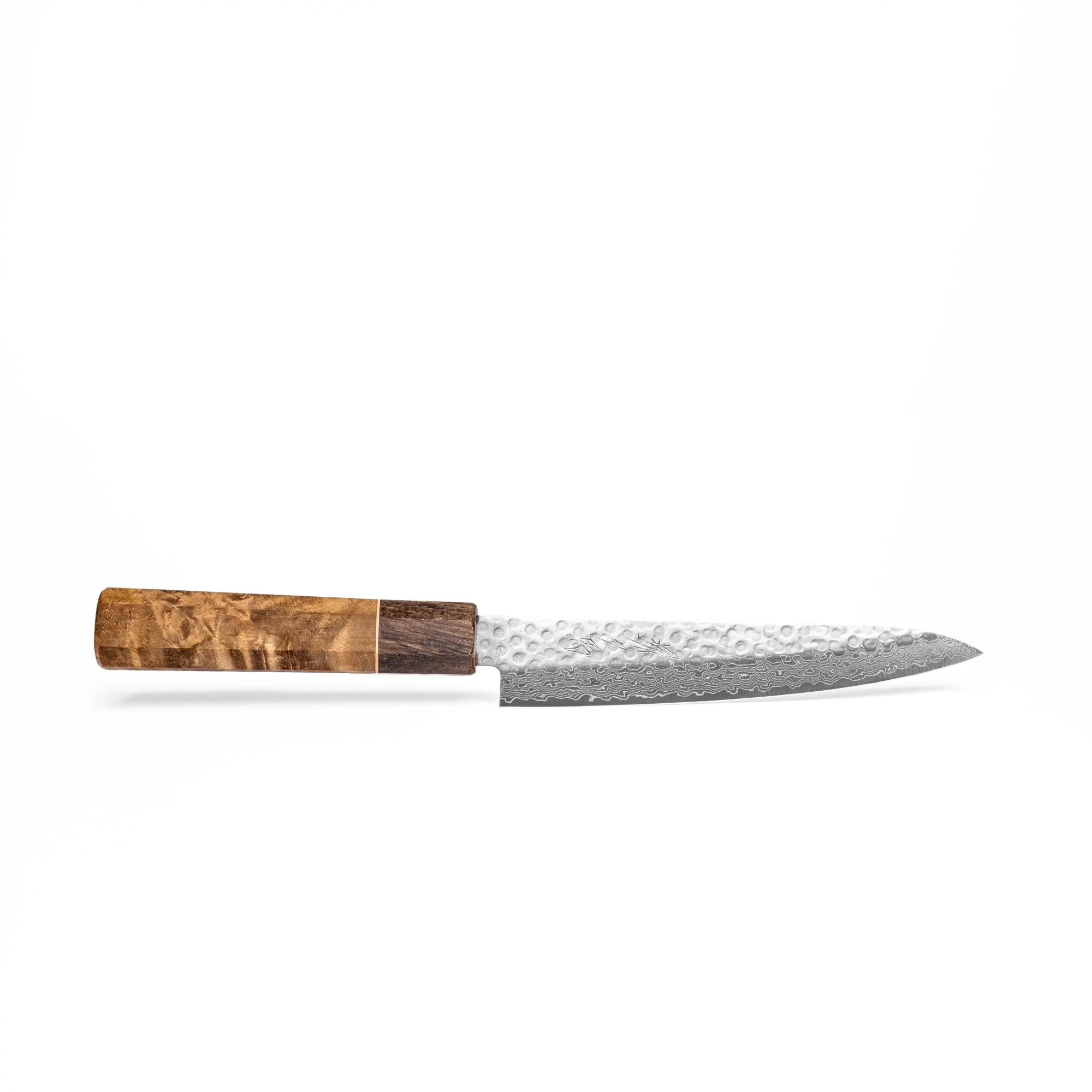


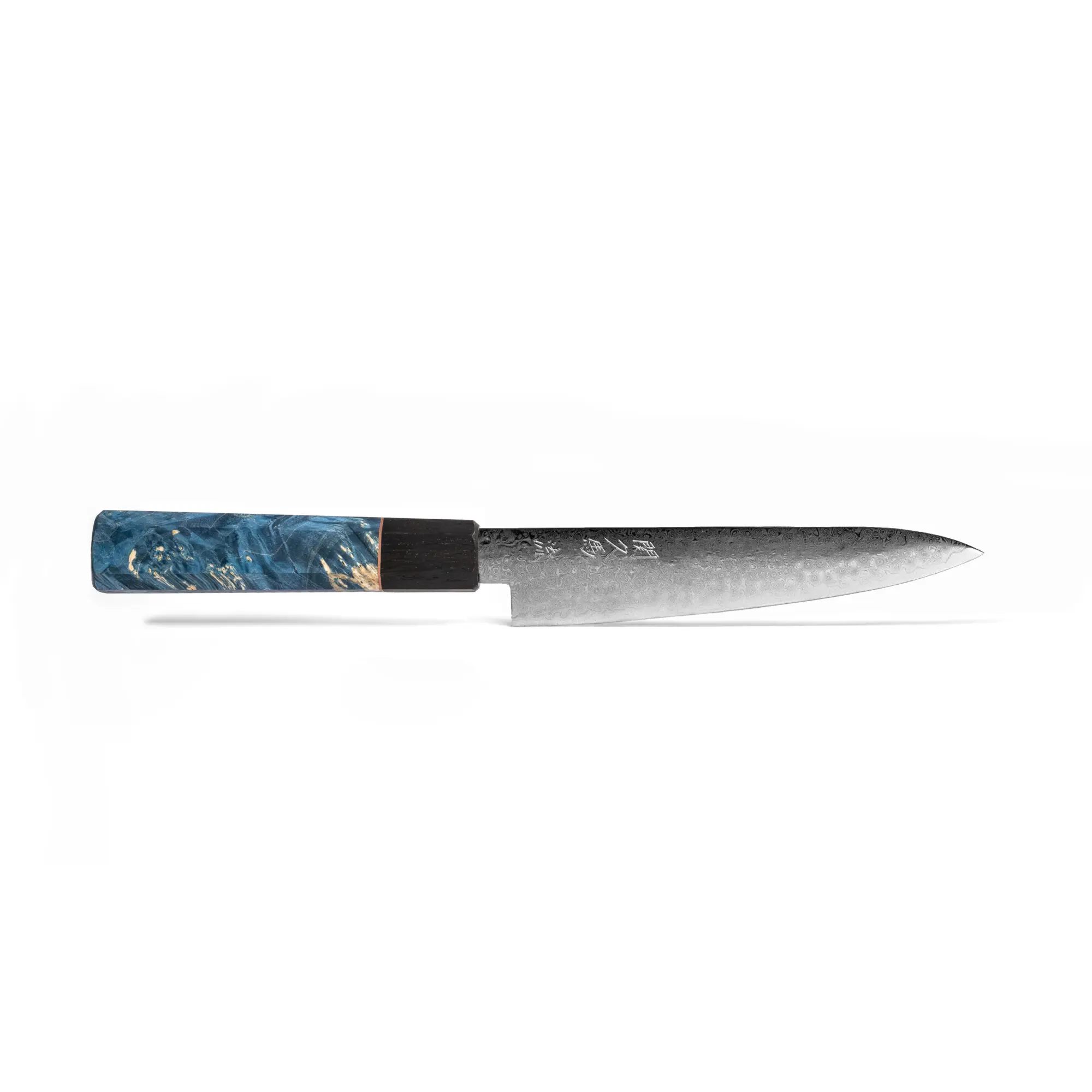
The Role of a Petty Knife in a Japanese Knife Collection
If a gyuto or Santoku is the workhorse of your kitchen, the petty knife is its indispensable companion. Every cook encounters tasks where a full-sized chef’s knife feels unwieldy: peeling an apple, deveining a prawn, supreming a citrus fruit, or trimming the stem from a strawberry. A Japanese petty knife handles all of these with a level of control and precision that a larger blade simply cannot match.
What sets a Japanese petty knife apart from a standard Western paring knife is the same advantage found across all Japanese cutlery: harder steel ground to a finer edge. Our petty knives, available across the KYU, KATA, NIJI, and RYU lines, are forged from the same premium steels as our chef’s knives. The Aogami Super carbon steel in the KYU line and the VG-10 stainless in the KATA and RYU lines both deliver an edge that slices effortlessly through delicate ingredients without bruising or tearing.
Choosing Between 12cm and 15cm
Petty knives typically come in two sizes, and the best choice depends on how you plan to use it. A 12cm petty is closer in spirit to a traditional paring knife. It is light, nimble, and excels at in-hand work such as peeling, tourning vegetables, and decorative garnishing. Many cooks find this size natural for tasks performed away from the cutting board, where the short blade allows intuitive thumb-guided cuts.
A 15cm petty bridges the gap between a paring knife and a chef’s knife. With the extra length, it becomes useful on the board as well, handling tasks like slicing shallots, mincing garlic, or breaking down small vegetables. For cooks who want a single utility knife that covers both in-hand precision and light board work, the 15cm is the more versatile of the two. If your budget allows, having both sizes covers every scenario.
Why Every Kitchen Needs a Quality Utility Knife
A petty knife is often the most frequently used knife in a well-equipped kitchen, even if it rarely gets the credit. Professional chefs typically reach for their petty dozens of times during a single service for quick trimming, tasting cuts, and detail work. At home, it becomes the knife you grab when you need to slice a lemon for a drink, cut cheese for a snack, or quickly prep a small handful of herbs. Investing in a quality Japanese petty knife means these countless small tasks are completed faster, more cleanly, and with greater enjoyment.
All Oishya petty knives ship from Europe and come with our 100-day money-back guarantee. Pair one with a chef’s knife to cover the full spectrum of kitchen prep, or explore our complete collection to build the set that suits your cooking.
What is the difference between a petty knife and a paring knife?
The terms are closely related. “Petty” is the Japanese term for a small utility knife, and it encompasses what Western cooks would call both paring knives (typically under 10cm) and small utility knives (10-15cm). Japanese petty knives tend to be slightly longer than Western paring knives, typically 12-15cm, and are made from harder steel with a finer edge, giving them better cutting performance across a wider range of tasks.
What is a petty knife used for?
A petty knife excels at any task that requires more precision than a chef’s knife can offer. Common uses include peeling fruits and vegetables, trimming herbs, deveining prawns, hulling strawberries, cutting small garnishes, slicing cheese, and segmenting citrus. The 15cm version can also handle light board work such as slicing shallots, mincing garlic, and cutting small produce.
Should I get a carbon steel or stainless steel petty knife?
Because petty knives frequently come into contact with acidic fruits and wet ingredients, a stainless steel option like the KATA (VG-10) or RYU (Damascus VG-10) can be a practical choice for reduced maintenance. That said, the KYU line’s Aogami Super carbon steel offers an even keener edge that many cooks prefer for delicate precision work. If you are comfortable drying the blade promptly after contact with acidic foods, carbon steel is an excellent option.
Do I really need a petty knife if I already have a chef’s knife?
While a chef’s knife can technically handle small tasks, a petty knife makes them significantly easier and safer. Trying to peel a piece of ginger or trim a radish with a 21cm gyuto is awkward and imprecise. A petty knife is lightweight, manoeuvrable, and designed for exactly these situations. Most professional chefs consider a good petty knife the second most essential blade in their kit, right after the chef’s knife.