
Filleting Knives
A filleting knife is a knife with a flexible blade that allows you to move easily between the flesh and bones of the fish, and the sharper the knife, the easier the job.
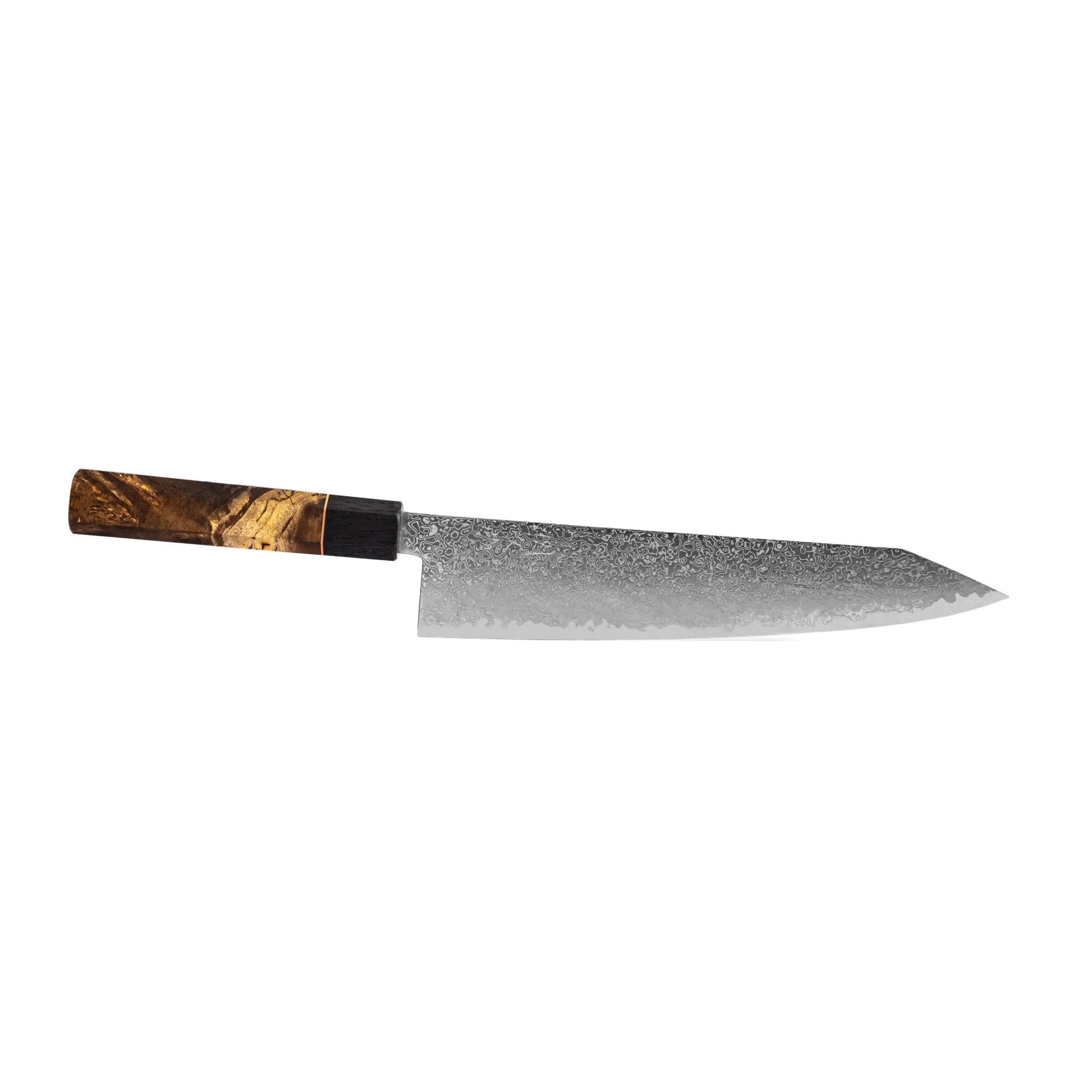


Why a Japanese Filleting Knife Makes a Difference
Filleting fish is one of the most technically demanding tasks in the kitchen. The blade must navigate around bones, contour along the spine, and separate skin from flesh, all while minimising waste and preserving the clean appearance of each fillet. A Japanese filleting knife is engineered for exactly this kind of precision work. The steel is harder than that found in Western fillet knives, allowing a finer, sharper edge that slices through connective tissue with minimal resistance. The thinner blade profile means less flesh is left on the bones, so you get more usable fish from every piece.
Our filleting knives are available in the Seki Kyuba SHIN and Seki Kyuba KATA lines, both produced in Seki, Japan’s premier centre for stainless cutlery. The KATA line uses VG-10 stainless steel, offering excellent edge retention and corrosion resistance, which is especially important when working with salt water fish. The SHIN line provides a high-performance stainless option at a more accessible price point, making it ideal for home cooks who fillet fish regularly but not daily.
How to Choose and Use a Filleting Knife
The defining feature of a fillet knife is its flexibility. Unlike a chef’s knife, which relies on rigidity for controlled chopping, a fillet knife flexes to follow the contours of the fish. When selecting a filleting knife, look for a blade that bends easily along its length but returns to straight when released. The edge should be thin enough to slide between skin and flesh without tearing.
When filleting, let the knife do the work. Use long, smooth strokes rather than short sawing motions. Keep the blade angled slightly toward the bones to maximise the amount of flesh on the fillet side. For round fish like sea bass or trout, start behind the gills and follow the spine from head to tail. For flat fish like sole or plaice, work from the centre line outward. A sharp Japanese filleting knife makes these cuts feel almost effortless.
Pair your filleting knife with a good gyuto for breaking down whole fish before filleting, and a petty knife for pin-boning and trimming. Explore our full Japanese knife collection to build the set that fits your cooking. All knives ship from Europe with our 100-day money-back guarantee.
What makes a Japanese filleting knife different from a Western one?
Japanese filleting knives are made from harder steel, typically rated 58-61 HRC compared to 54-56 HRC for Western equivalents. This allows a more acute edge angle, which translates to cleaner cuts and less waste. The blade tends to be thinner as well, giving it better feel and feedback as it traces along bones. Many Japanese fillet knives also use stainless steel with superior corrosion resistance, an important quality when working with fish.
Can I use a filleting knife for tasks other than fish?
While a filleting knife is optimised for fish, its thin, flexible blade can be useful for other delicate tasks such as deboning poultry, trimming silverskin from meat, or slicing very thin pieces of cured fish like gravlax. However, it is not suitable for general-purpose chopping, slicing dense vegetables, or any task requiring a rigid blade. For all-round cutting, a chef’s knife is the better tool.
How do I maintain a filleting knife?
Rinse and dry your filleting knife immediately after use, especially after contact with salt water fish, as salt accelerates corrosion even on stainless steel. Sharpen on a fine-grit Japanese whetstone, using light pressure to preserve the blade’s thin, flexible profile. Store in a blade guard or on a magnetic rack to protect the edge. Avoid the dishwasher, as the heat and detergent can damage both the blade and handle over time.