Cooking Knife Sets
In the modern kitchen filled with high-tech gadgets, the knife remains an irreplaceable tool. Choosing essential kitchen knives can be daunting due to the array of options. Frequent cooks should invest in quality knives that match their cooking style.

Why Choose a Japanese Kitchen Knife Set?
A well-chosen Japanese knife set gives you the right blade for every task without the guesswork. Rather than accumulating knives one at a time, a curated set ensures each piece complements the others, covering the full range of kitchen prep from rough chopping to delicate slicing. Japanese knife sets also represent excellent value: purchasing knives together typically costs less than buying each blade individually, while guaranteeing that the steel type, handle style, and aesthetic are consistent across your collection.
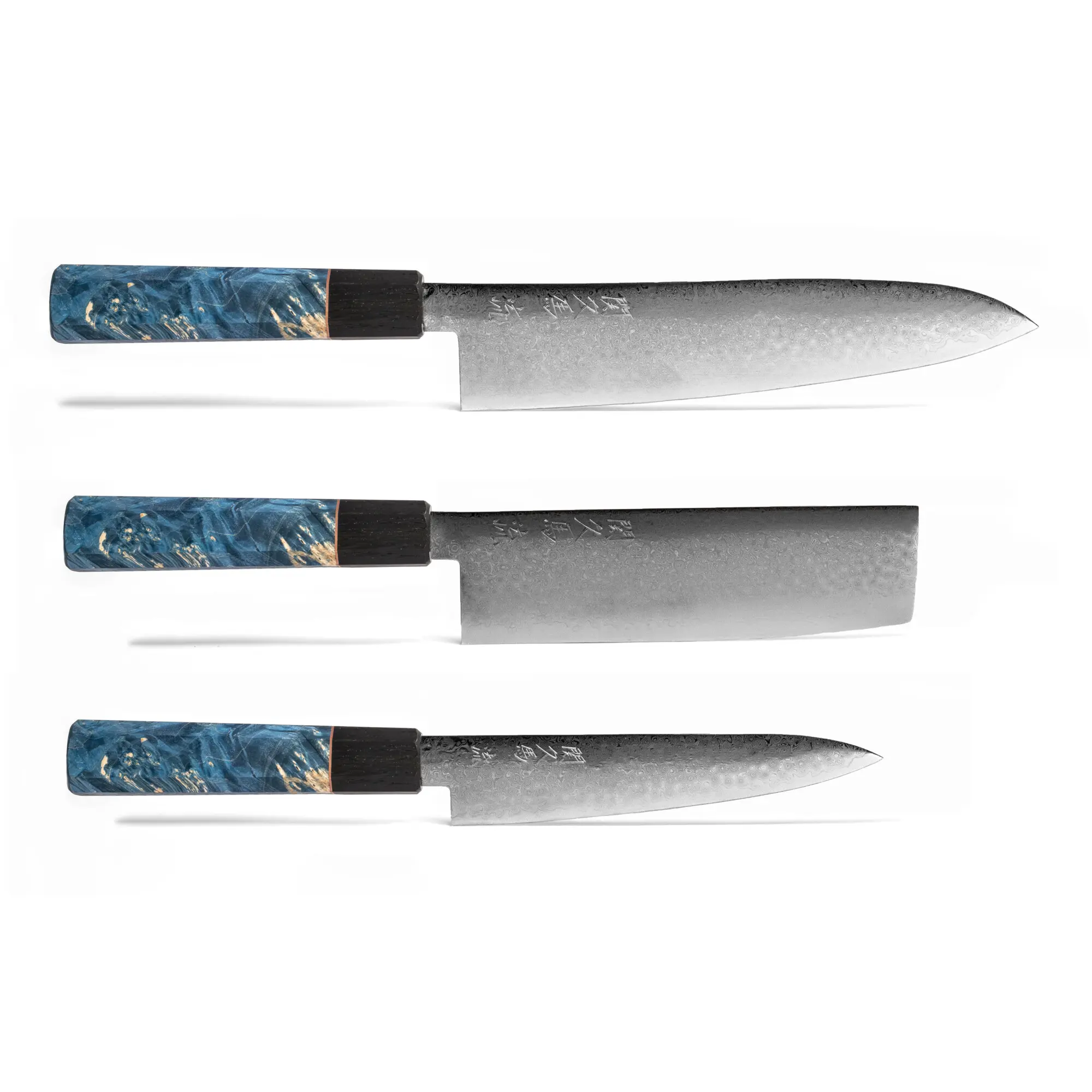
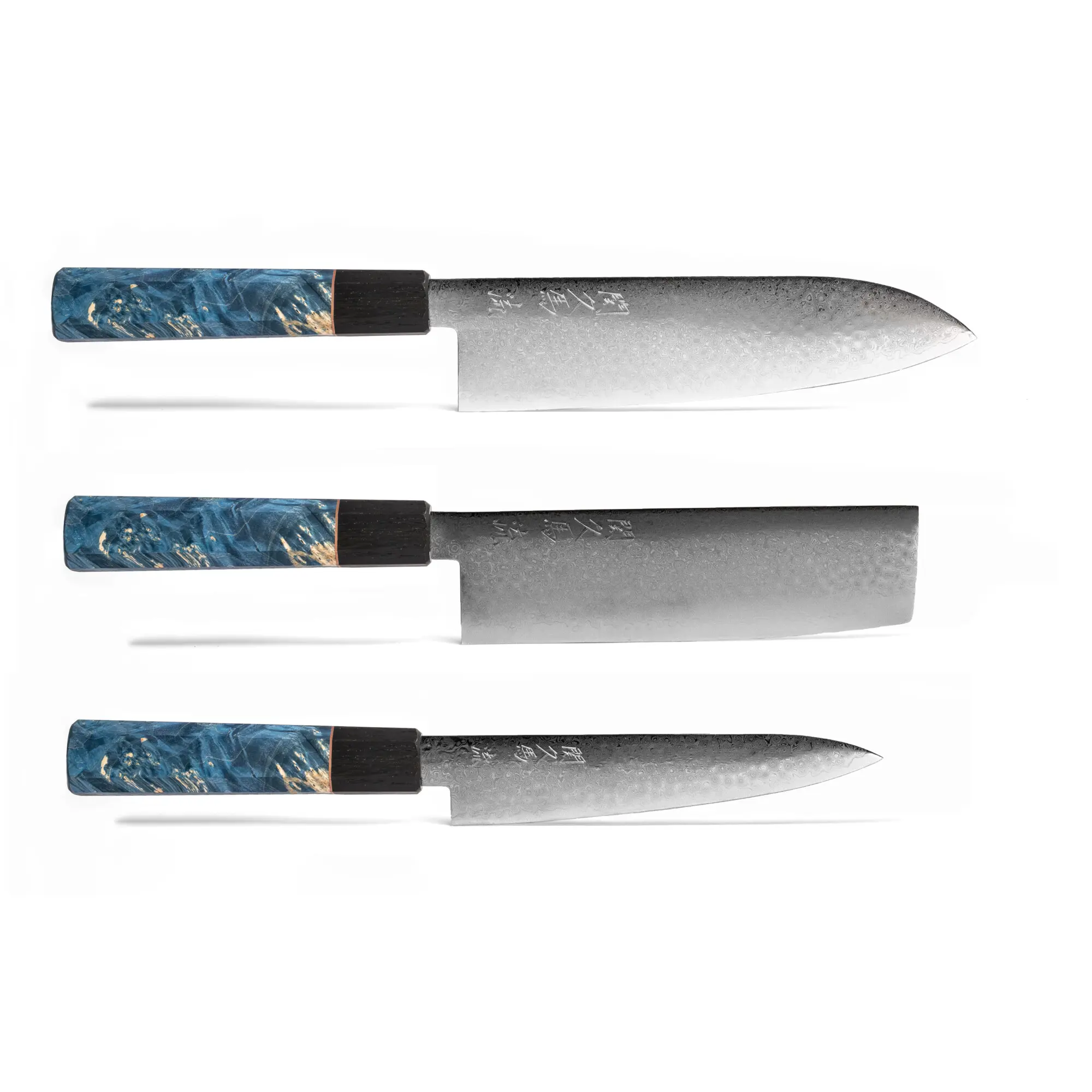
At Oishya, our sets are built around the three knives that professional and home cooks reach for most often. The typical combination pairs a Gyuto (chef’s knife) for general-purpose cutting, a Nakiri for efficient vegetable prep, and a Petty for precision tasks like peeling, trimming, and detail work. This trio covers the vast majority of daily cooking needs. We offer sets in our KYU (Aogami Super carbon steel) and RYU (VG-10 Damascus) lines, so you can choose between the unparalleled edge performance of high-carbon steel or the low-maintenance beauty of Damascus stainless.
What to Look for in a Japanese Chef Knife Set
Not all knife sets are created equal. Many mass-market sets pad the count with blades you will rarely use, such as dedicated boning knives or oversized carving knives, while skimping on the quality of the core pieces. When evaluating a Japanese knife set, focus on the following:
Steel quality. This is the single most important factor. Our KYU sets feature Aogami Super steel, one of the hardest and most edge-retentive carbon steels available, hand-forged in Sakai by artisan blacksmiths. Our RYU sets use VG-10 stainless clad in 67 layers of Damascus, offering a stunning wave pattern alongside excellent corrosion resistance.
Blade selection. Three well-chosen knives will outperform a block full of mediocre ones. A chef’s knife (Gyuto or Santoku), a vegetable knife (Nakiri), and a utility knife (Petty) is the combination most chefs recommend as a starting foundation.
Handle comfort. You will hold these knives for extended periods, so the handle shape and material matter. Oishya knives feature ergonomic handles designed for balanced, fatigue-free use during long cooking sessions.
Building Your Collection Over Time
A set is the ideal starting point, but your collection can grow as your skills develop. Once you have the core three covered, consider adding a Kiritsuke for its elegant versatility, or a dedicated bread knife for weekend baking. Explore our full Japanese knives range to find the next addition to your kitchen.
All Oishya knife sets ship from our European warehouse and are covered by our 100-day money-back guarantee. If a set does not meet your expectations, return it with no questions asked.
What knives should be in a Japanese knife set?
The essential Japanese knife set includes three blades: a Gyuto or Santoku (chef’s knife) for all-round cutting, a Nakiri (vegetable knife) for efficient chopping and slicing of produce, and a Petty (utility knife) for peeling, trimming, and intricate tasks. This combination handles the vast majority of home cooking needs and is the foundation recommended by most professional chefs.
Are Japanese knife sets worth the investment?
Yes. A quality Japanese knife set will outperform a drawer full of cheaper alternatives. The harder steel holds its edge significantly longer, the thinner blade geometry requires less cutting force, and the overall experience makes cooking more enjoyable and efficient. Sets also offer better value than purchasing individual knives, and with proper care, they will last a lifetime.
Should I choose carbon steel or stainless steel for my knife set?
It depends on your maintenance preference. Carbon steel sets, like our Sakai Kyuba KYU, deliver the absolute sharpest edge and are easy to resharpen, but require hand-drying after use to prevent oxidation. Stainless Damascus sets, like our Seki Kyuba RYU, are more forgiving of moisture and acidic foods while still offering outstanding sharpness. Both are excellent choices for serious home cooks.
How do I care for a Japanese knife set?
Hand wash each knife with warm water and mild detergent immediately after use, then dry with a soft cloth. Never place Japanese knives in the dishwasher. Store on a magnetic rack, in individual blade guards, or in a knife block to protect the edges. Sharpen on a whetstone every few months and use a ceramic rod or leather strop for maintenance between sessions.