
Chef's Knives
In cooking, a chef’s knife, also known as a cook’s knife or Japanese “gyuto”, is a cutting tool used in food preparation. The chef’s knife was originally designed primarily to slice and disjoint large cuts of beef. Today it is the primary general-utility knife for most western cooks.
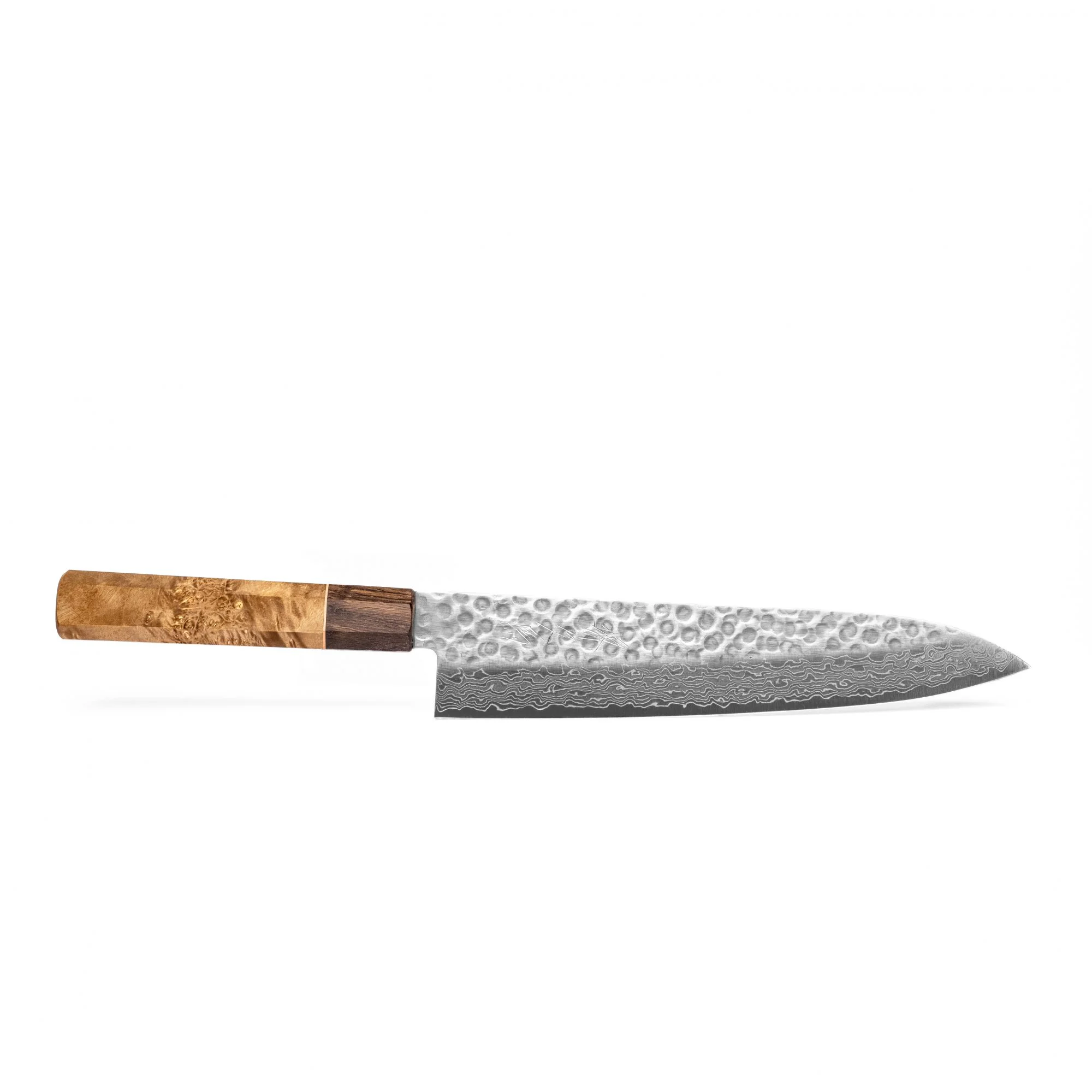


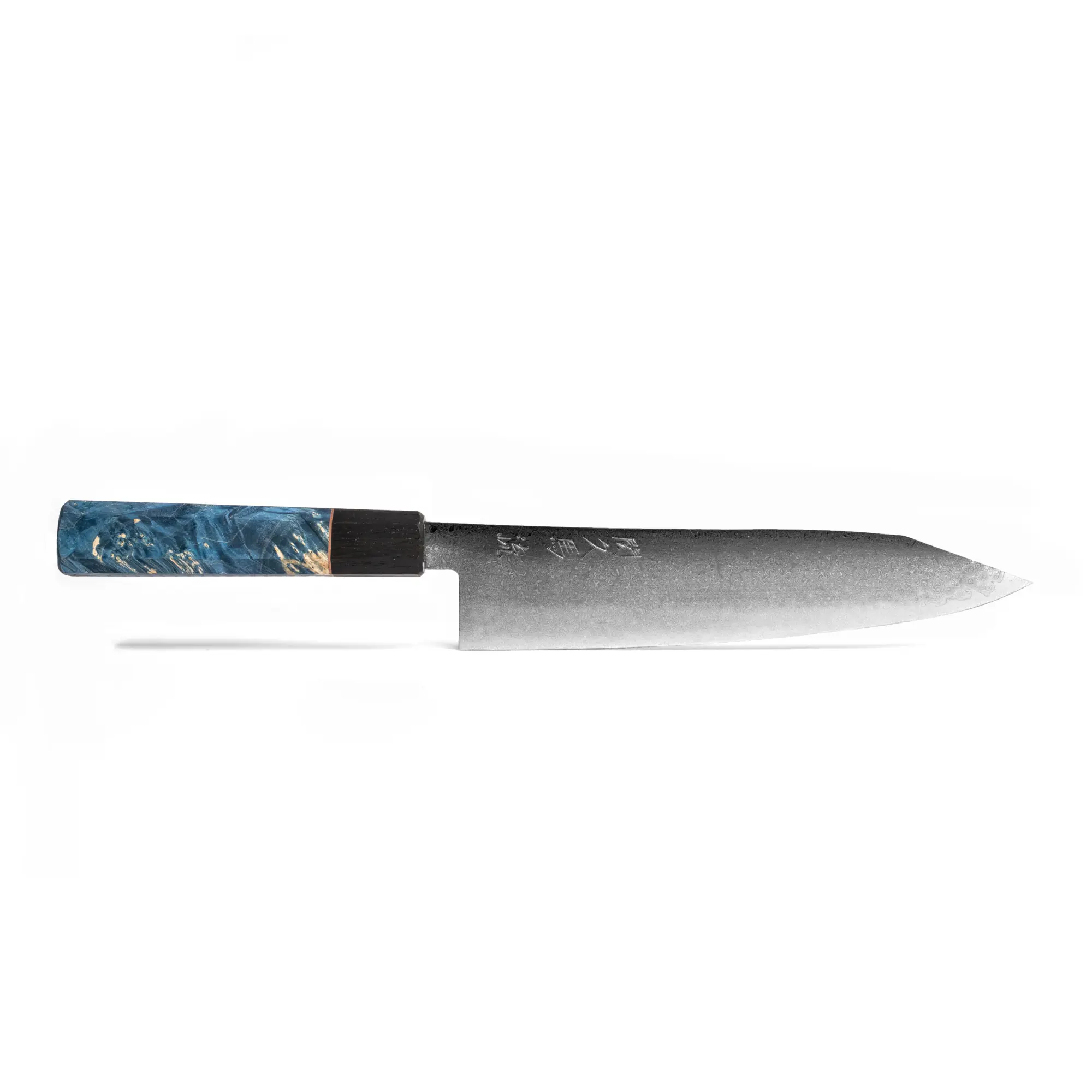


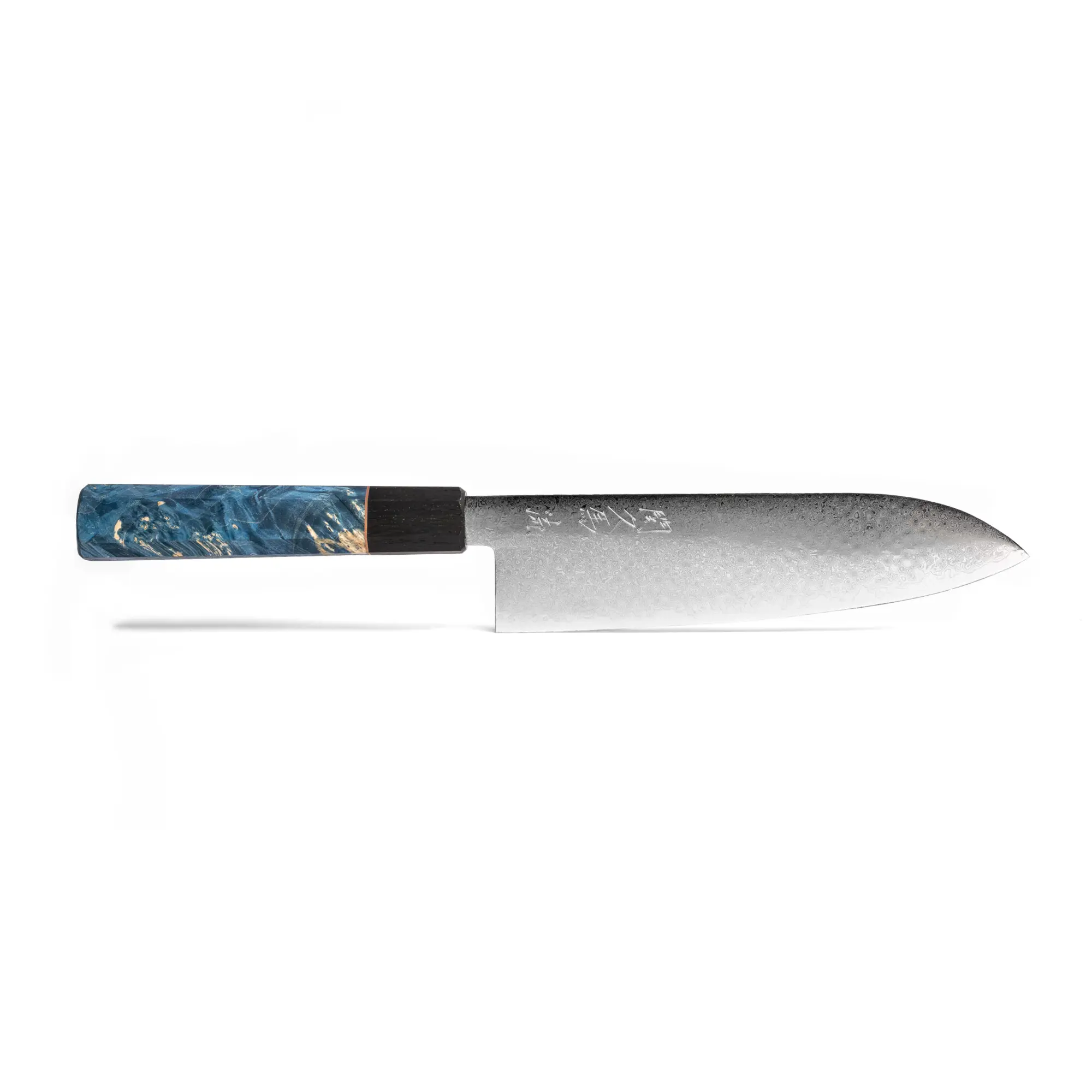


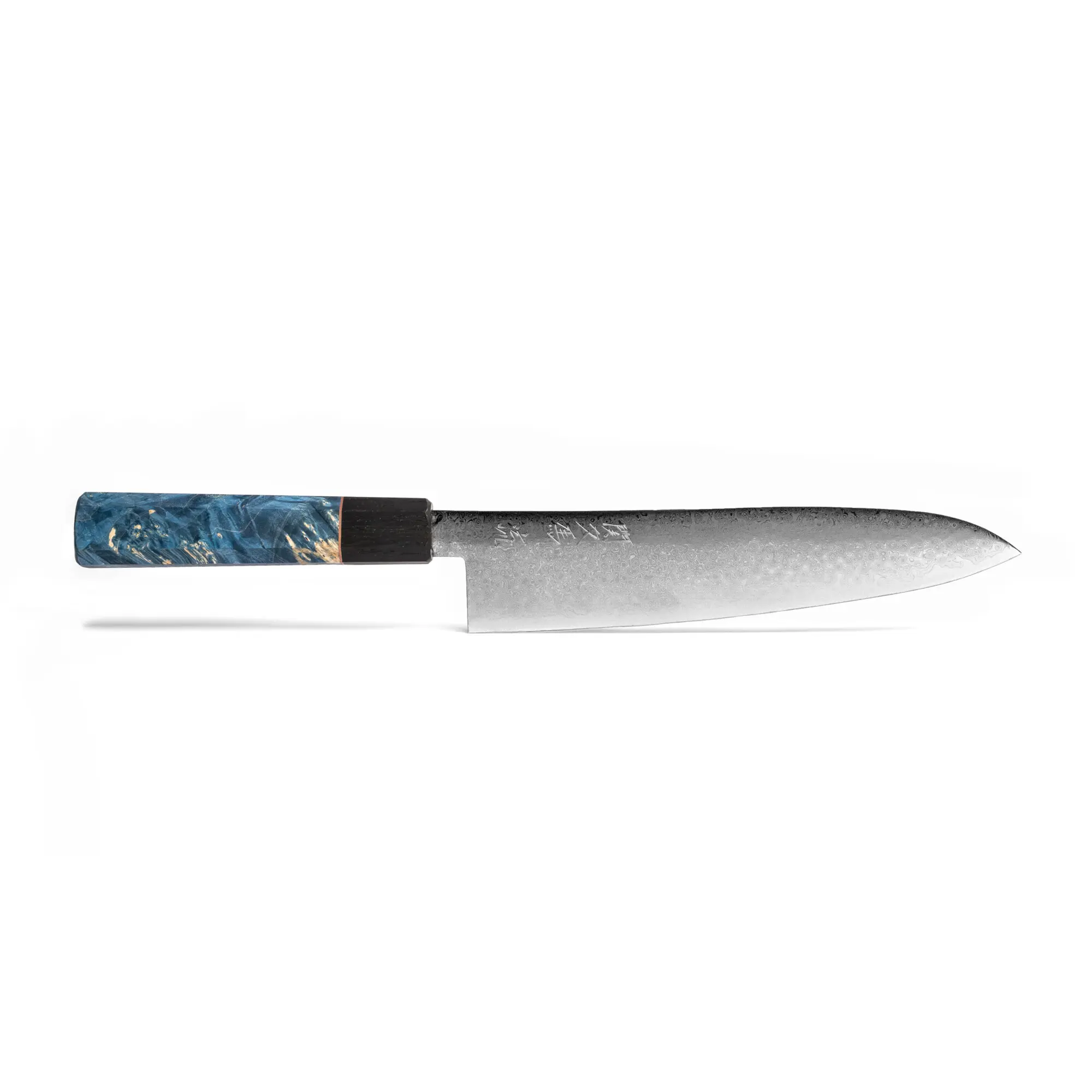


What Makes a Japanese Chef Knife Different?
A Japanese chef knife differs from its Western counterpart in several fundamental ways. The blade geometry is thinner and harder, typically forged from steel rated between 58 and 63 on the Rockwell hardness scale. This allows the edge to be ground to a more acute angle, usually between 12 and 15 degrees per side, compared to the 20-degree angle common on European knives. The result is a blade that glides through ingredients with noticeably less resistance, preserving cell structure and keeping produce fresher for longer after cutting.
At Oishya, our gyuto knives are crafted in two of Japan’s most respected blade-making regions. The Sakai Kyuba KYU line is hand-forged in Sakai, Osaka Prefecture, from Aogami Super carbon steel, a high-carbon alloy prized by professional chefs for its exceptional edge retention and ease of sharpening. Our Seki Kyuba lines, including KATA (VG-10 stainless), SHIN, NIJI, and RYU (Damascus), are produced in Seki, Gifu Prefecture, the historic centre of Japanese cutlery, using stainless steels that offer outstanding corrosion resistance alongside remarkable sharpness.
Choosing the Right Japanese Chef’s Knife for Your Kitchen
With several blade shapes and sizes available, selecting the best Japanese chef knife for your needs comes down to how you cook. The Gyuto in 21cm or 24cm is the most versatile option, equally capable of rocking through herbs, push-cutting vegetables, and slicing proteins. If you prefer a flatter cutting profile and more of a forward-and-back motion, a Kiritsuke (21-24cm) offers a striking single-bevel-inspired geometry in a double-bevel grind. The Santoku (18cm) suits cooks who value a compact, manoeuvrable blade for everyday tasks, while the Bunka (18-21cm) bridges the gap between a Santoku and a Gyuto with its distinctive reverse-tanto tip that excels at detailed tip work.
Consider the steel type as well. If you enjoy the ritual of maintaining a blade and want the sharpest possible edge, the Aogami Super carbon steel in our KYU line is hard to beat. For a lower-maintenance option that still outperforms most Western knives, the VG-10 stainless steel in our KATA line is an excellent choice. Our RYU Damascus line pairs VG-10 performance with a beautiful 67-layer Damascus pattern. Read our guide to buying your first Japanese knife and our comparison of Aogami steel types for a deeper look at what sets these steels apart.
Caring for Your Gyuto Knife
A quality Japanese chef’s knife will reward you with years of precise cutting if treated with basic care. Hand wash and dry your knife after each use rather than placing it in the dishwasher, where it can knock against other items and dull the edge. Store it on a magnetic rack or in a blade guard rather than loose in a drawer. Sharpen on a Japanese whetstone every few months, and use a leather strop or ceramic honing rod for quick touch-ups in between. Carbon steel blades like our KYU line will develop a natural patina over time, which actually helps protect the steel. A light coat of food-safe oil on the blade before storage keeps everything in top condition.
Every Oishya knife ships from our European warehouse and is covered by our 100-day money-back guarantee, so you can try your new Japanese chef knife risk-free. Browse our full Japanese knives collection to find the blade that fits your cooking style.
What is the difference between a gyuto and a Western chef’s knife?
A gyuto is the Japanese equivalent of a Western chef’s knife, but it is typically lighter, thinner, and harder. The blade is forged from harder steel, allowing a more acute edge angle that cuts with less effort. Gyuto knives tend to have a flatter belly than their Western counterparts, making them well-suited to the push-cutting and pull-cutting techniques common in Japanese cuisine, while still being capable of the rocking motion many Western cooks prefer.
What size Japanese chef knife should I buy?
For most home cooks, a 21cm (210mm) gyuto is the ideal starting point. It is long enough to handle large vegetables and proteins yet manoeuvrable enough for everyday prep. If you frequently work with larger cuts of meat or have a spacious cutting board, a 24cm (240mm) blade offers extra reach. For those who prefer a shorter, lighter knife, an 18cm Santoku is a popular alternative.
Is a carbon steel or stainless steel gyuto better?
Neither is objectively better; it depends on your priorities. Carbon steel, such as the Aogami Super used in our KYU line, takes and holds the sharpest edge and is easy to resharpen, but requires more attentive care to prevent rust. Stainless options like VG-10 in our KATA and RYU lines are more forgiving, resist corrosion, and still offer performance far beyond most Western knives. Many enthusiasts own both.
Can I use a Japanese chef knife for all kitchen tasks?
A gyuto or Santoku can handle roughly 80-90% of kitchen cutting tasks, from slicing vegetables and herbs to portioning meat and fish. However, they are not designed for cutting through bones, frozen food, or very hard-skinned produce like whole pumpkins. For those tasks, a heavier cleaver or purpose-built tool is more appropriate. Pairing your chef’s knife with a good petty knife for detail work covers virtually every everyday need.