
Japanese Bread Knives
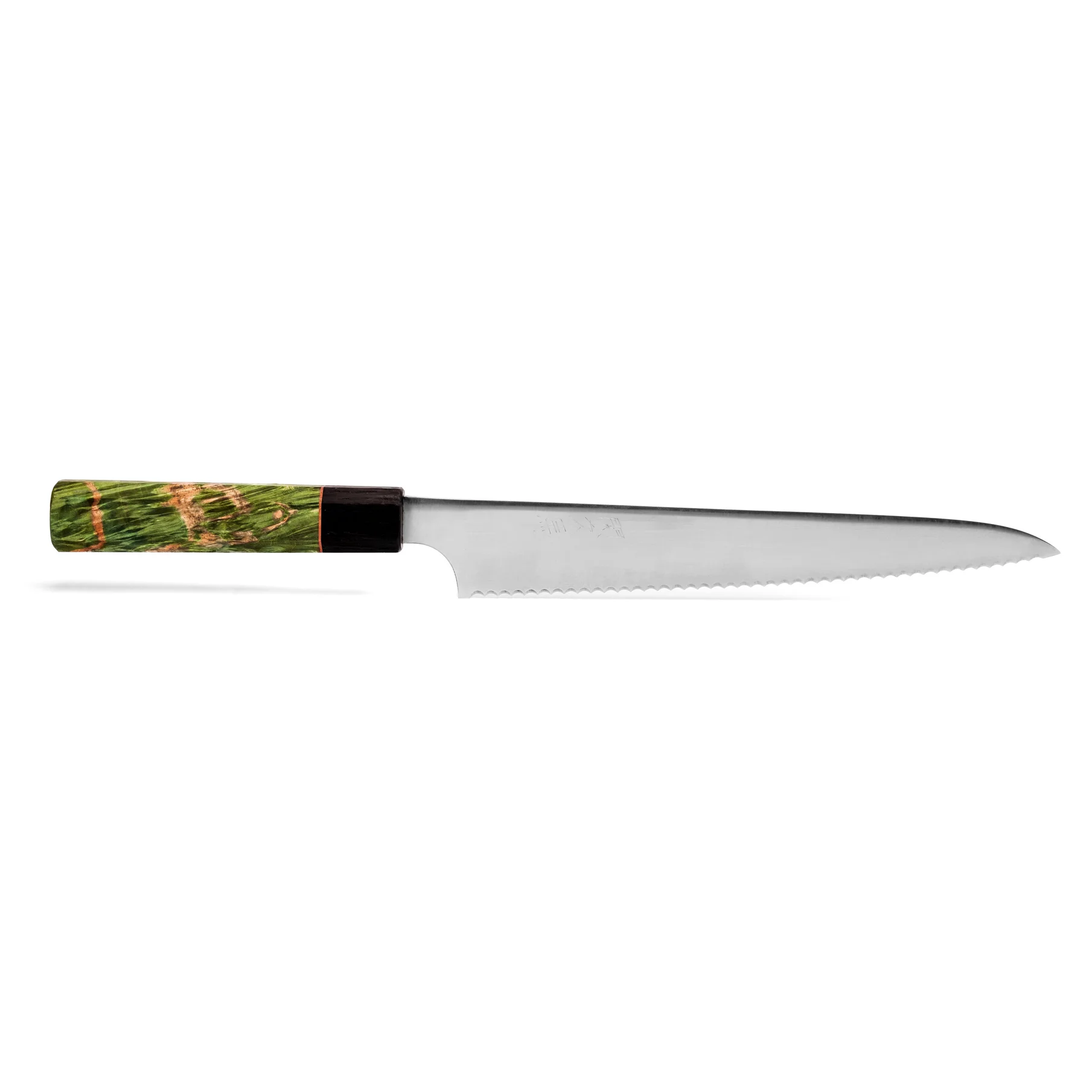
If you’re investing in quality kitchen equipment, don’t overlook the importance of a good bread knife like our Japanese Seki Kyuba PAN serrated knives.

Why a Japanese Bread Knife Is Worth the Upgrade
Most households make do with a cheap serrated knife, and for years it seems adequate. But once you use a properly crafted Japanese bread knife, the difference is immediately clear. A quality serrated blade cuts through crusty loaves without the excessive downward pressure that crushes the soft interior. It produces clean slices with minimal crumbing, and it handles more than just bread: ripe tomatoes, layered cakes, roasted meats with crisp exteriors, and delicate pastries all benefit from a sharp, well-designed serrated edge.
Our Seki Kyuba PAN Bread Serrated Knife (23.5cm) is forged in Seki, Japan, using the same attention to blade geometry and steel quality that defines all our knives. The 23.5cm blade is long enough to slice through wide boules and sandwich loaves in a single pass, while the serration pattern is engineered to grip the crust on the initial bite and then glide smoothly through the crumb. The “PAN” in the name is a nod to the Japanese word for bread, reflecting the knife’s single-minded purpose.
Getting the Most from Your Serrated Knife
Technique matters with a bread knife. Rather than pressing down, let the serrations do the work. Use long, gentle sawing strokes that engage the full length of the blade. Start the cut at the heel end of the knife and draw it toward you, then push forward, maintaining light and consistent pressure throughout. This technique produces cleaner slices and less compression, whether you are cutting a just-baked sourdough or a tender brioche.
A bread knife is also invaluable for levelling cakes. When you need to torte a sponge into even layers, the long serrated blade provides the control that a chef’s knife lacks. Hold the knife horizontally, place your free hand flat on top of the cake for stability, and rotate the cake against the blade in smooth, steady strokes.
Beyond bread and pastry, try using your serrated knife on large ripe tomatoes, watermelon, pineapple, and citrus fruits with thick rinds. Any ingredient with a firm exterior and soft interior is a natural candidate for serrated cutting.
Pair the PAN bread knife with a gyuto or Santoku for general prep and a petty knife for detail work, and your core knife collection is complete. Browse our full Japanese knife range to see all available options. Every knife ships from Europe with our 100-day money-back guarantee.
Frequently Asked Questions
Can you sharpen a serrated bread knife?
Serrated knives can be sharpened, but the process is different from sharpening a straight-edged blade. Each serration must be individually honed using a ceramic rod or a tapered sharpening stone drawn through each scallop. In practice, a quality serrated knife like the Seki Kyuba PAN holds its edge for a very long time because the recessed points of the serrations are protected from direct contact with the cutting board. Most home cooks will go years before needing to sharpen a bread knife.
What length bread knife should I choose?
A bread knife should be long enough to slice through your widest loaf in a single pass without requiring excessive back-and-forth sawing. For most home bakers and bread enthusiasts, 23-25cm is the ideal length. Our Seki Kyuba PAN at 23.5cm comfortably handles everything from standard sandwich loaves to large artisan boules.
Is a bread knife only for bread?
Not at all. A serrated bread knife is excellent for slicing any food with a firm exterior and soft interior. Large tomatoes, roasted meats with crispy skin, delicate cakes that need levelling, pineapples, watermelons, and citrus fruits all benefit from the gripping action of serrated teeth. It is one of the most versatile knives in the kitchen, despite being named after a single food.
Why is the Seki Kyuba PAN better than a regular bread knife?
The Seki Kyuba PAN is forged in Seki, Japan, from higher-quality steel than mass-produced serrated knives. This means the serrations are more precisely ground, the edge stays sharp significantly longer, and the blade is thinner, producing cleaner cuts with less crumbing. The handle is ergonomically designed for comfortable extended use. It is the difference between a tool that merely functions and one that genuinely improves your experience in the kitchen.